If you are looking at Aloe Vera supplements, the first decision is not which bottle looks more natural. It is what kind of Aloe product you actually want in your routine.
A high-Aloe drink, an Aloe-plus-botanical formula and a broader multi-ingredient liquid can all sit under the same “Aloe” mental category while doing very different jobs on the label. When those differences are not clear, it is easy to compare percentages, bottle sizes or marketing phrases without understanding what you are really buying.
Start with your need: do you want Aloe to be the main feature of the formula, do you want Aloe combined with another botanical, or are you looking for a broader daily liquid where Aloe is only one part of a multi-ingredient routine?
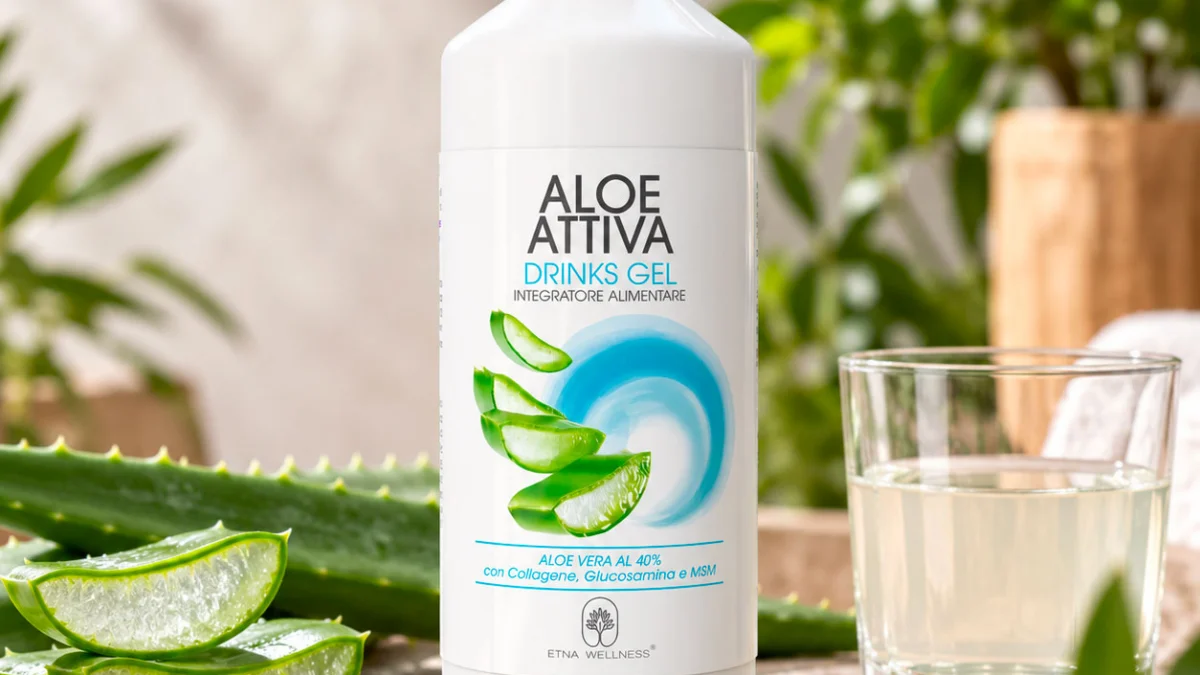
If you are comparing aloe formats rather than looking for a generic “best” product, continue with the Aloe Attiva Etna Wellness guide for the aloe-plus-joint-support formula, or the Aloe Vera 98 Etna Wellness guide for the high-aloe liquid format. The comparison is more useful when each formula is judged by its actual ingredients, serving instructions and intended role.
Why “Aloe Vera supplement” is not one single choice
The word Aloe can create a simple image: one plant, one type of product, one reason to use it. In practice, orally consumed Aloe products can differ by the part of the leaf used, the percentage of Aloe in the finished formula, flavouring, sweeteners, added vitamins and other active ingredients.
That means the buying decision becomes much clearer when you stop asking “which Aloe is strongest?” and start asking “which formula structure best matches the reason I want an Aloe product?”
This reframing matters because a higher percentage is not automatically a better fit. A concentrated Aloe-led drink and a multi-ingredient formula may both be useful comparisons, but they solve different decision problems.
Four formula routes that look similar until you read the label
| Route | What defines it | Etna Wellness example | Best question to ask |
|---|---|---|---|
| Aloe-led drink | Aloe is the dominant formula identity. | Aloe Vera 98% | Do I mainly want a simple Aloe-centred product? |
| Aloe + honey | Aloe remains central while honey changes flavour and formula profile. | Aloe Vera with Honey | Do I want an Aloe-led formula with honey rather than the peach/Stevia route? |
| Aloe + botanical | Aloe remains central but another plant changes the formula logic. | Aloe Nettle | Do I specifically value the added botanical rather than Aloe alone? |
| Multi-ingredient liquid | Aloe is one component inside a broader daily formula. | Aloe Attiva | Am I really choosing Aloe, or a wider glucosamine/chondroitin/MSM/collagen routine? |
Aloe Vera 98%: when the value is formula simplicity
The newly supplied current product sheet confirms Aloe Vera 98% Peach as a 98% Aloe Vera gel formula. Its ingredient list also includes Stevia, inulin, xanthan gum, citric acid, flavouring and vitamin C. The recommended daily amount is 100 ml, divided into two or three servings, and the sheet declares 27.6 mg vitamin C per 100 ml.
The important value here is not a promise of a particular health outcome. It is clarity. If your priority is to choose an Aloe-led drink rather than a formula where Aloe shares the spotlight with many other ingredients, this structure is easy to understand.
That can make the choice feel simpler: you are not paying for a long list of co-ingredients you may not need, and you can evaluate the product primarily on Aloe concentration, taste, preparation, warnings and how naturally it fits into your routine.
Aloe Vera with Honey: when you want Aloe to remain central but prefer a different formula experience
The newly supplied current Aloe Vera Drinks Gel with Honey and Vitamin C sheet declares 90% Aloe Vera gel, 7% wildflower honey and vitamin C. The recommended daily amount is 100 ml, divided into two or three servings, and the sheet declares 80 mg vitamin C per 100 ml.
This keeps Aloe at the centre of the decision while changing the flavour, sweetening profile and micronutrient contribution. It is therefore a different route from Aloe Vera 98% without becoming a complex multi-ingredient formula.
The useful question is not whether honey makes it “better”, but whether this profile makes the product easier and more enjoyable for you to use consistently. When the added element improves routine fit, it can increase real perceived value.
Aloe Nettle: when a second botanical is part of the reason for choosing
The newly supplied current sheet confirms Aloe Nettle 90% as a formula with 90% Aloe Vera gel, 6.5% honey, 2% nettle extract and vitamin C. The recommended daily amount is 100 ml, divided into two or three servings, and the sheet declares 27.6 mg vitamin C per 100 ml.
That makes it a different decision from Aloe Vera 98%. The question is no longer simply “how much Aloe is present?” but whether the added nettle is genuinely relevant to what you are looking for.
A second botanical can increase perceived value when it has a clear role in your decision. It does not automatically increase value just because the ingredient list is longer. If you cannot explain why the added plant matters to you, the simpler formula may be easier to justify.
Aloe Attiva: when Aloe is only one part of a broader formula
Aloe Attiva changes the decision more substantially. Its current source-locked daily serving is 40 ml, and the formula includes 40% Aloe Vera gel alongside glucosamine sulphate, chondroitin sulphate, MSM, hydrolysed bovine collagen, vitamin C and vitamin E.
The labelled 40 ml serving declares 450 mg glucosamine sulphate, 450 mg chondroitin sulphate, 200 mg MSM and 27.6 mg vitamin C. Vitamin E is also present. Hydrolysed bovine collagen is included in the ingredient list but is not quantified on the current sheet. The glucosamine sulphate is identified as being derived from crustaceans, which makes the allergen declaration relevant when deciding whether the formula is suitable for you.
This means Aloe Attiva should not be chosen simply because the word “Aloe” appears on the front. Its value proposition is the opposite of Aloe Vera 98%: it is a broader multi-ingredient liquid routine. If that broader structure matches your priorities, the extra complexity can make sense. If your priority is simply an Aloe-centred drink, it may be more formula than you need.
What the Aloe percentage tells you — and what it does not
A percentage helps you understand how much of the finished formula is described as Aloe, but it does not tell you everything about the product. It does not by itself establish effectiveness, safety for every person, or superiority over a lower-percentage formula with a different purpose.
Use the percentage as one decision signal, then look at the rest: which part of the plant is used, what other ingredients are present, whether the formula includes sweeteners or added nutrients, how much you take and what warnings apply.
Picture the routine before you decide which formula has more value
Imagine an ordinary morning. Do you want a simple Aloe-led drink that requires very little explanation? Would you prefer an Aloe-plus-botanical formula because the second ingredient is part of your reason for choosing? Or are you deliberately looking for a broader liquid routine with glucosamine, chondroitin, MSM and collagen?
The answer matters because value is not the number of ingredients on the label. Value is how well the formula matches the role you want it to play in your day.
A product that feels coherent with your routine is easier to use consistently. A product that looks impressive but contains several ingredients you did not actually want can create more complexity without increasing useful value.
A seven-point Aloe supplement decision check
- Need: why are you looking for an Aloe product?
- Formula role: Aloe-led, Aloe-plus-botanical or broader multi-ingredient liquid?
- Aloe percentage: how much of the finished formula is Aloe?
- Plant part / preparation: gel, latex or whole-leaf context?
- Co-ingredients: do they add value for your specific reason for choosing?
- Safety: medicines, pregnancy/breastfeeding, digestive sensitivity and label warnings.
- Routine fit: can you realistically see yourself using the format as directed?
When “more complete” is valuable — and when it is just more complex
There is no automatic winner between a 98% Aloe-led product and a 40% Aloe multi-ingredient formula. They are answering different questions.
If your decision is centred on Aloe itself, simplicity can increase value. If your decision is centred on a broader routine and you deliberately want the additional ingredients, the wider formula can increase value. The important step is being able to explain why the added complexity belongs in your routine.
This is also the point where ethical upselling becomes useful rather than mechanical: you add a broader formula or a second route only when there is a second need you can identify clearly, not because “more products” automatically means “better results”.
Choose the Aloe route first, then verify the current product
If you are still unsure which formula structure fits your need, start from the needs guide. If you already know whether you want an Aloe-led drink, Aloe-plus-botanical formula or broader multi-ingredient liquid, ask for help comparing the exact current options. When the role is clear, create customer access and verify the current formula, format, price and availability before deciding whether to order.
Ask for help comparing Aloe formulas
Create customer access & check current Aloe products
Creating customer access does not place an order. On mobile, scroll down on the registration page, complete your customer details, enter the shop and verify the current product, format, price and availability before ordering.
Frequently asked questions
Is a higher Aloe percentage always better?
No. A higher percentage tells you that Aloe makes up more of the formula, but it does not automatically make the product more suitable for your need.
What is the difference between Aloe Vera 98% and Aloe Attiva?
Aloe Vera 98% is an Aloe-led peach-flavoured formula with Stevia and vitamin C. Aloe Attiva contains 40% Aloe gel inside a broader formula with glucosamine, chondroitin, MSM, hydrolysed bovine collagen and vitamins.
What is Aloe Nettle?
The current product sheet declares 90% Aloe Vera gel, 6.5% honey, 2% nettle extract and vitamin C. It is therefore a distinct Aloe-plus-botanical route rather than simply another flavour.
Is oral Aloe the same as Aloe gel applied to the skin?
No. Topical and oral Aloe products have different uses and safety considerations. Oral Aloe also differs according to whether the preparation involves inner-leaf gel, latex or whole-leaf material.
Who should ask a healthcare professional before using oral Aloe?
People who are pregnant or breastfeeding, who take regular medicines or who have medical conditions should seek professional advice before using oral Aloe products. Always follow the exact product label.
Bottom line
The useful Aloe decision is not “which bottle contains the most Aloe?” but “which formula structure best matches the role I want in my routine?” Start with the need, compare the formula rather than the headline, understand the plant preparation and safety context, then choose only the level of complexity that adds real value for you.
A few useful notes before you choose
A final detail worth knowing is that oral Aloe products can use different parts of the plant, so checking the exact preparation helps you compare them more confidently. Aloe gel comes from the inner portion of the leaf, while Aloe latex comes from the outer layer; whole-leaf preparations can contain both unless processed to remove anthraquinone compounds such as aloin. Short-term oral use of Aloe gel has been studied with generally reassuring safety findings, while Aloe latex has a different safety profile and is generally approached with more caution.
The current product sheets also include a few product-specific notes that are useful to check before choosing. For example, the Aloe Vera with Honey sheet includes specific guidance for younger users, pregnancy or breastfeeding and prolonged use. Aloe Attiva also suggests checking suitability with a healthcare professional when there are existing conditions or ongoing medicines. Its crustacean-derived glucosamine also makes the allergen declaration relevant.
You may come across many different benefit claims for Aloe online. The most useful approach is to keep those broad messages separate from the specific formula you are actually comparing. For Great Britain, supplement communication should stay within the authorised health-claim framework. Formula facts, authorised nutrient claims where applicable, safety and realistic expectations must remain separate from unsupported finished-product claims.
As a simple final check, follow the current label for the specific product you choose. If pregnancy, breastfeeding, regular medicines, allergies or an existing condition are relevant to you, a quick suitability check with an appropriate healthcare professional can help you use the product with greater confidence.
Sources and verification
Product-specific facts are based on the current ETNA.COM project evidence for Aloe Vera 98%, Aloe Nettle and Aloe Attiva. Aloe Vera 98% formula proof is source-closed as 98% peach-flavoured Aloe Vera with Stevia and vitamin C. Aloe Nettle is source-locked as 90% Aloe Vera gel plus nettle dry extract and vitamin C. Aloe Attiva uses the current product-owner source lock for the 40 ml daily serving and multi-ingredient formula. External Aloe safety context was refreshed on 21 September 2026 against current NCCIH guidance; UK food-supplement claim boundaries were checked against current GOV.UK guidance. No disease-treatment claim is adopted for any finished product.