If you have started looking at prostate supplements, you are probably not looking for another long list of ingredients. You want to understand whether a formula makes sense for your situation, what you can realistically expect from it and when a supplement should not be the first step at all.
That distinction changes the whole decision. A product name can make a formula feel targeted, but the name does not tell you whether the ingredient, daily amount, evidence and routine actually fit what you need. A more useful starting point is to separate the reason you are searching from the product you are being shown.
Start here: if you are simply comparing men’s-health supplements, continue with the formula check below. If you are searching because urination has changed, symptoms are persistent or something feels clearly different from your normal, the first value comes from understanding the cause — not from buying quickly.
For the Etna-specific product route, continue with the ProstaMan Etna Wellness guide. For a broader urinary-tract comparison that is not prostate-specific, see Urinary Tract Supplements: How Formula Roles Differ.
The real need comes before the supplement category
It is easy to move straight from a concern to a product: you notice a change, search online, see “prostate support” and begin comparing capsules. But that shortcut can hide the most important question: what are you actually trying to solve?
For one person, the need may simply be to understand a supplement already recommended or noticed online. For another, it may be concern about urinary frequency, interrupted sleep or a change in flow. Those are not the same buying situation. The second deserves more caution because symptoms can have different causes and a supplement cannot diagnose them for you.
This is also why a responsible decision can feel slower at first but become easier afterwards: once you know whether you are dealing with a general wellness choice or a symptom that needs assessment, much of the confusion disappears.
What a good prostate-supplement decision should help you clarify
| Question | Why it matters | What to verify |
|---|---|---|
| Why am I considering this? | A general wellness choice is different from trying to self-treat symptoms. | Your actual reason for searching; whether medical assessment is more appropriate. |
| What is the active ingredient? | The front label may say “prostate”, but the ingredient determines what evidence is relevant. | Botanical identity, extract type, standardisation and daily amount. |
| What does the evidence actually show? | Traditional use, marketing and clinical evidence are not the same thing. | Evidence for the exact ingredient and the limits of that evidence. |
| Can I realistically use it as directed? | Routine fit is part of value; an unused supplement has no practical value. | Dose, frequency, warnings, medicines and whether the routine is sustainable. |
Saw palmetto / Serenoa: why the ingredient name can sound more decisive than the evidence
Saw palmetto, also known as Serenoa repens, is one of the best-known botanical ingredients in products marketed for men’s urinary and prostate-related concerns. That familiarity can create an automatic assumption: if the ingredient is common, it must be strongly proven.
The current evidence is more cautious. Major evidence summaries report that saw palmetto used on its own provides little or no benefit for urinary symptoms associated with benign prostate enlargement. That does not make the ingredient “worthless”; it means the evidence should not be turned into a promise that a finished supplement will relieve urinary symptoms or treat an enlarged prostate.
This is an important reframing when you are comparing products: the value of transparency is different from the value of a medical claim. A clear formula tells you what you are taking. It does not automatically prove what outcome you will experience.
Why extract type and standardisation matter more than a headline number
When comparing saw-palmetto formulas, a milligram number is only useful when you know what preparation it describes. Whole berry, powder and lipid-sterolic extracts are not interchangeable descriptions.
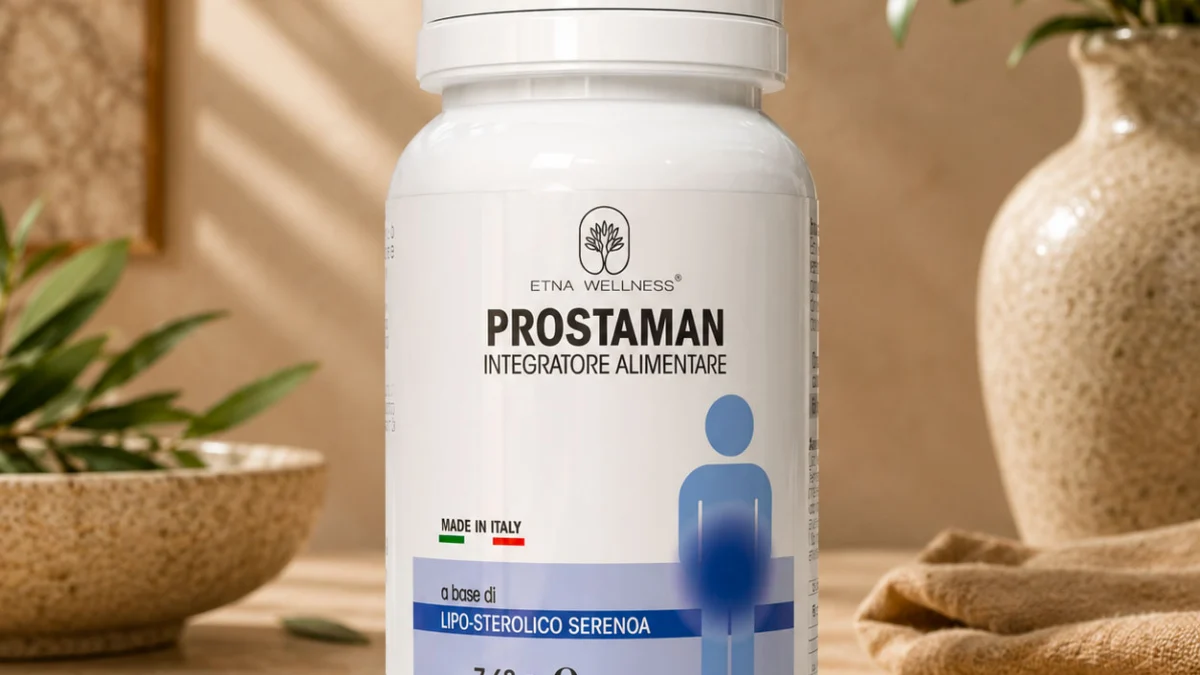
The current official ProstaMan page identifies a lipid-sterolic extract of Serenoa repens fruit standardised to 90% total fatty acids. That is a more reliable current comparison point than repeating a dose figure that is not shown on the public product page.
So instead of asking whether a single milligram number is “strong”, ask: what exact preparation is used, how is it standardised, what is the labelled daily use, and what evidence applies to that preparation?
Where ProstaMan fits in the Etna Wellness range
Once the decision criteria are clear, the Etna Wellness product can be understood in context rather than treated as the starting point.
The current official Etna Wellness page identifies ProstaMan as a 24-capsule product based on lipid-sterolic Serenoa repens fruit extract standardised to 90% total fatty acids, with a labelled use of one capsule per day. That gives you two useful pieces of information: the formula is centred on one recognisable botanical route, and the routine is simple to understand.
What those facts do not prove is equally important. They do not establish that ProstaMan treats benign prostate enlargement, reduces urinary symptoms, changes PSA, prevents disease or replaces a medical evaluation.
The value of a simpler formula is clarity, not certainty
There can be practical value in a formula that is easy to read. You know what the main botanical is, what the daily amount is and how often it is taken. That can reduce one type of uncertainty: what am I actually buying?
But reducing formula uncertainty must not be confused with creating outcome certainty. A simpler ingredient story is useful because it makes comparison easier; it is not a reason to overstate what the product can do.
This is where perceived value becomes more meaningful. Instead of value being “more ingredients” or “stronger claims”, value becomes clarity, relevance, routine fit and an informed reason for choosing.
Picture the decision before you picture the bottle
Imagine the next few weeks, not just the moment of purchase. If you are using a supplement as part of a general wellness routine, can you explain to yourself why you chose it, what the main ingredient is, how you take it and what you are not expecting it to do?
If the answer is yes, the decision is becoming more conscious. If the reason is still “because the word prostate was on the label”, you probably need another layer of information before buying.
And if your real concern is a urinary change that is affecting sleep, daily comfort or confidence, imagine the value of resolving the uncertainty first. Knowing whether the issue needs clinical assessment can be more useful than adding another product to the routine.
When the smartest next step is not a supplement
Changes in urination can have different causes. Seek medical advice if you have persistent difficulty starting or passing urine, increasing frequency or other ongoing urinary changes. Urgent assessment is important if you are unable to urinate, have blood in your urine or have significant pain.
That safety boundary does not weaken the supplement decision. It strengthens it, because it separates a general wellness purchase from situations where a diagnosis matters more than a product.
Five questions to ask before buying a prostate supplement
- What is my real reason for considering it? General wellness or an attempt to manage symptoms?
- What exactly is in the daily serving? Plant, extract type, standardisation and amount.
- What does the evidence support — and what does it not support?
- Does the routine fit me? Dose, frequency, medicines, warnings and consistency.
- Would I still choose it if the front-of-pack marketing disappeared? If not, compare again.
A more conscious purchase usually feels simpler, not more exciting
Good supplement decisions often become less dramatic as they become more informed. You move from “I need the strongest product” to “I understand what I am comparing”. You move from “this ingredient is famous” to “I know what the evidence actually says”. And you move from buying because of a concern to choosing only when the product genuinely fits the role you have defined for it.
That is the point at which a product can have higher perceived value without exaggeration: you understand why it is there, what it contains, how it fits your routine and where its limits are.
Choose the next step that matches your level of certainty
If you are still working out what kind of support you are actually looking for, start with the wider needs guide. If you already understand the role of the formula but want to verify ProstaMan’s current details, ask for information. If the formula and routine are already clear to you, you can create customer access and check the current product, price and availability before deciding whether to order.
Ask about the current ProstaMan formula
Create customer access & check ProstaMan
Creating customer access does not place an order. On mobile, scroll down on the registration page, complete your customer details, enter the shop and verify the current product, format, price and availability before ordering.
Frequently asked questions
What is saw palmetto?
Saw palmetto is the common name for Serenoa repens, a botanical ingredient widely used in men’s-health supplements.
Does saw palmetto treat an enlarged prostate?
Current evidence reviews do not support presenting saw palmetto used alone as an effective treatment for urinary symptoms associated with benign prostate enlargement. A food supplement should not be presented as treating, preventing or curing a medical condition.
How is the Serenoa extract described?
The current official product page identifies a lipid-sterolic Serenoa repens fruit extract standardised to 90% total fatty acids. It does not publish a separate milligram amount for the extract on the public page.
How is ProstaMan taken?
The current official product page states one capsule per day. Always recheck the current label before use.
When should urinary symptoms be checked medically?
Persistent urinary changes should be discussed with a healthcare professional. Inability to urinate, blood in the urine or significant pain require prompt medical assessment.
Bottom line
A prostate supplement should be the end of a decision process, not the beginning of one. Start with the reason you are searching, separate general wellness from symptoms that need assessment, compare the exact ingredient and daily amount, understand the evidence limits and only then decide whether the formula adds meaningful value to your routine.
A few useful notes before you choose
Use the formula check as a confidence step, not a reason to rush. Recheck the current label and serving, and remember that persistent or changing urinary symptoms are better assessed for their cause before a supplement becomes part of the decision.
Sources and verification
- Etna Wellness — current ProstaMan product page — current customer-facing name, 24-capsule format, Serenoa extract identity and standardisation, and one-capsule daily use.
- NCCIH — Saw Palmetto: Usefulness and Safety — current evidence context and limitations for urinary symptoms associated with enlarged prostate.
- Food Standards Agency — Food supplements guidance — GB safety and claim boundaries for food supplements.
This article does not adopt disease-treatment claims for ProstaMan or for saw palmetto supplements generally. Persistent or concerning urinary symptoms require appropriate medical assessment.