Choosing a Lion’s Mane supplement is easier when you stop comparing labels by hype and start comparing what is actually inside the capsule. The useful questions are practical: which part of the mushroom is used, is it an extract or a powder, is any standardisation declared, what is the daily serving and how transparent is the label?
This matters because two products carrying the same “Lion’s Mane” name can be built very differently. The goal is not to find the most dramatic promise. It is to find the formula you can understand, compare and use with confidence.
A useful comparison starts with five facts: mushroom part, extract type, declared standardisation, daily amount and serving format.
If your main question is broader than Lion’s Mane itself, compare the ingredient roles in Focus Supplements: How to Compare Formula Types. If the issue is daytime energy rather than focus, the Energy Supplements guide separates stimulant, vitamin and mineral-support approaches.
Why Lion’s Mane labels can be difficult to compare
The front of the pack may simply say “Lion’s Mane”, yet that does not tell you whether the product uses the fruiting body, another fungal material, a dry extract or a simple powder. It also does not tell you whether a meaningful standardisation is declared.
Those details do not automatically prove that one product will produce a better outcome. They do, however, make the formula easier to evaluate.
1. Check which part of the mushroom is used
Lion’s Mane is Hericium erinaceus. When comparing supplements, the label should make the raw-material identity as clear as possible.
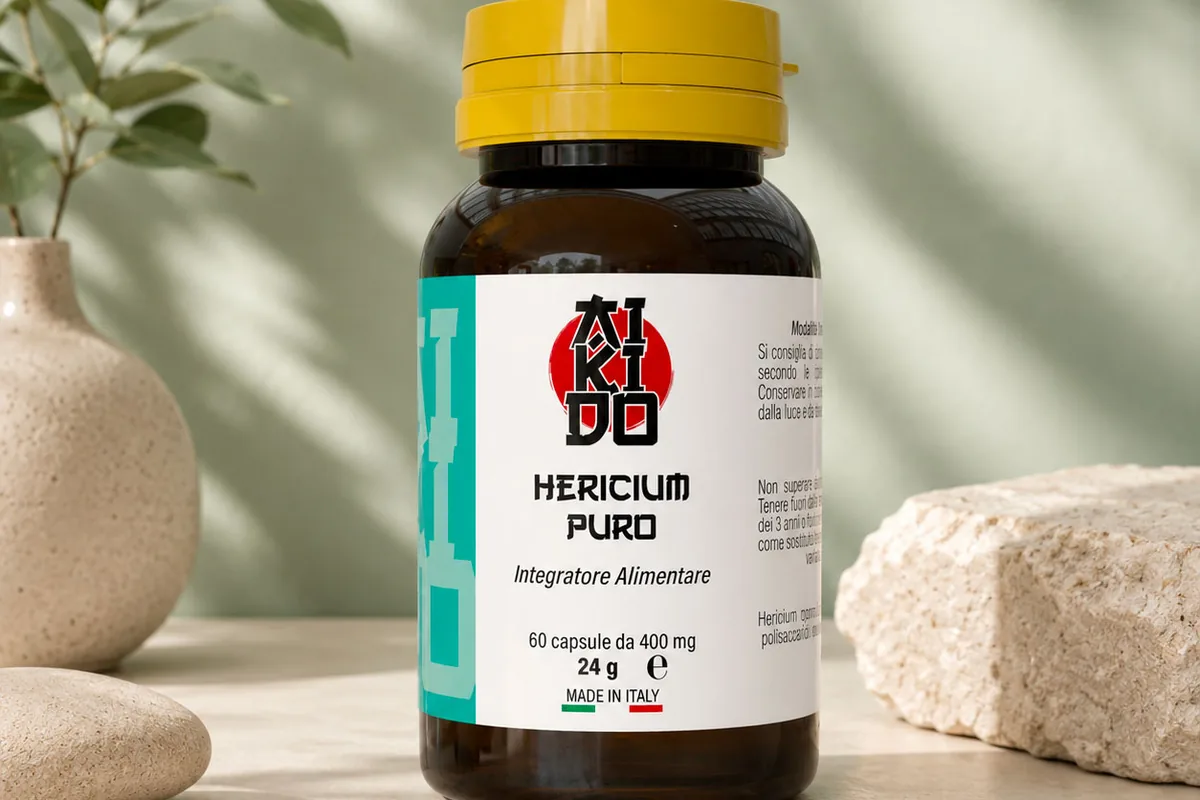
Hericium Puro, the Etna Wellness product used as the worked example in this guide, currently identifies a Hericium erinaceus sporophore dry extract. “Sporophore” refers to the fruiting body of the mushroom.
That is useful information because it tells you exactly which part of the mushroom the current formula is built around.
2. Separate extract from simple powder
“Powder” and “extract” are not interchangeable terms. An extract has undergone a concentration process, while a simple powder is generally the ground raw material.
That does not mean an extract is automatically superior in every context. It means you should compare like with like and understand what the manufacturer is declaring.
3. Look for declared standardisation
A standardisation figure can improve formula transparency when it tells you which group of compounds has been measured.
The current official English information for Hericium Puro states that its sporophore dry extract is standardised to 30% polysaccharides.
This should be read as a compositional fact, not as a guarantee of a cognitive result. Standardisation helps you understand the material more precisely; it does not by itself prove that a finished product will improve memory, concentration or mood.
4. Compare the daily amount, not only the capsule strength
One capsule strength tells you only part of the story. The useful number is the amount actually used per day.
Hericium Puro currently contains 60 capsules of 400 mg, with directions of 2 capsules per day. That corresponds to 800 mg per daily serving.
With two capsules per day, a 60-capsule pack corresponds to around 30 days of use when followed as directed.
5. Ask whether the label gives you enough information to make a real comparison
A useful Lion’s Mane label should let you answer basic questions without guessing:
- Which species is used?
- Which part of the mushroom is used?
- Is it an extract or a powder?
- Is a standardisation declared?
- How much is taken per day?
- How many days does the pack provide?
When those points are clear, you can compare formulas on substance rather than presentation.
Where Hericium Puro fits
Hericium Puro is a single-mushroom route. That is important because it keeps the decision distinct from a broader focus formula containing several botanicals or nutrients.
If your priority is specifically Lion’s Mane, a focused Hericium product gives you a cleaner comparison. If your real need is broader mental focus and you want to compare stimulant, mushroom and multi-ingredient botanical approaches, use the dedicated Focus Supplements guide instead.
Single-mushroom vs broader focus formula
| Route | What you are comparing | When it may feel clearer |
|---|---|---|
| Single Lion’s Mane | Species, mushroom part, extract, standardisation and daily serving. | When Lion’s Mane itself is the specific ingredient you want to evaluate. |
| Broader focus formula | Several ingredient families combined for a broader focus-oriented routine. | When your need is broader than one mushroom ingredient. |
Why more ingredients do not automatically create more value
A longer formula can look more complete, but it also changes the decision. If the reason you are shopping is specifically Lion’s Mane, adding several unrelated ingredients can make it harder to judge what you are actually choosing.
A broader formula may still make sense when it answers a broader need. The point is not to minimise ingredients; it is to make sure each additional layer has a reason to be there.
How ethical upselling should work here
Hericium Puro should not automatically lead to a second focus, energy or immune product.
A second product only adds value when you can describe the second need independently. If the customer simply wants a Lion’s Mane route, the focused choice may already be the clearest one.
If another need genuinely exists, compare that need separately rather than building an automatic stack.
Picture the routine after the novelty has passed
Imagine the product sitting in your routine after two or three weeks. Two capsules per day is simple on paper, but the best routine is the one you can actually follow consistently.
Would you prefer a single-ingredient mushroom product because the purpose stays obvious? Or would you rather use a broader formula because you are trying to address a wider focus-related need?
That future routine is part of the value equation.
A six-question Lion’s Mane fit check
- Is Lion’s Mane itself the ingredient I want to evaluate?
- Does the label identify the mushroom part clearly?
- Is it an extract or a simple powder?
- Is any standardisation declared?
- Is the daily serving clear?
- Do I want a focused single-mushroom route or a broader focus formula?
Choose the formula structure before you choose the product
If you are still deciding whether Lion’s Mane itself is the right route, start from the needs guide. If the route is already clear, ask for help comparing the current formula. Then create customer access and verify the current product, format, price and availability before deciding whether to order.
Ask for help comparing Lion’s Mane formulas
Create customer access & check Hericium Puro
Creating customer access does not place an order. On mobile, scroll down on the registration page, complete your customer details, enter the shop and verify the current product, format, price and availability before ordering.
Frequently asked questions
What does “sporophore” mean?
It refers to the fruiting body of the mushroom. The current Hericium Puro information identifies a Hericium erinaceus sporophore dry extract.
What does 30% polysaccharides mean?
It is a declared standardisation of the extract. It helps describe the composition of the raw material, but it should not be interpreted as a guaranteed measure of cognitive effect.
How much Hericium Puro is used per day?
The current official English information states two 400 mg capsules per day, equal to 800 mg per daily serving.
How long does a pack last?
At two capsules per day, the current 60-capsule pack provides around 30 days of use.
Is Lion’s Mane the same as a general focus supplement?
No. Lion’s Mane is a specific mushroom ingredient. A broader focus formula may contain several different ingredient families and should be compared separately.
Bottom line
A good Lion’s Mane comparison is not about finding the most impressive promise. Check the mushroom part, extract type, standardisation, daily amount and label transparency. Hericium Puro currently provides a clear single-mushroom example: 60 capsules of 400 mg, sporophore dry extract standardised to 30% polysaccharides, with two capsules per day.
A few useful notes before you choose
Lion’s Mane is often discussed online in connection with memory, focus, mood and other cognitive themes. Those discussions should not be turned automatically into finished-product claims. This article therefore keeps the product comparison centred on verified formula facts rather than promising a cognitive outcome.
There is no guaranteed timetable for “feeling” a Lion’s Mane supplement, and a standardisation percentage should not be used as a shortcut to promise effectiveness.
As a simple final check, follow the current label for the exact product you choose. If pregnancy, breastfeeding, regular medicines, allergies or an existing condition are relevant to you, a suitability check with an appropriate healthcare professional can add confidence.
What UK readers should check before choosing
In Great Britain, food supplements are regulated as foods rather than medicines. A supplement should therefore be compared from its actual label, ingredients, dose and permitted claims rather than from online promises about treating or preventing a condition.
The Food Standards Agency food supplements guidance recommends following the label and checking suitability when medicines, pregnancy, breastfeeding or medical conditions are relevant. Commercial health claims in Great Britain must also fit the Great Britain nutrition and health claims register.
This UK comparison does not assume that every Lion’s Mane formula, or any specific Etna Wellness product, is available in every UK sales channel. Availability and the current product label should be checked separately before ordering.
Sources and verification
This draft uses the current official English Hericium Puro facts locked in the ETNA.COM editorial evidence matrix: 60 capsules of 400 mg, Hericium erinaceus sporophore dry extract, 30% polysaccharides and two capsules per day. Finished-product claims for memory, concentration, ADHD, dementia, depression or mood are not adopted. The Lion’s Mane owner remains separate from the generic Focus Supplements owner.