Moringa supplements can look similar on the front of the pack while using very different parts of the plant and very different preparations. That is why “moringa” alone is not enough information to make a useful comparison.
For a broader framework covering vitamins, minerals, botanicals and stimulant-style formulas, see the energy supplement comparison guide.
The clearer route is to check which plant part is used, whether the formula is an extract or a simple powder, whether any standardisation is declared, what the daily serving is and how transparent the label is.
Start with the raw material: seed and leaf products should not be treated as interchangeable just because both are sold as “moringa”.
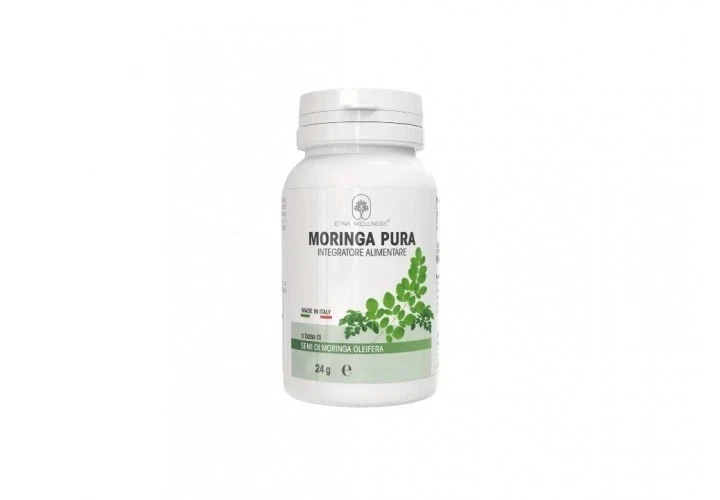
For the Etna-specific formula, continue with the Moringa Pura Etna Wellness guide. For broader catalogue context, see the Etna Wellness products and prices guide.
Why the plant part matters
Moringa products may use leaves, seeds or other plant material. Those are not automatically equivalent ingredients, and research or traditional use associated with one part should not simply be transferred to another.
For that reason, a good label should tell you clearly which part of Moringa oleifera is actually present.
Seed vs leaf: the first comparison to make
Many online articles discuss moringa generically, but the useful consumer question is more specific: is this a leaf-based product or a seed-based product?
Moringa Pura, the Etna Wellness example used in this guide, is currently identified by the official English product page as a Moringa oleifera seed dry extract.
That immediately places it in a different comparison category from a simple moringa leaf powder.
Extract vs powder: another important distinction
A dry extract and a simple powder are different preparation types.
A powder is generally the milled raw material. An extract has undergone a process intended to concentrate selected components. That does not mean an extract is automatically “better”; it means the formulas should be compared on their own terms.
When the label tells you the preparation type clearly, you can make a more meaningful comparison.
What standardisation tells you
The current official English Moringa Pura information states that the seed dry extract is standardised to 40% polysaccharides.
That is a useful compositional fact because it tells you that a particular group of compounds has been measured and declared consistently.
It should not be turned into a promise of a specific health outcome. Standardisation improves transparency; it does not, by itself, prove that a finished product will deliver weight-loss, digestive, circulation or metabolic results.
Daily serving matters more than capsule marketing
The current official English page gives a use of 1–2 capsules per day with water and identifies a 60-capsule pack.
The exact 400 mg-per-capsule figure seen in older secondary material is not repeated in the current English page used for this editorial lock, so it is deliberately not presented here as a current customer-facing fact.
This is the safer comparison approach: use what the current direct source confirms and keep unresolved quantitative details out until they are re-verified.
Where Moringa Pura fits
Moringa Pura is a seed-extract route. Its value is therefore not that it represents every kind of moringa supplement, but that it provides a clearly defined formula structure within the category.
If you are specifically looking for a leaf powder, it belongs to a different comparison. If you are looking for a standardised seed extract in capsule form, Moringa Pura is the more relevant route to evaluate.
Why broad “moringa benefits” lists are not enough
Moringa is often marketed online with very broad claims touching digestion, circulation, cholesterol, glucose, weight management, immunity, beauty and more.
The problem is that generic botanical discussion can easily blur three separate things:
- research on a plant or plant part;
- the exact composition of a finished supplement;
- what a finished product is actually allowed and able to claim.
A stronger buying decision keeps those three layers separate.
How to compare moringa products more intelligently
| What to check | Why it matters |
|---|---|
| Plant part | Seed and leaf are not interchangeable. |
| Preparation type | Extract and simple powder are different product formats. |
| Standardisation | Helps describe composition more precisely. |
| Daily serving | Lets you compare the actual routine, not only the front label. |
| Claim quality | Prevents generic botanical language from becoming a finished-product promise. |
Why more botanical ingredients are not automatically better
A formula with more plants can appear more complete, but a larger ingredient list only adds value when each additional ingredient serves a separate, clearly understood purpose.
If your aim is specifically to evaluate moringa, a focused formula can make the decision easier because the role of the product remains obvious.
How ethical upselling should work with moringa
Moringa Pura should not automatically lead to a detox, weight-management, beauty or immune product.
A second product only makes sense when there is a distinct second need. If the customer is simply evaluating moringa as a standalone botanical route, adding products for unrelated reasons creates complexity rather than value.
Picture the routine after the first month
Imagine the supplement becoming part of an ordinary week rather than a new purchase. Would a 1–2 capsule routine be easy to maintain? Do you understand why you chose a seed extract rather than a leaf powder? Can you explain what the 40% standardisation means without turning it into a promise?
If those answers are clear, the product has become easier to evaluate and easier to use consistently.
A six-question moringa fit check
- Which part of the plant does the product use?
- Is it an extract or a simple powder?
- Is a standardisation declared?
- Is the daily serving clear?
- Are broad botanical claims being separated from finished-product evidence?
- Does this formula type match what I actually want to buy?
Choose the moringa type before you choose the product
If you are still deciding whether moringa fits your need, start from the needs guide. If you already know you want to compare seed extract vs other moringa formats, ask for help comparing the current formula. Then create customer access and verify the current product, format, price and availability before deciding whether to order.
Ask for help comparing moringa formulas
Create customer access & check Moringa Pura
Creating customer access does not place an order. On mobile, scroll down on the registration page, complete your customer details, enter the shop and verify the current product, format, price and availability before ordering.
Frequently asked questions
Is Moringa Pura made from moringa leaf?
No. The current official English product page identifies it as a Moringa oleifera seed dry extract.
What does 40% polysaccharides mean?
It is the current declared standardisation of the seed extract. It describes the composition of the ingredient but should not be treated as a guaranteed measure of effectiveness.
How is Moringa Pura currently used?
The current official English information states 1–2 capsules per day with water.
How many capsules are in the current pack?
The current official English information identifies a 60-capsule format.
Why is the 400 mg-per-capsule figure not shown?
Because that figure is not stated in the current direct English page used for this source lock, so it remains gated until a current direct source confirms it.
Bottom line
The useful moringa decision is not “which product mentions the most benefits?” but “what type of moringa formula am I actually buying?” Separate seed from leaf, extract from powder, check standardisation and daily use, and keep broad botanical claims separate from finished-product evidence.
A few useful notes before you choose
Moringa is discussed online in many different health contexts, but that does not mean every moringa supplement has proven or authorised claims for digestion, circulation, weight loss, cholesterol, glucose control, immunity or other outcomes.
The most reassuring way to compare products is to stay close to the current label and to the exact plant part and preparation used.
As a simple final check, follow the current label for the exact product you choose. If pregnancy, breastfeeding, regular medicines, allergies or an existing condition are relevant to you, a suitability check with an appropriate healthcare professional can add confidence.
Sources and verification
This draft uses the current official English Moringa Pura facts locked in the ETNA.COM editorial evidence matrix: 60 capsules, Moringa oleifera seed dry extract, standardised to 40% polysaccharides, with directions of 1–2 capsules per day with water. The 400 mg-per-capsule figure remains excluded because it is not confirmed by the current direct English page. Broad weight-management, digestive, circulation and metabolic claims are not adopted.