Searching for the “best energy supplements” can push very different products into the same list. A caffeine-based formula, a vitamin-and-mineral formula and a broader nutrient-support product may all be marketed around “energy”, but they solve different problems.
The better starting point is not “which product is strongest?” It is what kind of energy problem are you trying to solve? Immediate alertness, a nutrient foundation and general daytime support are not the same need.
Quick answer: the best energy supplement is the one whose formula matches your real need, whose active ingredients and daily amount are transparent, whose claims are proportionate, and whose timing fits your routine. “More stimulating” is not automatically “better”.
Why “energy supplement” is a broad category
Products in this space can work through very different formula architectures:
- stimulant-led formulas built around caffeine-containing ingredients;
- vitamin-led formulas using nutrients involved in normal energy-yielding metabolism;
- mineral-support formulas where magnesium or other nutrients are central;
- broader wellness formulas combining vitamins with other ingredients;
- focus-oriented formulas that belong more naturally in a cognitive/focus comparison than an energy one.
Comparing all of these as if they were interchangeable creates weak buying advice.
Step 1: decide whether you want stimulation or nutritional support
This is the biggest distinction.
A stimulant-led product can change alertness relatively quickly because caffeine has an acute effect. A vitamin-and-mineral formula is different: nutrients do not function like a stimulant, and a larger dose does not create an instant “energy hit”.
That means the same person could reasonably choose a stimulant formula for one situation and a nutrient-support formula for another.
Step 2: check whether caffeine is present
If the product contains caffeine, the label should make the serving and caffeine context clear enough for you to judge timing and total daily intake.
Also consider:
- coffee, tea and energy drinks already used during the day;
- late-afternoon or evening timing;
- individual caffeine sensitivity;
- other stimulant-containing supplements;
- medicines or health conditions that may make professional advice appropriate.
Step 3: do not use “more caffeine” as a quality score
A high caffeine number can make a product feel stronger, but strength is not the same as suitability.
A formula that fits your timing and total daily caffeine exposure may be more useful than one that simply maximises stimulation.
Step 4: identify the nutrient logic
Some vitamins and minerals have authorised health claims related to normal energy-yielding metabolism or the reduction of tiredness and fatigue when the conditions of use are met.
That does not mean every product containing those nutrients can promise to “boost energy” in every person. The exact nutrient, amount and authorised wording still matter.
Step 5: separate energy from focus
Energy and concentration often feel connected, but they are not identical search intents.
A stimulant can increase alertness without solving the broader reasons someone feels mentally unfocused. Likewise, a mushroom or botanical focus formula should not automatically be placed in an energy ranking.
For that decision, use Focus Supplements: How to Compare Stimulant, Mushroom and Botanical Formulas.
Step 6: compare timing and routine fit
Ask when the product is intended to be used:
- morning;
- before activity;
- during a demanding work period;
- spread across the day;
- only occasionally;
- as part of a daily nutrient routine.
A formula can look excellent on paper but be inconvenient if its timing conflicts with sleep or if the serving pattern is difficult to follow.
Step 7: compare one daily serving, not the pack front
Use the recommended daily amount as the comparison unit.
Check:
- number of servings per day;
- active ingredients per daily amount;
- whether the headline quantity refers to the whole powder or an active ingredient;
- how many days the pack actually lasts.
Step 8: check whether the formula is solving a real need
More ingredients can increase perceived value without improving fit.
If your problem is primarily that you already consume enough caffeine and want a nutrient-based formula, adding more stimulants is not automatically useful. If you want alertness for a specific period, a broad mineral formula may answer a different question.
A practical energy-supplement comparison framework
| Formula type | Main question | What to verify |
|---|---|---|
| Stimulant-led | Do I need temporary alertness? | Caffeine amount, timing, serving frequency, total daily intake. |
| Vitamin-led | Am I comparing nutrient support rather than stimulation? | Exact vitamins, amounts and authorised claim conditions. |
| Mineral-led | Is the formula primarily about electrolyte/mineral support? | Mineral amounts, preparation, sodium/potassium/magnesium context. |
| Multi-ingredient | Do the extra ingredients each have a clear role? | Transparency, dose, unnecessary overlap and claim quality. |
How Etna Wellness energy formulas fit this framework
The current Etna Wellness range includes products that sit in different energy-related branches, so they should not be ranked as if they are the same formula.
Energizer: stimulant-led daytime support
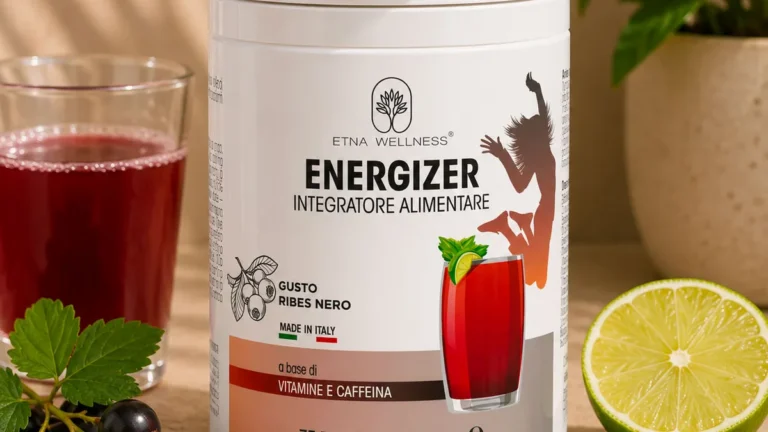
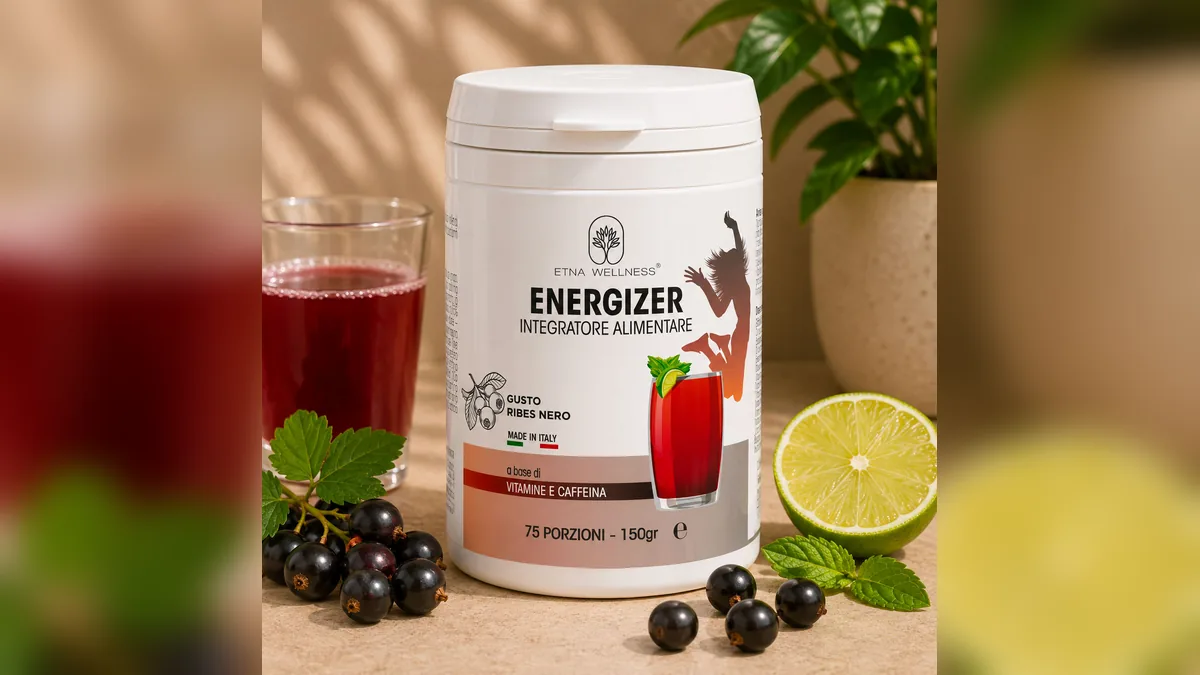
Energizer Etna Wellness is the stimulant-oriented example. The current project English catalogue identifies it as a powdered food supplement with natural extracts, a vitamin complex and caffeine, and gives a three-times-daily serving pattern.
This makes caffeine timing and total daily stimulant intake central to the decision. It should not be treated as automatically “better” than a nutrient formula simply because the effect may feel more immediate.
Life: broader vitamin-based formula
Life Etna Wellness is a different architecture. Current official English source material describes a 120 g powder with B vitamins, vitamin C, freeze-dried royal jelly and acetyl-L-carnitine, used at 5 g per day in 100 ml of water.
That places it closer to a broader nutrient-support route than a simple stimulant comparison.
R-Mineral: mineral and micronutrient route
R-Mineral Etna Wellness is another distinct branch. Current official English source material describes a 210 g powder with potassium, magnesium and calcium salts plus vitamin D3, chromium and selenium, prepared at approximately 6 g per day in 250 ml of still water.
Again, this is not the same buying question as choosing a caffeine-based product.
Which energy supplement is “best” for tiredness?
Persistent or unexplained tiredness is not a product-selection problem first. It can have many causes, including sleep, diet, stress, illness, medication and nutrient deficiency.
If tiredness is ongoing, severe or unexplained, appropriate medical assessment matters more than trying progressively stronger supplements.
Which is better: caffeine or vitamins?
Neither is universally better because they serve different roles.
Caffeine can increase alertness acutely. Vitamins and minerals participate in normal physiological processes, but they are not equivalent to a stimulant.
Which is better for work or study?
Start by separating physical tiredness, sleepiness and difficulty concentrating.
If the main issue is focus rather than energy, a dedicated focus comparison is more useful. If the issue is insufficient sleep, no supplement should be used to normalise chronic sleep deprivation.
Do energy supplements cause a crash?
That depends on the formula, caffeine amount, timing, food intake, sleep, individual sensitivity and other factors.
Avoid treating “no crash” as a guaranteed finished-product claim unless the exact evidence supports it.
Can you combine energy supplements?
Do not assume stacking creates better results. Combining stimulant products can increase total caffeine exposure, while combining multiple vitamin/mineral products can create unnecessary overlap.
Compare the formulas first and add a second product only when it answers a genuinely different need.
How this page differs from the broad Energy Supplements owner
This page owns the criteria-led “best energy supplements” comparison intent.
The broader Energy Supplements: How to Compare Vitamins, Minerals and Stimulant Formulas page remains the category explainer and should carry the deeper education around formula families.
Picture your day before choosing
Imagine the exact moment you plan to use the product. Is it 8:00 in the morning, 15:00 during a long workday, before exercise, or simply part of a daily nutrient routine?
If the timing and need are clear, the correct formula family becomes easier to identify. If they are not, choosing the strongest-looking product usually adds confusion rather than value.
Choose the energy route before the product
If you are still deciding between stimulant, vitamin or mineral support, start with the needs guide. If you want help comparing current labels, ask for information. If you are ready to inspect current Etna Wellness products, create customer access and verify the live label, serving, price and availability before ordering.
Ask for help comparing energy formulas
Create customer access & check current products
Creating customer access does not place an order. On mobile, scroll down, complete your customer details, enter the official shop, then verify the current product, formula, serving, price and availability before ordering.
Frequently asked questions
What is the best energy supplement?
There is no single best product for everyone. First decide whether you need stimulant-led alertness, vitamin-based support, mineral support or a different route entirely.
Are energy supplements the same as pre-workouts?
No. Some overlap exists, but pre-workout products are usually designed around exercise performance contexts, while energy supplements can have broader daytime roles.
Do B vitamins give instant energy?
No. B vitamins participate in normal metabolic processes, but they should not be presented as equivalent to an acute stimulant effect.
Is caffeine always the strongest energy option?
Caffeine can increase alertness, but higher caffeine is not automatically a better choice. Timing, total daily intake and individual tolerance matter.
Can I take Energizer and R-Mineral together?
Do not combine products automatically. First check whether each formula answers a distinct need and review the current labels for overlapping ingredients, directions and warnings.
When should persistent tiredness be checked medically?
If tiredness is persistent, unexplained, severe or associated with other symptoms, seek appropriate medical assessment rather than relying only on supplements.
A few useful notes before you choose
Use the current label as the final reference for serving, ingredients, caffeine, allergens and warnings. If you are pregnant or breastfeeding, take medicines, have a medical condition, are sensitive to caffeine or are considering several overlapping supplements, seek appropriate professional advice.
Food supplements should not be used as substitutes for a varied, balanced diet, healthy lifestyle or adequate sleep.
Sources and verification
- ETNA.COM — Energy Supplements: How to Compare Vitamins, Minerals and Stimulant Formulas.
- ETNA.COM — Energizer Etna Wellness.
- ETNA.COM — Life Etna Wellness.
- ETNA.COM — R-Mineral Etna Wellness.
- Current official English Life and R-Mineral product pages plus the current project English catalogue for Energizer — used only for the formula-role and serving facts stated above; exact Energizer caffeine/ingredient quantities remain label-level verification items.
Independent distributor notice: this website is operated by an independent Etna Wellness distributor and is not the official corporate website. This guide provides comparison criteria rather than a ranked recommendation, and current product details should be verified from the live label and official shop.