When sleep feels less restorative than you would like, the first useful question is not “what is the strongest sleep supplement?” but “what kind of support am I actually looking for?”
Some products are built around botanicals, some around nutrients, and some markets treat ingredients such as melatonin very differently. That means the best comparison starts with ingredient role, dose, timing, regulatory context and the difference between supporting a routine and treating a sleep disorder.
A clearer decision starts with three questions: What is disrupting the routine? Which ingredient family is being used? Is the product appropriate and legally available in your country?
For the product-specific formula, use Relax Etna Wellness: Ingredients, Melatonin, Dose & Sleep Guide. For a broader UK comparison framework, see Best Sleep Supplements UK.
Start with the sleep need, not the product name
“Sleep support” can describe very different situations: difficulty winding down, an inconsistent bedtime routine, travel-related disruption, or persistent sleep problems that deserve proper assessment.
Those situations should not automatically be treated as the same need. A supplement can be part of a routine, but it should not be used to disguise or delay assessment of persistent sleep problems.
1. Compare the ingredient family
Sleep-oriented formulas may combine several ingredient types. Botanicals such as chamomile, lemon balm, hawthorn and fennel are different from compounds such as inositol, and different again from melatonin.
Seeing several familiar ingredients on one label does not mean the formula is automatically stronger or more suitable. The useful question is what role each ingredient is intended to play and whether the finished-product wording is supported.
2. Timing is part of the formula
A product taken at breakfast and a product designed for an evening routine are not interchangeable simply because both are supplements.
For sleep-related products, check the label for the recommended time of use, number of capsules or servings, and any directions linked to meals, bedtime or travel. Do not invent a timing rule from the ingredient list alone.
3. Dose matters more than ingredient-name recognition
Ingredient names can create a strong impression, but the meaningful comparison requires the actual amount and the conditions attached to any permitted claim.
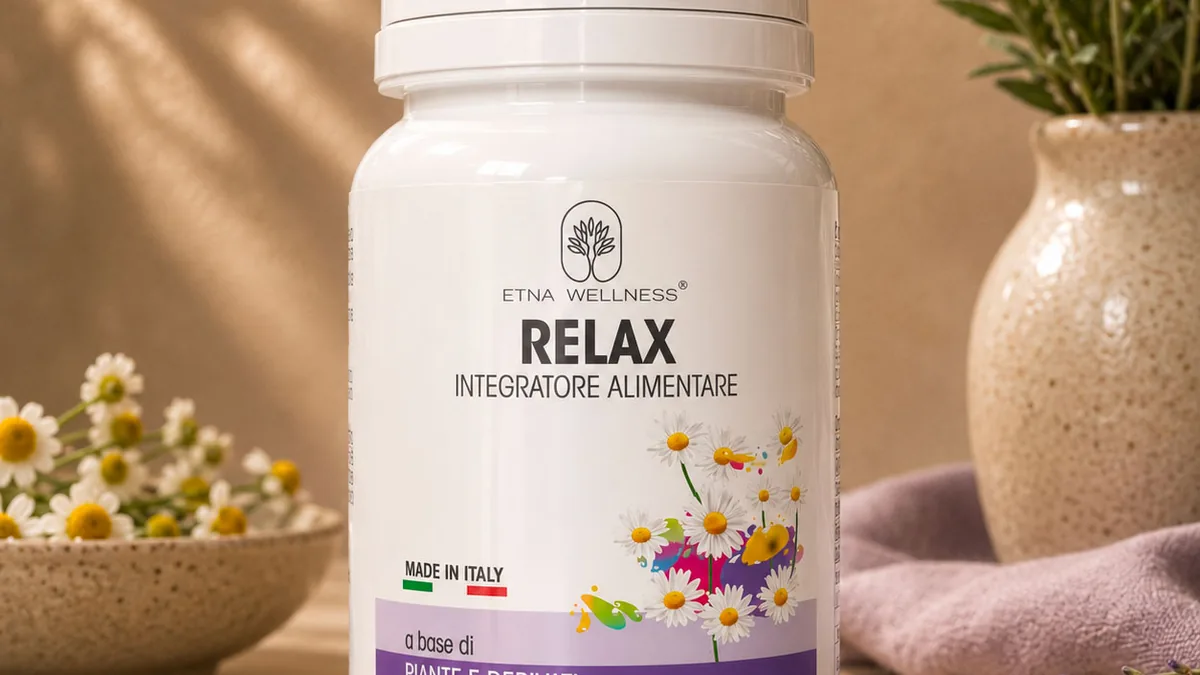
For the Etna Wellness product Relax, current verified project evidence identifies a formula containing melatonin, chamomile, lemon balm, hawthorn, inositol and fennel. Exact current amounts and market-specific directions remain subject to direct label verification, so this category guide does not reproduce unverified quantitative figures.
4. Melatonin changes the UK discussion
In the United Kingdom, melatonin is treated as a prescription-only medicine. NHS guidance states that melatonin is available on prescription only, and MHRA guidance treats medicinal status and borderline products separately from ordinary food supplements.
That means an international product containing melatonin should not be assumed to be available or appropriate for sale as a food supplement in the UK simply because it exists in another market.
For UK readers, the practical rule is simple: verify the current legal status and local availability before considering any melatonin-containing product.
5. Sleep support is not the same as treating insomnia
Food supplements cannot be presented as treatments, preventatives or cures for disease. A sleep-oriented article therefore needs a clear boundary between supporting an evening routine and treating insomnia or another sleep disorder.
If sleep problems are persistent, severe, associated with breathing problems, significant daytime impairment or other concerning symptoms, the right next step is clinical assessment rather than progressively adding more supplements.
Where Relax fits — and where it does not
Relax is relevant as a worked example of a multi-ingredient sleep-oriented formula, not as proof that a multi-ingredient formula is automatically better.
Its current verified project formula includes melatonin together with several botanical ingredients and inositol. That makes it structurally different from a single-botanical product or a nutrient-only product.
Because melatonin has market-specific regulatory implications, especially in the UK, Relax should only be considered after confirming country eligibility, current label details and current availability.
More ingredients do not automatically mean better sleep support
A long ingredient list can increase perceived value, but only when each component adds a clear and justified role. If several ingredients are included simply to make the label look more complete, complexity can work against clarity.
For some people, a simpler routine may be easier to understand and follow. For others, a broader formula may make sense. The decision should follow the need, not the number of ingredients.
How ethical upselling should work in the sleep category
A sleep formula should not automatically lead to a second product for stress, energy, focus or weight management.
A second product only adds value if there is a distinct second need that can be explained separately. If the only need is an evening routine, increasing the number of products without a clear reason adds friction rather than value.
Picture the evening routine before you buy
Imagine the formula as part of a normal weekday after the novelty of the purchase has worn off. Is the timing easy to remember? Is the serving practical? Do you understand why each ingredient is there? Is the product legally available in your country?
That future routine is a better indicator of fit than a dramatic “strongest sleep aid” label.
A six-question sleep-supplement fit check
- What am I actually trying to improve: routine, wind-down, travel disruption or a persistent sleep problem?
- Which ingredient family does the formula use?
- Are the dose and timing clearly stated on the current label?
- Does the formula contain melatonin or another ingredient with country-specific regulatory status?
- Am I comparing routine support rather than expecting treatment of insomnia?
- Would this routine still feel simple and sensible after several weeks?
Choose the need before you choose the sleep formula
If you are still identifying the need, start from the Needs Guide. If you want help understanding ingredient roles or country-specific availability, use the information request before creating customer access.
Ask about ingredients & country availability
Create customer access & check your local range
Creating customer access does not place an order. On mobile, scroll down on the registration page, complete your customer details, enter the shop and verify the current product, format, price, availability and country eligibility before ordering.
Frequently asked questions
Are sleep supplements the same as sleeping medicines?
No. Food supplements and medicines are different regulatory categories. A supplement should not be presented as treating insomnia or another sleep disorder.
Is melatonin a food supplement in the UK?
UK NHS guidance states that melatonin is available on prescription only. For that reason, UK readers should not assume that an international melatonin-containing supplement can be sold locally as an ordinary food supplement.
What ingredients are currently associated with Relax in the ETNA.COM evidence set?
Melatonin, chamomile, lemon balm, hawthorn, inositol and fennel. Exact current amounts and directions require current direct-label verification before publication as quantitative product facts.
Does a formula with more ingredients work better?
Not automatically. A longer formula only adds value when its extra ingredients have a clear reason to be there and the finished-product claims remain evidence-based.
When should sleep problems be assessed rather than self-managed?
If they persist, significantly affect daytime functioning, or are accompanied by other concerning symptoms, an appropriate healthcare assessment can clarify the next step.
If magnesium is the specific ingredient route you want to compare, continue with the magnesium for sleep supplements guide, which separates magnesium form, elemental amount, serving and safety from broader sleep claims.
Bottom line
Compare sleep supplements by need, ingredient family, dose, timing, evidence and country-specific regulatory status. The right decision is not the formula with the longest label; it is the one whose role, use and availability are clear.
A few useful notes before you choose
This guide deliberately keeps treatment language out of the supplement decision. Sleep support should not be used as a substitute for assessment of persistent insomnia or suspected sleep disorders.
For UK readers, melatonin requires particular care because NHS guidance describes it as prescription-only. Always verify the current local status of a melatonin-containing product rather than assuming that availability in another country applies to the UK.
As a simple final check, follow the current label and local rules for the exact product you are considering. If you take regular medicines, are pregnant or breastfeeding, or have an existing condition, a suitability check with an appropriate healthcare professional can add confidence.
Sources and verification
This guide uses current Etna Wellness documentation for the Relax ingredient family — melatonin, chamomile, lemon balm, hawthorn, inositol and fennel — while keeping exact quantitative details tied to the latest product label. For UK readers, melatonin status is treated separately because NHS and UK government guidance do not support treating melatonin-containing products as ordinary retail food supplements.