Searching for the “best sleep supplements” can produce long rankings of magnesium, herbs, amino acids and melatonin products. But a useful comparison has to start with the reason sleep is difficult, the evidence behind each ingredient and the legal status of the product in your market.
For UK readers, one point is especially important: melatonin is a prescription-only medicine in the UK and melatonin supplements are not authorised for ordinary retail sale as food supplements. That means UK sleep-supplement comparisons should not copy US-style lists without adapting them to the UK regulatory context.
Quick answer: the best sleep supplement is not a universal winner. Compare the reason for poor sleep, ingredient evidence, dose transparency, timing, safety, medicine interactions, legal status and whether the formula addresses a real need rather than simply containing more ingredients.
Why sleep supplements need an evidence-first comparison
Sleep is influenced by many factors, including sleep timing, caffeine, alcohol, stress, pain, shift work, environment, medication and health conditions.
That means a supplement can only be one part of the picture. If the underlying issue is chronic sleep restriction, untreated sleep apnoea, persistent anxiety, pain or another medical problem, adding more supplements is unlikely to solve the root cause.
Step 1: define the sleep problem before choosing an ingredient
Different sleep complaints are not interchangeable:
- difficulty falling asleep;
- frequent waking;
- early waking;
- poor sleep timing;
- feeling tense before bed;
- sleep disruption linked to caffeine or late routines;
- daytime tiredness despite enough time in bed.
The more clearly you identify the pattern, the easier it becomes to judge whether a supplement category is even relevant.
Step 2: start with sleep hygiene before supplements
Supplements should not be used to compensate for a routine that is consistently working against sleep.
Basic checks include:
- consistent sleep and wake times;
- limiting late caffeine;
- reducing bright light and stimulating activity close to bedtime;
- keeping the bedroom dark, quiet and comfortable;
- avoiding heavy late meals where they disturb sleep;
- allowing enough time for sleep.
Step 3: compare ingredient evidence, not popularity
Some ingredients are widely marketed for sleep even when the human evidence is limited, inconsistent or highly dependent on the population studied.
A useful comparison asks:
- Are there human trials?
- Was the ingredient studied alone or only inside a blend?
- Was the dose similar to the commercial product?
- Were the participants healthy adults, older adults or people with diagnosed insomnia?
- Was the outcome falling asleep, total sleep time, subjective sleep quality or something else?
Step 4: do not transfer evidence from one ingredient to an entire formula
A commercial blend may contain magnesium, botanicals and amino acids, but evidence for one ingredient does not automatically prove the finished product improves sleep.
This is especially important with multi-ingredient formulas where the exact combination has never been studied.
Magnesium: useful to compare carefully
Magnesium is commonly included in sleep products because of its physiological role in the nervous system and because some studies have explored its relationship with sleep.
However, magnesium should not be presented as a guaranteed sleep treatment. The effect can depend on baseline magnesium status, population and formulation.
When comparing magnesium products, check:
- the magnesium salt used;
- the amount of elemental magnesium;
- the daily serving;
- other magnesium already used during the day;
- gastrointestinal tolerance;
- kidney-health considerations where relevant.
L-theanine and amino-acid style formulas
L-theanine is often used in evening or relaxation products and has been investigated in human studies for stress, relaxation and sleep-related outcomes.
The evidence is not the same as an authorised claim that a finished product “treats insomnia”.
As with other ingredients, compare the exact dose and whether the product is being positioned as general relaxation support or as a medical sleep treatment.
Botanical formulas: different herbs, different evidence
Valerian, passionflower, lemon balm, ashwagandha and other botanicals are frequently grouped together in sleep products.
That can be misleading because each botanical has its own evidence base, preparation method, dose and safety considerations.
Do not assume that a longer botanical list means a stronger formula.
Melatonin: the UK distinction that cannot be ignored
In some countries, melatonin is sold as a supplement. In the UK, the situation is different.
The NHS states that melatonin is available on prescription only, and that melatonin supplements sold as complementary products in some countries are not authorised for sale in the UK.
For this reason, a UK-focused article should not present an ordinary melatonin supplement as a standard over-the-counter food-supplement option.
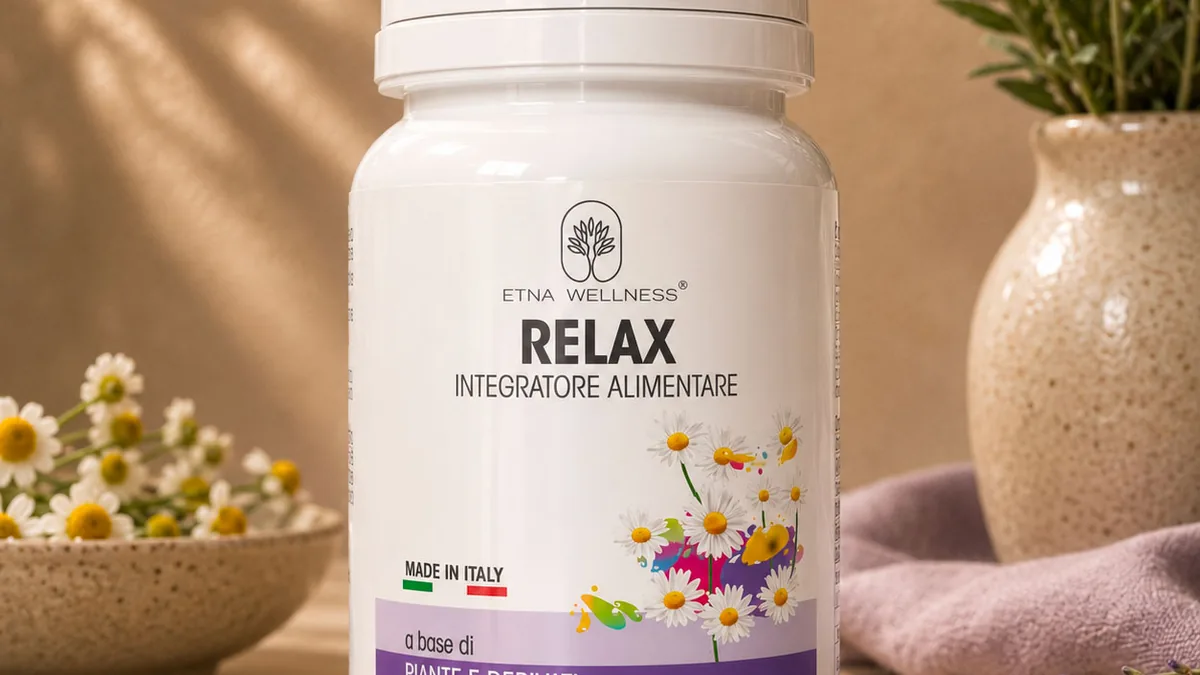
What this means for Etna Wellness Relax
Relax Etna Wellness contains melatonin according to the current Etna Wellness product documentation.
That means it should not be used as an ordinary UK food-supplement product bridge unless a compliant UK route is explicitly verified.
The product can still be discussed in broader international editorial context where market-specific legality and availability have been checked, but this UK comparison does not direct readers to purchase it.
Step 5: compare timing
Timing can matter as much as ingredient choice.
Questions to ask include:
- Is the product intended 30–60 minutes before bed?
- Does it contain anything stimulating?
- Could it increase next-day drowsiness?
- Does it interact with evening medicines?
- Does the label advise a specific schedule?
Step 6: check medicine interactions and personal context
Sleep products can interact with medicines or be unsuitable in certain situations.
Extra care is appropriate if you:
- take sedating medicines;
- take antidepressants or other psychiatric medicines;
- take medicines for blood pressure or other chronic conditions;
- are pregnant or breastfeeding;
- have kidney or liver disease;
- have unexplained persistent sleep problems.
Step 7: avoid “stronger” as a decision shortcut
A formula with more ingredients, higher doses or more sedating positioning is not automatically better.
For sleep, the best-fitting option is often the one with the clearest rationale, simplest formula and safest fit for the user’s actual problem.
Step 8: compare the whole formula
| Criterion | What to look for | Common mistake |
|---|---|---|
| Ingredient evidence | Human evidence relevant to the actual use. | Assuming popularity equals proof. |
| Dose | Transparent amount per daily serving. | Using proprietary blends with unclear amounts. |
| Timing | Clear evening instructions. | Ignoring stimulant or medicine timing. |
| Safety | Warnings and interactions are visible. | Assuming “natural” means risk-free. |
| Legal status | Appropriate for the target market. | Copying US product advice into a UK page. |
Step 9: distinguish sleep support from insomnia treatment
Food supplements should not be presented as treatments for insomnia or other diagnosed sleep disorders.
If sleep problems are persistent, severe or associated with loud snoring, gasping, breathing pauses, restless legs, depression, severe anxiety or major daytime impairment, medical assessment is more appropriate than progressively stronger supplements.
Step 10: use a decision framework instead of a ranking
A practical sequence is:
- identify the sleep pattern;
- check sleep hygiene and obvious causes;
- decide whether a supplement is appropriate at all;
- compare ingredient evidence;
- check dose and timing;
- check interactions and warnings;
- verify UK legal status;
- choose the simplest formula that fits the need.
How this guide differs from the broader Sleep Supplements article
Sleep Supplements: How Ingredients, Timing and Claims Differ explains the broader category.
This guide narrows the decision to a criteria-led comparison. It is not a product ranking and does not replace the broader educational article.
Why this page does not rank Relax for UK readers
Current Etna Wellness product documentation confirms that Relax contains melatonin, but the current UK regulatory context prevents us from presenting it as an ordinary food-supplement purchase recommendation for UK readers.
That is a good example of why market relevance and local legal status must be considered separately: a product can be relevant internationally without being an appropriate ordinary retail option in the UK.
Picture the decision without the product names
Imagine the labels have no brand names. You can see only the active ingredients, doses, warnings, timing and legal status.
Would the same product still fit the sleep problem you identified? If yes, the choice is based on useful criteria rather than a ranked-list headline.
Start with the sleep problem, not the strongest-looking supplement
If you are unsure which kind of sleep support is relevant, begin with the needs guide or request information. For UK readers, melatonin-containing products should not be treated as ordinary food supplements without a compliant route.
Ask for current sleep-support information
Create customer access & check products available for your country
Creating customer access does not place an order. Availability and legal status vary by market. For UK customers, melatonin-containing products should not be treated as ordinary food supplements unless a compliant route is specifically verified.
Frequently asked questions
What is the best sleep supplement in the UK?
There is no single best option for everyone. Compare the sleep problem, ingredient evidence, dose, timing, safety, medicine interactions and UK legal status.
Can you buy melatonin supplements in the UK?
The NHS states that melatonin is prescription-only in the UK and that melatonin supplements sold as complementary products in some countries are not authorised for sale in the UK.
Is magnesium the best supplement for sleep?
Not universally. Magnesium may be relevant in some contexts, but evidence varies by population and baseline status. It should not be treated as a guaranteed sleep treatment.
Are herbal sleep supplements safer than medicines?
Not automatically. “Natural” does not mean risk-free. Herbs can cause side effects or interact with medicines.
Can I take several sleep supplements together?
Do not stack products automatically. Combining sedating ingredients or overlapping nutrients can increase risk without proving greater benefit.
Should I use supplements for persistent insomnia?
Persistent or severe sleep problems deserve appropriate medical assessment, especially when they cause major daytime impairment or suggest another sleep disorder.
A few useful notes before you choose
Use the current product label and UK guidance as the final reference for ingredients, warnings, legal status and suitability. If you take medicines, are pregnant or breastfeeding, have a medical condition or have persistent sleep problems, seek appropriate professional advice.
Food supplements are not substitutes for diagnosis, treatment, adequate sleep opportunity or healthy sleep habits.
Sources and verification
- NHS — Common questions about melatonin.
- NHS — About melatonin.
- Food Standards Agency / GOV.UK — Food supplements guidance.
- GOV.UK — Nutrition, health claims and supplement labelling.
- ETNA.COM — Sleep Supplements: How Ingredients, Timing and Claims Differ.
Independent distributor notice: this website is operated by an independent Etna Wellness distributor and is not the official corporate website. This page provides a decision framework rather than a ranked recommendation.