Do collagen supplements work? The most accurate answer is: some collagen preparations have shown benefits in clinical research, but the evidence is not strong enough to assume that every collagen product will produce the same result for every person.
That distinction matters. “Collagen supplements work” is too broad. A better question is which outcome, which collagen preparation, which dose, which population and how strong was the study?
Quick answer: current reviews suggest potentially useful effects for several skin and musculoskeletal outcomes, but study quality, formulation, dose and duration vary. Evidence for one collagen preparation should not be transferred automatically to every commercial supplement.
Why this question is harder than it looks
Collagen supplements are not one uniform intervention. Studies use different sources, peptide sizes, doses, combinations, durations and participant groups. Some trials examine skin hydration or elasticity. Others examine joints, bone, muscle or tendon-related outcomes.
So when someone asks whether collagen “works”, the first task is to define what “works” means.
- Improved skin hydration?
- Improved skin elasticity?
- Reduced wrinkle depth?
- Changes in joint-related outcomes?
- Changes in bone or muscle outcomes?
- Support during a specific rehabilitation context?
Those are separate evidence questions.
Do collagen supplements really work? What the 2026 evidence says
A 2026 umbrella review pooled evidence from systematic reviews covering 113 randomised controlled trials and 7,983 participants. It reported favourable pooled findings across several skin, musculoskeletal and osteoarthritis-related outcomes, while results for oral-health and cardiometabolic outcomes were more mixed.
That is meaningful because an umbrella review sits above individual trials in the evidence hierarchy. But it still inherits the limitations of the underlying reviews and studies, including variation in products, doses and populations.
The practical interpretation is not “collagen is proven for everything”. It is that there is a substantial clinical evidence base, with stronger support in some outcome areas than others.
What the evidence says about skin
A 2026 systematic review of randomised controlled trials of oral hydrolysed collagen found improvements over placebo in many studies examining skin hydration, elasticity and wrinkle-related measures.
However, the same review also reported that the majority of included trials had a high risk of bias and concluded that larger, better-standardised and longer-term trials are still needed.
This is an important example of how to read supplement evidence properly: encouraging results and methodological caution can both be true at the same time.
So does collagen improve skin hydration and elasticity?
The current research supports a reasonable possibility of benefit from some oral collagen preparations, especially hydrolysed collagen peptides, for measures such as hydration and elasticity.
What it does not prove is that every collagen powder, gummy, capsule or drink will produce the same magnitude of effect. A product should not inherit a study result merely because the word “collagen” appears on its label.
What about wrinkles?
Several trials and reviews report improvements in wrinkle-related outcomes, but the same limitations apply: formulations differ, study durations vary, sample sizes can be modest and risk of bias is not always low.
That makes “may support measurable skin outcomes in some research settings” more defensible than “collagen removes wrinkles”.
What does the evidence say about joints and musculoskeletal health?
The 2026 umbrella review reported favourable pooled findings across several musculoskeletal outcomes, including areas related to bone, muscle and osteoarthritis.
But musculoskeletal evidence is especially sensitive to context. Collagen source, peptide preparation, dose, exercise or rehabilitation programme, age and underlying condition can all affect interpretation.
For tendon and ligament outcomes, a 2026 systematic review found the evidence promising in some contexts but limited by substantial heterogeneity in supplementation protocols, training and outcome measures. That makes strong universal claims inappropriate.
Collagen evidence is preparation-specific
One of the most common mistakes in supplement marketing is to take evidence from a particular hydrolysed collagen preparation and apply it to an unrelated finished product.
To avoid that mistake, separate three levels:
| Evidence level | What it can support | What it cannot automatically support |
|---|---|---|
| Collagen category evidence | General context about oral collagen research. | A guaranteed result from a specific brand. |
| Ingredient/preparation evidence | Evidence for a defined collagen source, peptide preparation or dose. | An unrelated formula with different composition or dose. |
| Finished-product evidence | Claims specifically studied on that exact product, if robust evidence exists. | Broader disease-treatment or guaranteed-outcome claims. |
formula facts is not evidence for the finished-product claim, and ingredient-level evidence is not finished-product claim.
Does dose matter?
Yes. Clinical trials use defined daily amounts, and different studies use different doses. That means a product containing collagen is not automatically comparable with a trial unless the preparation and dose are meaningfully similar.
This is why a good label comparison should include the actual daily collagen amount rather than only pack size or scoop weight.
Does hydrolysed collagen matter?
Many oral collagen trials use hydrolysed collagen or collagen peptides. Hydrolysis breaks collagen into smaller peptides.
That tells you something about processing, but “hydrolysed” is not a guarantee of effectiveness by itself. The evidence still depends on the preparation, dose, study design and outcome measured.
Marine vs bovine: does the source prove which works better?
No universal ranking is supported by source alone. Marine and bovine collagen differ in origin and typical collagen composition, but the more useful evidence question is whether the specific preparation and dose were studied for the outcome you care about.
Source can still be important for allergens, dietary preference and formula choice.
How long do collagen supplements take to work?
There is no single evidence-based timeline that applies to every collagen product and every outcome. Trials typically run for weeks or months rather than days, and the time point depends on the outcome being measured.
Be cautious with claims promising visible or functional results within an exact short period unless the claim is tied to appropriate evidence for that exact preparation.
Who is most likely to benefit?
Current research includes different populations, including healthy adults and people with musculoskeletal conditions. That makes it difficult to define one universal “ideal user”.
Age, baseline diet, protein intake, health status, activity level and the specific outcome being targeted can all influence relevance.
What collagen supplements cannot replace
Collagen supplements should not be treated as substitutes for adequate nutrition, medical assessment, rehabilitation, resistance training, sun protection or condition-specific treatment.
If the main goal is skin health, lifestyle factors such as UV exposure and smoking still matter. If the main goal is joint or tendon recovery, appropriate diagnosis, loading and rehabilitation can be central.
Are collagen supplements worth it? Use the evidence to decide
Instead of asking “does collagen work?”, use the evidence to ask better product questions:
- What outcome am I actually interested in?
- What collagen form and source does the product use?
- How much collagen does the daily serving provide?
- Are supporting ingredients clearly quantified?
- Is the marketing claim stronger than the evidence?
- Does the product fit a routine I can maintain?
For the broader buying framework, see Collagen Supplements: Types, Sources, Evidence & How to Choose.
How Etna Wellness collagen products fit the evidence question
Etna Wellness collagen formulas should be evaluated using the same rules as any other products. Their labels can establish what they contain, the source, the serving and supporting ingredients. That does not automatically establish a clinical effect for the finished product.
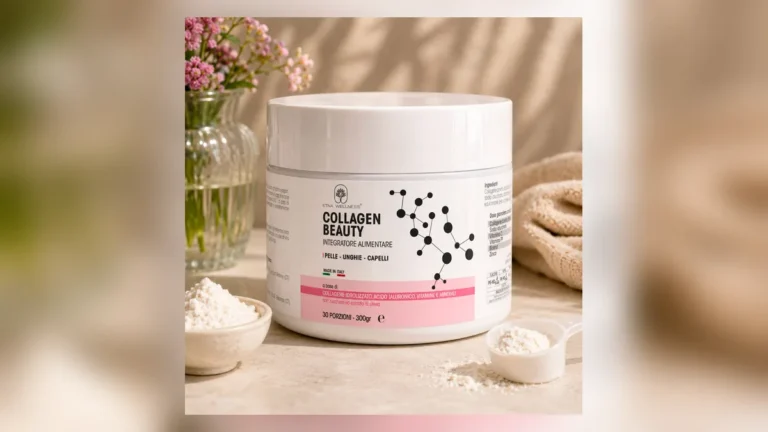
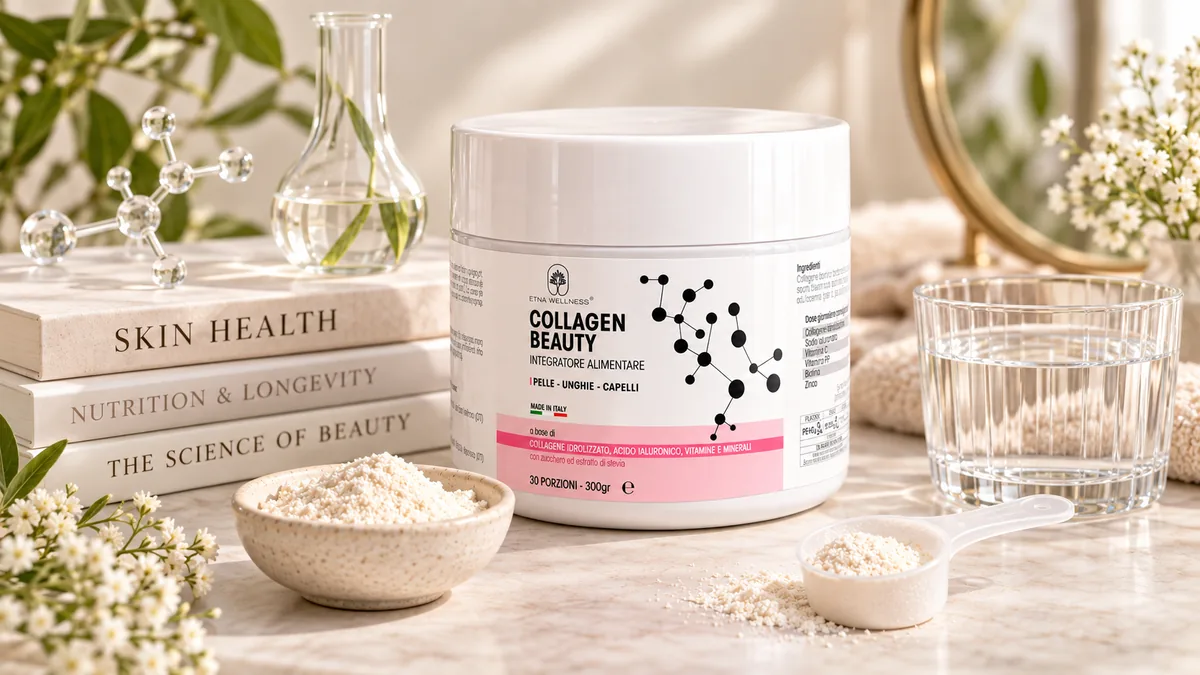
For example, the current supplied Collagen Beauty technical sheet documents a daily serving containing hydrolysed collagen, sodium hyaluronate and vitamin C. That supports accurate formula description. It should not be converted into a guaranteed anti-wrinkle or joint-treatment claim.
If your decision is specifically between a beauty-oriented and mobility-oriented formula, use the Collagen for Skin vs Joints guide. For the dedicated Collagen Beauty product owner, see Collagen Beauty Etna Wellness.
When the evidence should make you more cautious, not less
A large number of studies can create confidence, but evidence quality still matters. When reviews identify high risk of bias, heterogeneous products or inconsistent methods, the correct response is to narrow the claim, not ignore the evidence.
Good evidence-led communication should therefore be comfortable saying both:
- “there are encouraging findings”, and
- “we cannot assume every product will produce the same result”.
Picture the decision after the marketing disappears
Imagine the front-of-pack claims are hidden. You can only see source, form, daily dose, co-ingredients, warnings and price. Would the product still make sense for the outcome you care about?
If yes, your decision is probably being driven by formula fit. If not, the marketing may be doing more work than the evidence.
Use the evidence to narrow the choice
If you are still deciding what type of collagen support fits your priority, start with the needs guide. If you already know the route but want help comparing formulas, ask for information. If you are ready to check current products, create customer access and verify the live label, format, price and availability in the official shop.
Ask for help comparing collagen formulas
Create customer access & check current products
Creating customer access does not place an order. On mobile, scroll down, complete your customer details, enter the official shop, then verify the current product, format, price and availability before ordering.
Frequently asked questions
Do collagen supplements work for skin?
Several randomised trials and reviews report improvements in hydration, elasticity and wrinkle-related outcomes with some oral collagen preparations. However, study quality and formulations vary, so the evidence should not be treated as a guarantee for every product.
Do collagen supplements work for joints?
There is research supporting potentially useful musculoskeletal outcomes in some contexts, but products, doses, populations and study methods differ. Persistent joint symptoms require appropriate assessment rather than relying only on supplements.
How long does collagen take to work?
There is no universal timeline. Trials usually assess outcomes over weeks or months, and the relevant duration depends on the preparation and outcome.
Is hydrolysed collagen proven to work?
Hydrolysed collagen is widely studied and has encouraging evidence in several areas, but “hydrolysed” alone does not guarantee a result from every product.
Is marine collagen more effective than bovine collagen?
Source alone does not establish a universal winner. Compare the exact preparation, dose, evidence, allergens and your dietary preferences.
Can collagen supplements replace medical treatment?
No. Supplements should not replace diagnosis, treatment or rehabilitation where these are needed.
A few useful notes before you choose
Use the current product label as the final reference for ingredients, serving, allergens and warnings. If you are pregnant or breastfeeding, take medicines, have a medical condition or are considering collagen for persistent pain or a diagnosed musculoskeletal problem, seek appropriate professional advice.
Evidence discussed here describes research populations and preparations, not guaranteed individual outcomes.
Sources and verification
- 2026 umbrella review — Collagen Supplementation for Skin and Musculoskeletal Health.
- 2026 systematic review — Hydrolysed collagen supplementation and skin outcomes.
- 2026 systematic review — Collagen supplementation and tendon-related outcomes.
- Current Etna Wellness collagen technical materials — used only for formula-specific facts.
Independent distributor notice: this website is operated by an independent Etna Wellness distributor and is not the official corporate website. Product information is provided for general informational purposes and does not replace the current product label or professional medical advice.