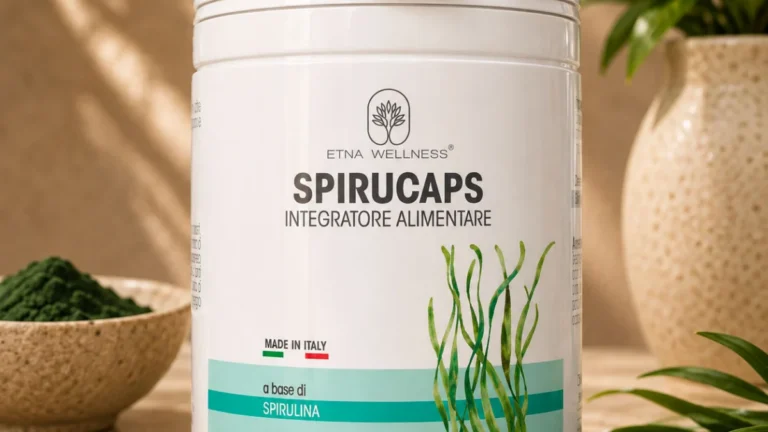
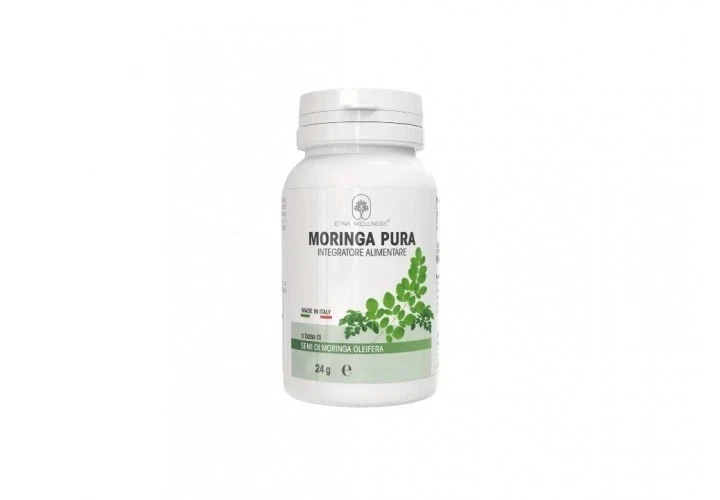
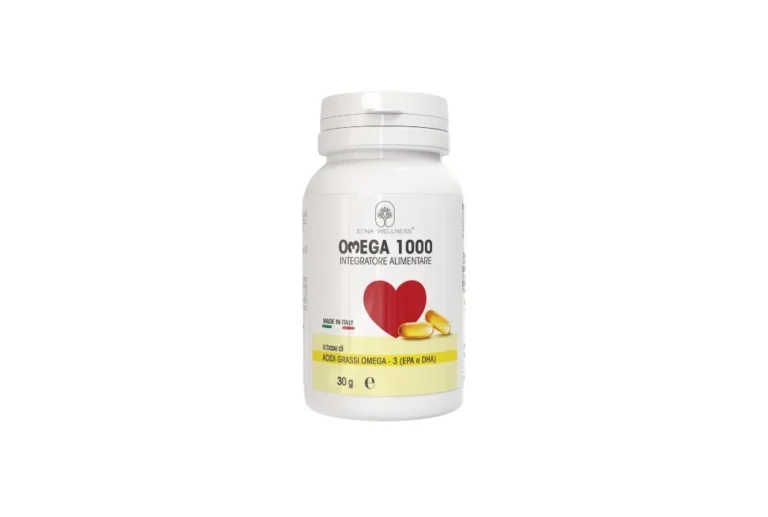
Spirulina looks like a simple supplement until you try to choose one. Capsules, tablets and powders can all carry the same familiar name, yet the daily routine, serving size, source information and label transparency can feel very different.
The useful decision is therefore not “which spirulina sounds strongest?”. It is which format and formula make the most sense for the way you actually want to use it.
Start from the routine: do you want the convenience of capsules, or do you genuinely prefer measuring and mixing a powder? Once the format is clear, dose, source and label quality become much easier to compare.
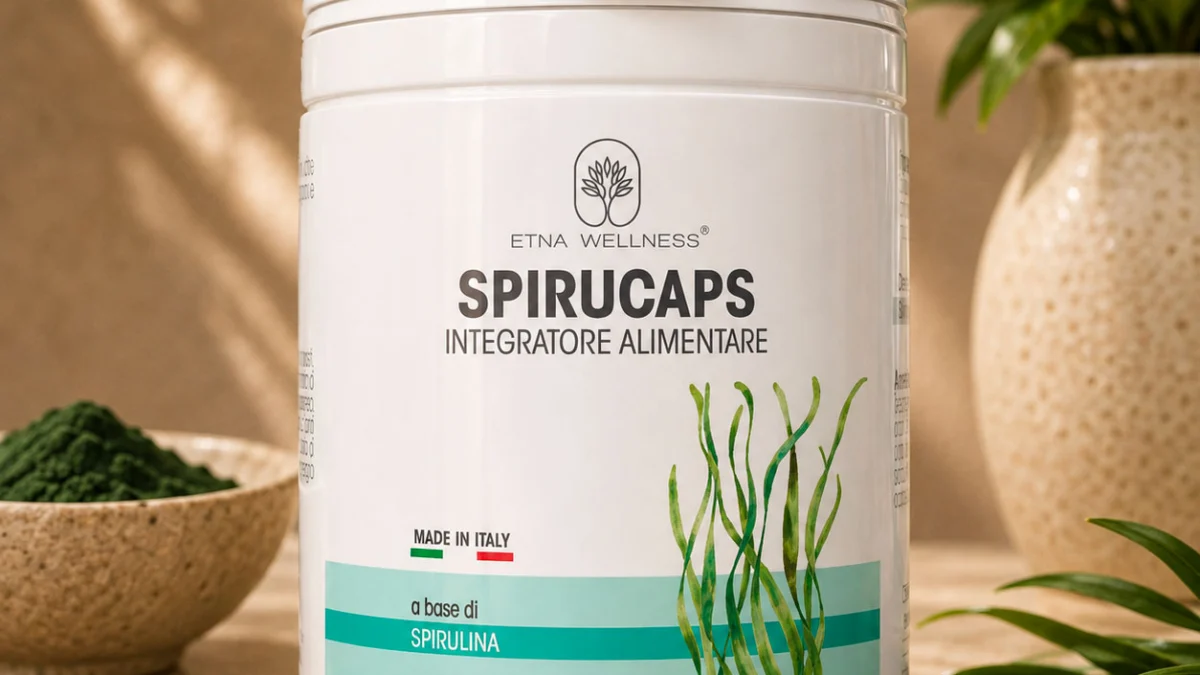
For the Etna-specific capsule format, continue with the Spirucaps Etna Wellness guide. If you are comparing spirulina with broader multi-ingredient wellness formulas instead, see the Immune Supplements comparison guide and compare each formula by its actual declared ingredients.
Why format changes the value of the product
Two spirulina products can contain the same general ingredient category but create very different daily experiences.
A powder asks you to measure, mix and accept the taste. Capsules remove those steps and make the serving more portable. Neither format is automatically more effective, but one may be much easier for you to use consistently.
This is where perceived value becomes practical: the product that fits your routine better may be the product you are more likely to keep using.
Capsules vs powder: what are you really choosing?
| Format | Practical value | What to check |
|---|---|---|
| Capsules | Simple, portable and easy to repeat without measuring. | Capsule count, amount per capsule, total daily serving and other ingredients. |
| Powder | Flexible serving format for people who prefer mixing into drinks or foods. | Serving weight, measuring method, taste, storage and source information. |
Why the species and source deserve more attention than the word “superfood”
“Superfood” is a marketing shortcut. It tells you very little about the exact product.
A better label comparison starts with the declared species or source. Spirulina products commonly identify Arthrospira platensis, but what matters commercially is whether the exact product tells you clearly what it contains, how much you take and where any quality or organic statement comes from.
That shift is useful because it turns an emotional label into a practical decision: you are no longer buying the reputation of spirulina; you are choosing a specific product with a specific routine.
Dose transparency matters more than a bold milligram number
One of the easiest mistakes is comparing the biggest number on the front of the pack.
A meaningful comparison should tell you the recommended daily amount, not only the amount in one capsule or scoop. A product with smaller capsules taken several times can provide a different daily total from a product with fewer larger capsules.
More milligrams do not automatically mean more value. The useful question is whether the amount is clearly documented and whether the serving fits the routine you want.
Where Spirucaps fits
The current English Etna Wellness catalogue identifies Spirucaps as a capsule-format supplement containing Arthrospira platensis, with current directions of 3 capsules per day, away from meals.
That gives Spirucaps a clear place in the decision tree: it is for the person who values a simple capsule routine rather than preparing spirulina powder.
The current project source set does not yet provide a direct current English technical sheet confirming the exact amount per capsule or total daily milligrams. Those figures are therefore intentionally left out rather than carried forward from older material.
This does not weaken the comparison. It makes the value proposition clearer: Spirucaps currently wins on routine simplicity and label identity, while the quantitative detail remains something to verify on the current product label before purchase.
When capsules may create more perceived value
Imagine a normal weekday rather than the first day you open the product. If you travel, eat away from home or simply dislike measuring green powder, capsules may make the routine feel much easier.
That convenience is not evidence of greater biological effectiveness. It is evidence of better behavioural fit.
And behavioural fit matters because an inconvenient product can have high theoretical value but low practical value if you stop using it.
When powder may still be the better fit
Powder can make more sense when you already prepare smoothies, shakes or other measured drinks and prefer seeing the amount you add yourself.
For that person, the extra preparation is not friction; it is part of the ritual.
The important point is that neither format should be positioned as universally superior. The stronger decision is the one that matches the routine you can realistically maintain.
How ethical upselling should work in the spirulina category
Spirulina should not automatically become a reason to add an energy product, an immune product or a multivitamin.
For a broader comparison of energy and nutrient-support formula types, see the energy and nutrient-support comparison.
A second product should enter only when there is a second need that is genuinely separate. If the reader is simply looking for a convenient spirulina routine, adding more products does not automatically increase value.
Upselling becomes useful only when the additional formula answers another clearly identified need and the customer can understand why it belongs there.
A five-point spirulina decision check
- Format: capsules or powder — which one fits your day?
- Identity: is the species/source clearly declared?
- Daily serving: can you see the total recommended amount, not just one unit?
- Transparency: are organic, sourcing or quality claims documented clearly?
- Routine fit: can you picture yourself using it consistently after the novelty has passed?
When those five points are clear, the decision becomes much simpler and the perceived value becomes more concrete.
Picture the routine after three weeks
Imagine that the product is already part of your day. You are not thinking about marketing anymore; you are simply following the routine.
Do three capsules away from meals feel easy? Would you prefer measuring powder? Does the label give you enough information to feel confident about what you are taking?
That future view is often more useful than comparing dramatic claims because it tells you whether the product actually fits the life you have.
Choose the format first, then verify the current Spirucaps label
If you are still deciding whether spirulina is the right route for your need, start from the wider needs guide. If a capsule-format spirulina already fits what you are looking for, ask for current product information or create customer access and verify the present Spirucaps label, price and availability before deciding whether to order.
Ask about the current Spirucaps formula
Create customer access & check Spirucaps
Creating customer access does not place an order. On mobile, scroll down on the registration page, complete your customer details, enter the shop and verify the current product, formula, format, price and availability before ordering.
Frequently asked questions
Is spirulina powder better than capsules?
Not automatically. The main difference is format and routine. The better option is the one whose current serving and preparation fit you more naturally.
What species is listed for Spirucaps?
The current English catalogue identifies Arthrospira platensis.
How is Spirucaps currently used?
The current English catalogue states three capsules per day, away from meals.
Why is the exact milligram amount not shown here?
Because the current project source set has not yet closed that quantitative fact with a direct current English technical sheet or label.
Does a higher spirulina dose automatically mean a better product?
No. Dose is only one part of the comparison; source transparency, serving instructions, formula quality and routine fit also matter.
Bottom line
The useful spirulina decision is not “powder or capsules: which is stronger?” but “which format gives me the clearest, easiest routine with a label I understand?” Spirucaps currently offers a simple capsule route built around Arthrospira platensis and three capsules per day, while exact quantitative details should be confirmed on the current label.
A few useful notes before you choose
Spirulina is often surrounded by broad “superfood”, detox, immunity and energy language online. A calmer way to compare products is to keep those broad messages separate from the exact formula in front of you and focus on what the current label actually documents.
For Great Britain, commercial supplement communication should remain within the authorised nutrition and health claims framework, so general enthusiasm for spirulina should not be turned into promises to prevent, treat or cure disease.
As a simple final check, follow the current label for the specific product you choose. If pregnancy, breastfeeding, regular medicines, allergies or an existing condition are relevant to you, a suitability check with an appropriate healthcare professional can add confidence.
Sources and verification
This draft uses the current ETNA.COM project source lock for Spirucaps: capsule format, Arthrospira platensis and three capsules per day away from meals. Exact per-capsule and daily milligram quantities remain intentionally gated until a direct current English technical sheet or label is available. No detox, disease-treatment, immunity or weight-loss claim is adopted.