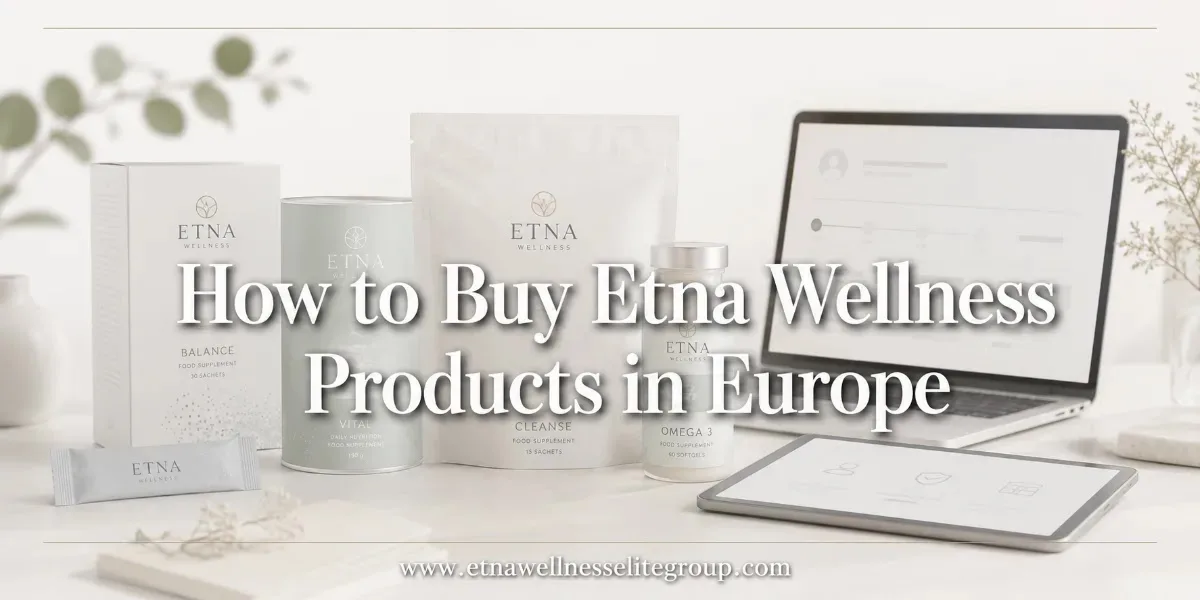
Buying Etna Wellness products from Europe is easier once you know which step comes first. You do not need to start with an old price list or search for a direct product checkout. The practical journey begins with customer access and continues inside the Etna Wellness ordering area, where you can check the products, formats, prices, delivery options and payment methods available for your profile before confirming an order.
Author: wpusername8240
-
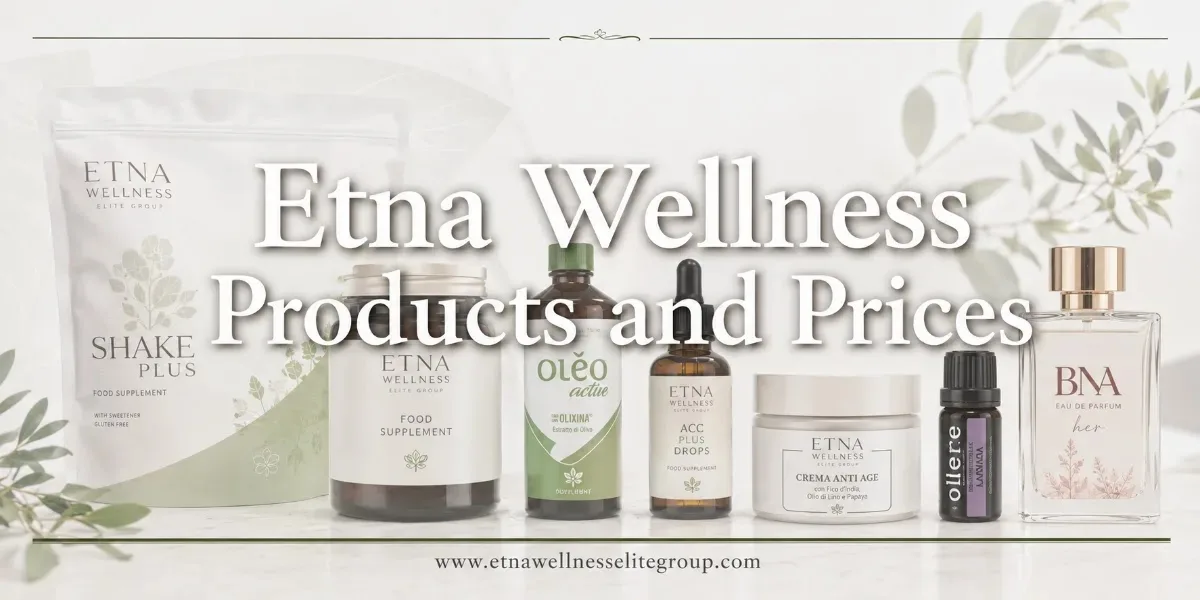
Etna Wellness Products and Prices: English Buyer’s Guide
If you are searching for Etna Wellness products and prices in English, the most useful answer is not an old fixed price table. It is a clear view of the product families, an explanation of how pricing works and a reliable way to verify the current amount for your market before you order.
This guide is designed for that purpose. It helps you compare the main Etna Wellness product areas, understand where individual product guides add more detail and avoid treating an archived price list as though it were a current 2026 quotation.

Price-source status: the English EU price list supplied for this review is dated 26 September 2024. It is useful as historical reference material, but it is not a current 2026 price source. For that reason, this page does not present those old figures as today’s prices.
What products are in the Etna Wellness range?
The current English catalogue is organised into distinct product families rather than one undifferentiated list. The main areas include Protein Supplements, Food Supplements, Opus, Olixfit, Aikido, KE, Natural Cosmetics, Etere, Klèa and BNA. That structure is useful because a protein shake, a botanical supplement, a cosmetic, an essential oil and a fragrance should not be compared in the same way.
If you want to browse the structure of the range first, use the dedicated Etna Wellness Catalogue guide. This page has a different job: helping you connect product choice with realistic price verification.
Protein supplements and daily nutrition
The protein area includes products such as Shake Plus and other nutrition-focused formats. When comparing products in this family, look at the exact format, flavour, preparation directions and current label before comparing price alone. A larger pack can have a different buying logic from a smaller format, so the lowest number is not automatically the best fit for your routine.
Food supplements: compare the product, not just the price
The food-supplement range includes products with very different formulas and directions. Examples already covered in dedicated English guides include Burn Plus, AC Plus, K-Gel, Control Plus and Oleo Active.
For a botanical capsule example with its own formula, serving and safety profile, see the K-Plus Etna Wellness guide.
For these products, the right comparison starts with ingredients, daily amount, format, directions and suitability notes. Price becomes meaningful only after you know that you are comparing the correct product and format.
Opus, Olixfit and Aikido
These catalogue families have their own identities. Opus is built around prickly-pear-related products, Olixfit includes olive-leaf-focused products such as Olèo and Oleo Active, and Aikido includes mushroom-related supplements and coffee products. Keeping these lines separate makes it easier to compare like with like rather than using one generic “supplement price” as the deciding factor.
For the olive-leaf-focused route, see the Olèo Etna Wellness ingredients and use guide. For vitamin C, mushroom and antioxidant formula roles, use the Immune Supplements comparison guide.
KE, cosmetics, Etere and BNA
KE includes functional foods and snack-style products. Natural Cosmetics covers face and body care. Etere includes natural oils and essential oils. BNA includes fragrances and fragrance-related personal-care products. These categories use different formats, quantities and usage patterns, so price comparison should always stay within the relevant category.
Why you will not find a “current 2026 price list” copied here
The archived English EU price list available to this site is explicitly dated 26 September 2024. Repeating those amounts without the date would create the impression that they are current, which would be misleading. The project source itself is useful for understanding historical formats and price structure, but not for certifying today’s final amount.
Current prices can also depend on the market, the customer profile, current company updates, product availability and the checkout environment. That is why the final purchasing reference should be the amount shown through the current official customer and ordering channel.
A better buying rule: use this guide to understand product families and price logic, then verify the exact product, format, current price and availability in the official purchasing environment before confirming an order.
How to compare Etna Wellness prices intelligently
Start with the exact product name and format. Then check whether you are comparing the same size, flavour, variant or multipack. Next, verify whether the price you are looking at is current for your selected market. Finally, review the checkout conditions that apply to your order rather than relying on an old screenshot or archived PDF.
If you already know what you want and need the complete purchasing sequence, use How to Buy Etna Wellness Products Online. If your question is specifically about login or customer access, use the Etna Wellness Online Shop access guide.
Buying from different markets
Availability and purchasing conditions can be market-specific. The English site therefore uses dedicated buying pages where location matters. For broader regional guidance, see How to Buy Etna Wellness Products in Europe. There are also dedicated guides for the United Kingdom and Switzerland.
Frequently asked questions
Are the prices in old Etna Wellness price lists still valid?
They should not be treated as current unless the company confirms that they still apply. The English EU price list available for this review is dated 26 September 2024, so its figures are historical reference data rather than verified 2026 prices.
Where should I check today’s price?
Check the exact product and final amount through the current official customer or ordering environment for your market before buying.
Why can the price differ from an article I found on Google?
The article may be older, refer to another market, show a different format or reflect a price list that has since been updated. Always compare the product and format first, then verify the current checkout information.
Can this guide help me choose a product?
Yes, at category level. For ingredients, daily amounts, warnings or detailed usage, use the dedicated product page where available or request information before ordering.
Make the price the final check, not the first one
A better purchase decision follows a simple order: identify the right product family, understand the specific product, confirm the exact format, then check the current price and availability. This prevents a historical price or an attractive number from becoming more important than whether the product itself is the right match for your question.
Choose your next step
Need help comparing products before you register? Request product guidance. Ready to create customer access and verify the current price yourself? Continue to registration.
Already know which product you want? Follow the step-by-step buying guide.
A final practical note
Keep the comparison current: product formulas, formats, prices and availability can change. For supplements, cosmetics, oils and other products, use the current label and directions supplied with the product you actually receive. For purchasing, verify the final price and conditions in the official customer environment before confirming the order.
Sources
Product-range basis: current Etna Wellness English catalogue supplied for this editorial review.
Price-source note: the English EU price list available to this review is dated 26 September 2024 and has therefore been treated as historical reference material, not as a current 2026 quotation.
Ready to order? Create your customer access and shop Etna Wellness
Getting started is quick. Follow these three simple steps to create your access and complete your order through the official Etna Wellness online shop.
- Create your access. Use the button below to create your customer access in just a few seconds by entering the requested information.
- Enter the online shop. Once your access is created, enter the shop and find the products you want using the product categories or the search icon, then add them to your cart.
- Complete your purchase. Proceed to checkout and complete your purchase by selecting your courier or available delivery option and your preferred payment method.
Create Your Access & Shop Etna Wellness
The registration page automatically adapts to supported browser languages.
-
AC Plus Ingredients: Exact Daily Amounts, Vitamin C, B3, Taurine & Carnitine
AC Plus ingredients are straightforward on the current technical sheet: vitamin C, vitamin B3, taurine and acetyl L-carnitine are the key components of the formula. This page focuses on those ingredients and their exact daily amounts, without turning the ingredient list into a second general product page.
For the complete product overview, directions, storage and safety information, see the AC Plus Etna Wellness product guide.

AC Plus ingredients at the recommended daily amount
The technical sheet gives the following quantities for the recommended daily amount of 4 ml, equal to 2 pipettes: vitamin C 200 mg (250% NRV), vitamin B3 54 mg (337.50% NRV), carnitine 1 g and taurine 1 g.
The ingredient list specifies acetyl L-carnitine HCl, taurine-L, vitamin PP as nicotinamide, vitamin C as L-ascorbic acid, citric acid, potassium sorbate, flavourings, crystalline fructose, red beetroot and water.
Vitamin C: 200 mg per day
AC Plus provides 200 mg of vitamin C at the recommended daily amount, equal to 250% of the stated NRV. Vitamin C contributes to normal energy-yielding metabolism, to the reduction of tiredness and fatigue and to the protection of cells from oxidative stress when the applicable conditions for authorised health claims are met.
Those are nutrient-level functions. They should not be converted into a promise that AC Plus will produce weight loss, fat burning or a guaranteed change in body composition.
Vitamin B3: 54 mg per day
The daily amount provides 54 mg of vitamin B3, equal to 337.50% of the stated NRV. Vitamin B3 contributes to normal energy-yielding metabolism and to the reduction of tiredness and fatigue when the authorised claim conditions are met.
Taurine: 1 g per day
AC Plus provides 1 g of taurine at the recommended daily amount. The technical sheet establishes its presence and quantity in the formula, but it does not assign taurine a separate guaranteed outcome. For that reason, this guide treats taurine as a product fact rather than a standalone performance or weight-management claim.
Carnitine: 1 g per day
The daily amount contains 1 g of carnitine, with the ingredient list specifying acetyl L-carnitine HCl. The current technical sheet supports the ingredient identity and quantity; it does not support presenting AC Plus as a guaranteed fat-burning product.
What the formula tells you — and what it does not
The formula tells you exactly which key ingredients are present and how much of each is supplied at the recommended daily amount. It also gives a clear basis for understanding the nutritional role of vitamin C and vitamin B3.
What the formula does not establish is a guaranteed personal result. Ingredient presence, nutrient claims and product claims are not interchangeable. Taurine and carnitine should therefore remain ingredient facts unless a specific authorised or otherwise properly supported claim applies.
How the ingredient guide differs from the product guide
This page owns the query around AC Plus ingredients. It is intentionally narrower than the main AC Plus product page. For instructions such as shaking before use, 4 ml per day, storage below 30°C, refrigeration after opening and the 30-day use-after-opening period, use the main AC Plus product guide.
Frequently asked questions about AC Plus ingredients
What are the main AC Plus ingredients?
The key formula ingredients are vitamin C, vitamin B3, taurine and carnitine. The ingredient list specifies acetyl L-carnitine HCl as the carnitine ingredient.
What do the vitamin C and vitamin B3 amounts tell you?
The declared amounts provide a basis for nutrient-level information about vitamin C and vitamin B3. They should not be extended into automatic weight-loss, fat-burning or body-composition promises for AC Plus as a whole.
Does the AC Plus ingredient list prove a weight-loss result?
No. Ingredient identity, declared quantities and authorised nutrient claims describe different kinds of evidence. None of them by itself establishes a guaranteed personal weight-loss result.
Need the full AC Plus product information? Use the main product guide for directions, storage and practical buying checks, or ask for clarification before deciding.
A final note for responsible use
Following the recommended daily amount keeps AC Plus use simple and consistent. The technical sheet also notes that excessive amounts of vitamin B3 may cause temporary effects such as flushing or redness, itching, nausea or abdominal discomfort. This information is included to help you use the product with greater awareness, not to make normal use feel complicated.
Disclaimer
This ingredient guide is for general informational purposes and is not medical advice. Food supplements should not be used as substitutes for a varied and balanced diet and a healthy lifestyle. For complete directions, storage information and final product notes, follow the current AC Plus technical sheet and product label.
Sources
Primary product source: current AC Plus technical sheet supplied for this editorial review.
Internal reference: AC Plus Etna Wellness: Ingredients, How to Use & Safety.
Ready to order? Create your customer access and shop Etna Wellness
Getting started is quick. Follow these three simple steps to create your access and complete your order through the official Etna Wellness online shop.
- Create your access. Use the button below to create your customer access in just a few seconds by entering the requested information.
- Enter the online shop. Once your access is created, enter the shop and find the products you want using the product categories or the search icon, then add them to your cart.
- Complete your purchase. Proceed to checkout and complete your purchase by selecting your courier or available delivery option and your preferred payment method.
Create Your Access & Shop Etna Wellness
The registration page automatically adapts to supported browser languages.
-
Calcium and Vitamin D3 for Bone Health: How to Choose & Etna Wellness CalciumD3
Calcium and vitamin D are often mentioned together for one simple reason: both have recognised roles in maintaining normal bones. But choosing a supplement is not just about seeing “calcium + D3” on the front of a bottle. You need to know the form of calcium, the daily amount, how the product is taken and whether the claims you are reading are actually supported.
Etna Wellness CalciumD3 is a straightforward food supplement formulated with calcium and vitamin D3. The useful question is not whether it is “the best” for everyone, but whether its formula, daily routine and product positioning fit what you are looking for.

What calcium and vitamin D3 actually do
Calcium is an essential mineral with several recognised physiological functions. In the European Union, authorised nutrient-level claims include that calcium is needed for the maintenance of normal bones and normal teeth and contributes to normal muscle function, normal neurotransmission, normal blood clotting and normal energy-yielding metabolism when the applicable conditions for use are met.
Vitamin D also has authorised functions. It contributes to normal absorption and utilisation of calcium and phosphorus, normal blood calcium levels, maintenance of normal bones and teeth, normal muscle function and normal function of the immune system when the relevant conditions are satisfied.
Those are nutrient functions. They should not be turned into a promise that a calcium and vitamin D supplement will rebuild bone, reverse osteoporosis, guarantee an increase in bone density or produce a specific personal result.
Why calcium and vitamin D are commonly combined
The combination makes practical sense because vitamin D contributes to normal calcium absorption and utilisation, while calcium itself is needed for the maintenance of normal bones. That relationship explains why the two nutrients frequently appear in the same supplement.
However, “calcium + vitamin D3” is not enough information by itself. A useful comparison also looks at the form of calcium, the amount supplied at the recommended daily dose, the vitamin D form, the label instructions, the warnings and whether the product is appropriate for your individual situation.
nnnIf you are comparing calcium and vitamin D within a broader mineral formula, see R-Mineral Etna Wellness. If your search is more about joint and mobility formulas, the Joint Supplements comparison guide explains how calcium, collagen, glucosamine and other formula types differ.
nHow to choose a calcium and vitamin D supplement
If you are searching for the best calcium and vitamin D supplement for bone health, treat “best” as a decision question rather than a universal ranking. A strong label should let you answer a few practical questions quickly.
- What form of calcium is used? Calcium citrate and calcium carbonate are common examples, but neither is automatically best for everyone.
- Which form of vitamin D is present? Vitamin D3 is cholecalciferol.
- What is the recommended daily dose? Compare products using the daily amount, not only the number printed on the front.
- What percentage of the Nutrient Reference Value is supplied? This helps put the dose into context.
- Are the instructions and warnings clear? A supplement should be easy to understand before you start using it.
- Are the claims realistic? Be cautious with language about rebuilding bone, curing osteoporosis or guaranteeing future mobility.
Calcium citrate vs calcium carbonate
Calcium citrate and calcium carbonate are two widely used forms of supplemental calcium. Calcium carbonate generally contains a higher proportion of elemental calcium by weight, while calcium citrate is often chosen in products where a different formulation profile is desired. The form alone does not tell you whether a supplement is right for you.
The more useful comparison is the complete label: elemental calcium per daily serving, other ingredients, vitamin D amount, serving instructions, tolerability and any advice from your doctor or pharmacist if you have a medical condition, take medicines or have been told to monitor calcium or vitamin D intake.
What Etna Wellness CalciumD3 contains
The current Etna Wellness catalogue supplied for this review describes CalciumD3 as a food supplement formulated with calcium and vitamin D3. It identifies calcium citrate as the calcium form and positions vitamin D3 around its recognised contribution to normal absorption and utilisation of calcium and phosphorus and the maintenance of normal blood calcium levels.
This gives the product a clear identity: a calcium-and-vitamin-D3 supplement with a simple daily capsule routine. It does not justify adding promises that are not on the current product information.
How to take Etna Wellness CalciumD3
Current catalogue directions: take 1 capsule per day, swallowed with a glass of water.
Do not invent a breakfast, lunch or evening schedule when the current catalogue does not specify one. If the pack or current official product sheet supplied with your order gives more specific instructions, follow the current label.
Who may consider a calcium + vitamin D supplement?
People look at calcium and vitamin D supplements for many different reasons: a professional may have identified a nutritional need, they may be reviewing their calcium or vitamin D intake, or they may simply want a convenient combined format. Those reasons are not interchangeable with a diagnosis.
If you have osteoporosis, kidney disease, kidney stones, abnormal calcium levels, a diagnosed vitamin D deficiency, take prescription medicines or are pregnant or breastfeeding, the decision about supplementation deserves individual professional guidance rather than a generic online recommendation.
What CalciumD3 can — and cannot — promise
- It can provide calcium and vitamin D3 in the format stated on the current product information.
- The nutrients have authorised physiological functions when the applicable claim conditions are met.
- It cannot guarantee an increase in bone density.
- It is not a treatment for osteoporosis or fractures.
- It cannot replace a varied, balanced diet and healthy lifestyle.
- It is not automatically the best choice for every person.
This distinction matters because a trustworthy supplement guide should help you make a decision, not make a medical promise on your behalf.
Can CalciumD3 be combined with other supplements?
There is no useful universal yes-or-no answer. Another supplement may already contain calcium or vitamin D, and medicines or health conditions can change what is appropriate. Check the complete labels together rather than evaluating each product in isolation.
If you are already taking a multivitamin, vitamin D, calcium, magnesium or another mineral formula, compare the total daily amounts and ask a qualified professional when there is any doubt.
Frequently asked questions
Is vitamin D3 the same as cholecalciferol?
Yes. Vitamin D3 is cholecalciferol.
How many CalciumD3 capsules are taken per day?
The current Etna Wellness catalogue states 1 capsule per day with a glass of water.
Does CalciumD3 cure osteoporosis?
No. It is a food supplement, not a treatment for osteoporosis. A diagnosis or treatment plan requires medical care.
Does calcium plus vitamin D automatically increase bone density?
No guaranteed personal outcome should be inferred from the presence of the nutrients. Use the authorised nutrient claims as the correct reference point.
Is calcium citrate always better than calcium carbonate?
No. They are different calcium forms. The right choice depends on the full formulation, daily amount, your own circumstances and professional advice where relevant.
Where can I check current Etna Wellness purchasing conditions?
Use the current customer-access and official shopping environment rather than relying on an old fixed price or promotion in an archived article. You can also read the Etna Wellness How to Buy guide.
How to buy CalciumD3 from the Etna Wellness online shop
If CalciumD3 matches what you are looking for, use the current official purchasing environment and verify the latest product presentation, availability, price and market-specific conditions before completing the order.
- Create your customer access using the requested information, then enter the Etna Wellness online shop.
- Once inside the online shop, continue to the product area.
- Browse the categories or use the search function to find CalciumD3 and add the product to your order.
- Before paying, check your shipping information, courier options, payment method, current price and any market-specific conditions shown at checkout.
Final decision: focus on fit, not hype
A calcium and vitamin D3 supplement is easiest to evaluate when the label is clear and the claims stay realistic. CalciumD3 has a simple identity: calcium, vitamin D3, calcium citrate and a one-capsule-per-day routine according to the current catalogue.
If that profile fits what you are looking for, the next sensible step is to verify the current label and purchasing conditions. If you are trying to correct a diagnosed deficiency, manage osteoporosis or decide on a dose for a medical reason, use professional guidance rather than a generic “best supplement” ranking.
Responsible-use note: food supplements should not replace a varied, balanced diet and healthy lifestyle. Follow the current label and do not exceed the recommended daily dose. Keep supplements out of reach of young children. If you have a medical condition, take medicines, are pregnant or breastfeeding, or have been advised to monitor calcium or vitamin D intake, ask a qualified healthcare professional before use.
Sources
Primary product source: current Etna Wellness catalogue supplied for this editorial review, March 2026. It identifies CalciumD3 as a calcium and vitamin D3 food supplement, specifies calcium citrate and gives the direction of 1 capsule per day with a glass of water.
Regulatory reference: European Commission — EU Register of Health Claims. The Register lists authorised health claims and their conditions of use.
Internal references: Etna Wellness products hub, Products and Prices guide, How to Buy guide and information request.
Ready to order? Create your customer access and shop Etna Wellness
Getting started is quick. Follow these three simple steps to create your access and complete your order through the official Etna Wellness online shop.
- Create your access. Use the button below to create your customer access in just a few seconds by entering the requested information.
- Enter the online shop. Once your access is created, enter the shop and find the products you want using the product categories or the search icon, then add them to your cart.
- Complete your purchase. Proceed to checkout and complete your purchase by selecting your courier or available delivery option and your preferred payment method.
Create Your Access & Shop Etna Wellness
The registration page automatically adapts to supported browser languages.
-
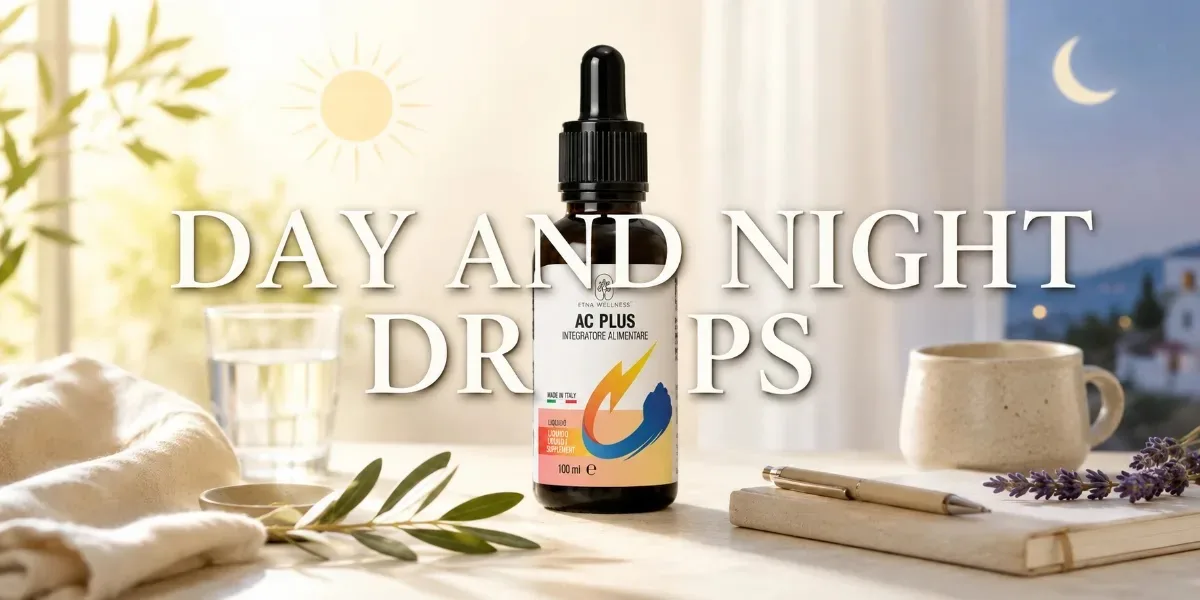
AC Plus Daily Routine: How to Use the Drops Correctly
If you are looking for a simple AC Plus daily routine, start with the current technical sheet rather than older descriptions of “day and night drops”. The confirmed direction is straightforward: shake well before use and take 4 ml per day, equal to 2 pipettes, dissolved in water.
The technical sheet does not specify a morning-only, evening-only or divided morning/evening schedule. This guide therefore focuses on what is confirmed and on practical ways to make the routine easier to remember without inventing a timing rule.
(more…) -
Rosemary Essential Oil: Uses, Aroma, Hair & Scalp Care Guide
There is something instantly recognisable about rosemary. Its green, aromatic character feels fresh, vivid and unmistakably Mediterranean. Open the bottle and the experience is immediate: herbal, clean and energetic.
That is what makes rosemary essential oil interesting. It can become part of an aromatic routine, but it can also have a place in cosmetic care when the exact product is used according to its own instructions.
The key is knowing what rosemary oil can realistically offer — and how to enjoy it without turning a simple aromatic product into a list of exaggerated promises.

What Does Rosemary Essential Oil Smell Like?
Rosemary has a distinctive herbal identity. Its aroma is green, fresh and aromatic, with a clean character that is easy to recognise even when it is blended with other oils.
For many people, that is the first reason to choose it: not because it promises a medical effect, but because its scent brings a vivid, Mediterranean feel to an aromatic routine.
If you prefer fresh, herbal profiles rather than sweet or floral aromas, rosemary is one of the essential oils most worth exploring.
Why Rosemary Has Such a Strong Mediterranean Identity
Rosemary is closely associated with Mediterranean landscapes, gardens and cooking traditions, so its scent often feels familiar before you even think about essential oils.
That familiarity gives rosemary a different personality from softer floral oils or sweeter citrus profiles. It feels direct, green and lively — a character that works especially well for people who want a crisp aromatic presence rather than a delicate fragrance.
What the Current Etna Wellness Catalogue Says About Rosemary Essential Oil
The current Etna Wellness catalogue describes rosemary essential oil through two main areas: aromatic use in the environment and cosmetic use.
For the environment, the catalogue presents rosemary as a lively, aromatic fragrance associated with freshness and energy, suitable for creating a more vital and stimulating atmosphere.
For cosmetic care, the catalogue places rosemary in routines involving tired-looking areas of the body and also highlights its relevance for the scalp and hair, particularly when hair appears fragile or stressed.
These are the most useful reference points for this guide because they come from the current product description rather than from generic aromatherapy recipes.
Rosemary Essential Oil for the Home Environment
If your main interest is aromatic use, rosemary is a strong choice when you want a fresh, herbal atmosphere rather than something sweet or heavily floral.
Use the product only according to the instructions provided on its label or current product sheet. Diffusers and other aromatic devices can differ, so a universal number of drops should not be treated as correct for every product or device.
What matters most is the aromatic experience: rosemary gives the room a greener, more energetic character that can work well in spaces where you prefer freshness and definition.
Rosemary Essential Oil in Cosmetic Care
Essential oils should not be treated as interchangeable ingredients. The correct topical use depends on the exact product, its concentration, intended use and label instructions.
For Etna Wellness rosemary essential oil, the current catalogue places the product within cosmetic-care routines. That makes the label and current company instructions the right reference for how it should be used, rather than a generic recipe copied from another essential oil.
Do not assume that undiluted application is suitable unless the exact product instructions explicitly allow it. More product is not automatically better.
Rosemary Essential Oil for Hair and Scalp Care
If your interest in rosemary comes from hair care, this is one of the most relevant parts of the current Etna Wellness description.
The catalogue positions rosemary essential oil within scalp and hair-care routines, particularly where the aim is to support the cosmetic appearance of hair that looks fragile or stressed.
This should not be turned into a promise of hair regrowth or a treatment for hair loss. The useful, accurate way to think about rosemary here is as part of a cosmetic routine whose exact method should follow the product instructions.
That distinction matters because it lets you evaluate the product for what it is actually presented to do, without expecting a medical result from a cosmetic or aromatic routine.
Rosemary Oil for Tired-Looking Areas of the Body
The current catalogue also places rosemary in cosmetic routines for areas that feel or appear tired, with language focused on a fresher, more toned-looking cosmetic appearance.
Again, this is not a medical or therapeutic claim. It belongs to cosmetic care, where the product is used according to its intended application and the instructions supplied with it.
Can You Combine Rosemary With Other Essential Oils?
From an aromatic point of view, rosemary is easy to understand because its green character changes noticeably depending on what surrounds it.
- Citrus aromas can make the blend feel brighter and lighter.
- Floral aromas can soften rosemary’s sharper herbal character.
- Woody aromas can make the overall profile feel deeper and more grounded.
- Mint or eucalyptus-style aromas can reinforce a very fresh aromatic direction.
These are aroma-pairing ideas, not instructions for therapeutic blends. If you mix products, follow the label directions and compatibility guidance for each oil involved.
What Rosemary Essential Oil Should Not Be Presented As
Rosemary essential oil should not be sold as a cure, a treatment for a disease or a guaranteed solution for hair growth, concentration, anxiety, sleep or other medical or psychological outcomes.
A stronger and more trustworthy description is also simpler: explain the aroma, the intended aromatic or cosmetic use, the current product information and the routine in which the customer is considering using it.
How to Decide Whether Rosemary Essential Oil Is Right for You
Ask yourself what attracted you to rosemary in the first place.
- If you enjoy fresh, herbal aromas, its scent profile may be the strongest reason to choose it.
- If you want an oil for the home environment, look at the current aromatic-use instructions.
- If you are interested in hair and scalp care, review the exact cosmetic directions for the product.
- If you want to include it in body care, follow only the approved topical instructions and precautions.
The best choice is the one that matches both your preferred aroma and the use actually supported by the product.
How to Access the Etna Wellness Online Shop
If you decide to purchase rosemary essential oil, the Etna Wellness customer area is the route into the online shop.
- Create your customer access using the requested information, then enter the Etna Wellness online shop.
- Once inside the online shop, continue to the product area.
- Browse the categories or use the search function to find rosemary essential oil and any other products you want to add.
- Complete the order by checking the shipping details, available courier options and payment methods shown for your market.
Prices, availability, delivery options and promotions can change by market, so the shop is the correct place to confirm the current conditions before ordering.
How to Use Rosemary Essential Oil Safely
Safety depends on the exact product and its intended use. Always read the current label and product instructions before using an essential oil.
- Do not improvise topical quantities or dilution levels from unrelated recipes.
- Avoid contact with eyes and sensitive areas unless the product directions specifically state otherwise.
- Keep the product out of reach of children and follow any age-related warnings on the label.
- If the product is intended for topical use, follow its exact dilution or application instructions.
- If you are pregnant, breastfeeding, under medical care or have specific sensitivities, follow the product warnings and seek qualified advice where appropriate.
- Store the product according to the conditions stated on its packaging.
Frequently Asked Questions
What does rosemary essential oil smell like?
It has a fresh, green, herbal and aromatic profile with a strong Mediterranean character.
Can I use rosemary essential oil in a diffuser?
If the exact product is intended for aromatic environmental use, follow the label and the instructions of the diffuser. Do not assume that one universal drop count applies to every device or formulation.
Can rosemary essential oil be used on hair?
The current Etna Wellness catalogue places rosemary essential oil within scalp and hair-care routines, particularly for the cosmetic appearance of stressed or fragile-looking hair. Follow the exact product directions.
Does rosemary essential oil make hair grow?
This guide does not present rosemary essential oil as a treatment for hair loss or guarantee hair growth. Evaluate it within the cosmetic use described for the product.
Can I apply rosemary essential oil directly to the skin?
Do not assume direct undiluted application is appropriate. Use the product only according to its current label and cosmetic-use instructions.
Is rosemary essential oil a cosmetic product?
The regulatory classification of an essential-oil product depends on how it is formulated, presented and intended to be used. For the Etna Wellness product, follow the classification, label and instructions supplied with that specific item.
Where can I buy Etna Wellness rosemary essential oil?
You can enter the Etna Wellness customer area through the registration and shop route described above, then search for the product inside the online shop.
A Fresh, Herbal Choice With a Clear Purpose
Rosemary does not need an exaggerated story to be interesting. Its aromatic identity is already distinctive, and its current Etna Wellness positioning gives it a clear place in environmental fragrance and cosmetic-care routines.
If you like herbal freshness and want to explore rosemary for the home, body care or hair and scalp routine, the next step is simply to compare that use with the current label and decide whether it fits what you are looking for.
Sources and Product References
Current Etna Wellness catalogue — Rosemary Essential Oil product description.
European Union — Regulation (EC) No 1223/2009 on cosmetic products
European Chemicals Agency — Understanding CLP
Important: This guide is for general informational purposes and does not replace the instructions, warnings or classification of the specific product. Essential oils should not be used as substitutes for medical treatment. Always follow the current product label and obtain qualified advice where necessary.
Ready to order? Create your customer access and shop Etna Wellness
Getting started is quick. Follow these three simple steps to create your access and complete your order through the official Etna Wellness online shop.
- Create your access. Use the button below to create your customer access in just a few seconds by entering the requested information.
- Enter the online shop. Once your access is created, enter the shop and find the products you want using the product categories or the search icon, then add them to your cart.
- Complete your purchase. Proceed to checkout and complete your purchase by selecting your courier or available delivery option and your preferred payment method.
Create Your Access & Shop Etna Wellness
The registration page automatically adapts to supported browser languages.
-
How to Sell Dupe Perfumes in Europe: Legal Steps & Representative Guide
You may already have noticed how easy fragrance is to talk about. One scent can create a reaction, a memory or a question — and that conversation can naturally become an opportunity.
If you enjoy perfumes and like helping people discover new scent profiles, selling perfume alternatives can become more than simply offering a bottle. It can become a relationship-based activity built around discovery, personal recommendations and repeat customers.
But enthusiasm alone is not enough. To build something that lasts in Europe, you need to understand what you are selling, how to communicate it correctly, what the main cosmetic rules require and which business model actually fits you.

Why Perfume Alternatives Can Be Interesting to Sell
Fragrance has one commercial advantage that is difficult to reproduce in many other categories: people can experience it immediately. A customer smells, reacts, compares and starts describing what they like. That creates a natural conversation instead of forcing you to begin with a sales pitch.
You can talk about fresh citrus profiles, floral notes, warm amber, woods, musk or gourmand accords. You can ask what the person normally enjoys, when they want to wear a fragrance and whether they prefer something discreet or more expressive.
The more useful your questions become, the less the conversation feels like selling. You are helping someone narrow a choice.
What Does “Dupe Perfume” Mean?
“Dupe perfume” is a common search term used by people looking for lower-cost or alternative fragrances with a familiar olfactory direction. In commercial communication, however, it is often safer and clearer to focus on expressions such as perfume alternatives, fragrance alternatives or descriptions based on olfactory families and accords.
The goal should be to help customers understand the scent on its own merits, not to build the identity of your offer around another company’s trademark, logo or packaging.
That approach is also stronger long term: the customer learns to trust your ability to recommend a fragrance rather than depending on a comparison with a famous name.
How to Start Selling Perfume Alternatives: Build the Conversation First
Before thinking about funnels, bundles or complicated launch plans, learn how to guide a simple fragrance conversation.
- Ask what the person enjoys. Fresh, floral, sweet, woody, spicy or clean?
- Understand the occasion. Everyday use, work, evening, gift or something more distinctive?
- Narrow the choice. Too many options create hesitation; a small, relevant selection makes the decision easier.
- Let the fragrance develop. The first seconds are not the entire scent experience.
- Follow up naturally. A useful question after the person has worn the fragrance can be more valuable than another sales message.
This is where product knowledge becomes commercial value. The better you understand families, notes and customer preferences, the easier it becomes to create confidence without pressure.
Are Dupe Perfumes Legal to Sell in Europe?
There is no single legal category called “dupe perfume”. What matters is the actual cosmetic product placed on the EU market, its safety and documentation, its labelling and the way it is marketed.
Perfumes intended to be applied to the human body fall within the EU cosmetics framework. The central reference is Regulation (EC) No 1223/2009 on cosmetic products.
For a cosmetic product placed on the EU market, the regulatory framework includes requirements such as a Responsible Person, safety assessment, a Cosmetic Product Safety Report (CPSR), a Product Information File (PIF), notification through the Cosmetic Products Notification Portal (CPNP), good manufacturing practice and compliant labelling.
If you are simply acting as a representative or reseller of an already compliant company range, your role is very different from that of a manufacturer or private-label brand owner. You should not assume responsibilities that belong to the company placing the cosmetic product on the market, but you should still market and present products accurately.
IFRA Standards: Important, but Not the Same as EU Law
The IFRA Standards are an important fragrance-industry safety system. They can prohibit, restrict or set specifications for certain fragrance ingredients.
They are not a substitute for EU cosmetics law. IFRA itself explains that its Standards are a voluntary industry system outside the obligations that apply to IFRA members, and that companies must still comply with the national and regional laws that apply where they operate.
For you as a seller, the practical lesson is simple: “IFRA compliant” should never be treated as shorthand for “all legal obligations are complete”.
A 2026 Change Sellers Should Know: Fragrance-Allergen Labelling
Fragrance-allergen labelling is an especially relevant issue in 2026. The European Commission explains that cosmetic products placed on the market before 31 July 2026 may continue to be made available until 31 July 2028 under the transition introduced by Regulation (EU) 2023/1545.
The change expands the individual labelling of fragrance allergens under the EU Cosmetics Regulation. This does not mean that a listed fragrance ingredient is automatically unsafe; the purpose is to give consumers, especially those already sensitised, clearer ingredient information.
You can review the Commission’s current explanation on its fragrance-allergen labelling page.
Selling a Compliant Range vs Creating Your Own Perfume Brand
These are two very different business paths.
Selling an existing company range lets you focus mainly on product knowledge, customer relationships, presentation, follow-up and commercial development within the rules and materials provided by the company.
Creating your own private-label perfume means entering a much more complex area. You need to ensure that the product placed on the market has the correct Responsible Person, safety documentation, PIF, CPNP notification, labelling and all other applicable compliance elements.
If what attracts you is the relationship with customers rather than becoming a cosmetic manufacturer or brand owner, the representative route can be considerably more straightforward.
What Selling Fragrances Really Looks Like
Imagine a normal conversation. Someone smells a fragrance. They tell you that they usually prefer something fresh but not too citrusy. You show them two or three options instead of ten. They try one, wait for it to develop and realise that one profile feels more like them.
The sale, if it happens, becomes the consequence of a useful conversation.
This is one of the most important skills in fragrance selling: do not rush the decision. The experience itself gives you the opportunity to create trust.
How to Present Perfume Alternatives Without Depending on Famous Brand Names
A strong fragrance seller learns to describe what a scent feels like.
- Citrus and aromatic: fresh, energetic, easy to wear.
- Floral and musky: soft, clean, elegant or romantic depending on the composition.
- Woody and spicy: warmer, deeper and often suited to evening preferences.
- Amber and gourmand: enveloping, sweet or sensual profiles.
- Green and herbal: crisp, natural-feeling and often lighter in character.
These descriptions create their own commercial identity. They also make it easier to discuss a fragrance without building your message around someone else’s trademark.
Where Can You Sell Fragrances?
Your strongest channel is usually the one where you can create trust consistently. That may be face-to-face conversations, social content, messaging, small local presentations or a combination of online and offline contact.
Online, visual content can attract attention, but fragrance still benefits from explanation. Instead of publishing only product pictures, teach people how to choose a family, understand top-heart-base development, store a fragrance correctly or identify whether they prefer fresh, sweet or woody profiles.
In person, focus on experience rather than pressure. Give the customer enough time to smell and compare. A person who feels guided is much more likely to remember you when they want another fragrance.
Can You Build an Independent Activity Around Perfume Sales?
If fragrances are something you genuinely enjoy talking about, the representative model can give you a way to turn that interest into an independent commercial activity.
You can progressively build product knowledge, share fragrances with people you know or reach through your communication, develop customer relationships and improve the skills that make recommendations more useful.
Over time, the activity can become more structured as your customer base and experience grow. The important point is that your progress comes from real activity, relationships and consistency — not from a promise of automatic income.
Eligible commercial activity may generate compensation according to the applicable Etna Wellness compensation plan and qualification requirements. Individual earnings vary and are not guaranteed.
Practical Skills That Can Make You Better at Selling Fragrance
The best progress often comes from improving a few repeatable skills:
- learn the main olfactory families and the language customers use to describe them;
- listen before recommending;
- avoid exaggerating longevity, projection or similarity;
- use the company’s current product information rather than inventing claims;
- follow up without becoming intrusive;
- keep notes on customer preferences so future recommendations become more relevant;
- respect privacy and consent when using email, WhatsApp or other direct communication channels.
These skills are transferable. They help you become more credible not only with fragrances, but across relationship-based selling generally.
Frequently Asked Questions
Are perfume dupes automatically illegal in Europe?
No. The legality depends on the actual product, its compliance with applicable cosmetic rules and the way it is marketed. Using another company’s trademarks or creating confusingly similar branding raises separate intellectual-property questions and should be assessed carefully.
Do finished perfumes sold to consumers normally need CLP hazard pictograms?
Finished cosmetic products intended for the final user are generally excluded from the CLP rules that apply to substances and mixtures in that final form. Other stages of manufacture, supply or transport can involve different requirements, so businesses handling bulk materials or logistics should obtain specific compliance advice.
Is an IFRA certificate enough to make a perfume legally compliant in the EU?
No. IFRA Standards are an industry safety framework and do not replace the requirements of EU cosmetics legislation.
What are CPSR, PIF and CPNP?
The CPSR is the Cosmetic Product Safety Report, the PIF is the Product Information File, and CPNP is the EU notification portal used for cosmetic products before they are placed on the market where required by the Cosmetics Regulation.
Do fragrance allergen rules change in 2026?
Yes. The EU transition linked to Regulation (EU) 2023/1545 includes the 31 July 2026 placing-on-the-market date and a transition until 31 July 2028 for products already placed on the market before that date.
Can I become a representative instead of creating my own perfume brand?
Yes. If you prefer to focus on sharing products, developing customers and building an independent commercial activity rather than managing cosmetic-product manufacturing and regulatory responsibilities, the representative path is the more relevant route to explore.
Turn Your Interest in Fragrance Into a Skill
Fragrance selling works best when enthusiasm becomes knowledge.
You learn to recognise what people enjoy. You ask better questions. You stop showing everything and start showing what is relevant. Customers begin to remember you not simply because you sell perfume, but because you help them choose.
If that kind of activity feels natural to you, the next step is not to know everything before you begin. It is to start learning, sharing and building experience one conversation at a time.
Sources and Regulatory References
European Union — Regulation (EC) No 1223/2009 on cosmetic products
European Commission — Fragrance allergens labelling
International Fragrance Association — IFRA Standards
European Union — GDPR Regulation (EU) 2016/679
Important: This guide is for general informational purposes and does not constitute legal advice. Rules can depend on the product, business role and country. Businesses placing cosmetic products on the market should verify current EU and national requirements and obtain qualified professional advice where necessary.
Ready to order? Create your customer access and shop Etna Wellness
Getting started is quick. Follow these three simple steps to create your access and complete your order through the official Etna Wellness online shop.
- Create your access. Use the button below to create your customer access in just a few seconds by entering the requested information.
- Enter the online shop. Once your access is created, enter the shop and find the products you want using the product categories or the search icon, then add them to your cart.
- Complete your purchase. Proceed to checkout and complete your purchase by selecting your courier or available delivery option and your preferred payment method.
Create Your Access & Shop Etna Wellness
The registration page automatically adapts to supported browser languages.
-
How to Sell Cleaning Products From Home in Europe: Sales & Representative Guide
Cleaning products solve problems people can see immediately. A greasy kitchen surface, streaked glass, limescale in the bathroom or a floor that never seems to look quite right creates a very different sales conversation from an abstract product. The customer already knows what they want to improve.
Your role is not to push a bottle. It is to understand the problem, explain the correct use of the product and make the result easier to evaluate. When the conversation starts from a real household need, selling can feel much more natural.
If you enjoy practical products, direct contact with customers and an activity you can progressively organise around your own time, home-care products can be an interesting category to explore. This guide shows you how to approach it without exaggerated income promises, invented sales formulas or unnecessary complexity.

Why Cleaning Products Can Be Easier to Demonstrate Than Explain
Many home-care needs are visible. A customer can see residue on a hob, marks on glass, dullness on a surface or a stain on fabric. That makes the sales conversation concrete from the beginning.
Instead of starting with a long catalogue, you can start with one question: “What are you trying to clean or improve?”
That question changes the entire interaction. You are no longer asking someone to choose from dozens of products. You are helping them identify the most relevant solution for a specific surface, room or routine.
The strongest value you can add is therefore not pressure. It is clarity: which product is appropriate, how it should be used, what precautions matter and what result the label or company material actually supports.
What Does Selling Cleaning Products From Home Actually Mean?
There is more than one business model behind the phrase “sell cleaning products from home”. Understanding the difference matters before you decide what you want to build.
- Representative or direct-sales activity: you present and recommend an existing company range, develop customers and follow the commercial rules of that organisation.
- Retail or resale: you purchase or obtain products for resale under the conditions applicable to that commercial relationship.
- Manufacturing, importing or private label: you place your own or imported cleaning product on the market and may take on significantly greater product-compliance responsibilities.
These paths should not be mixed together. If your goal is to develop customers, explain products and build a relationship-based sales activity, the representative model is very different from becoming a detergent manufacturer or importer.
Start With the Customer Problem, Not the Catalogue
A customer rarely wakes up wanting to study a cleaning catalogue. They want the oven easier to clean, the shower glass clearer, the floor cared for correctly or the laundry routine to feel more manageable.
That is why a problem-first conversation is more useful than listing features.
- Kitchen: grease, cooking residue, worktops, hobs and food-preparation surfaces.
- Bathroom: limescale, soap residue, glass and sanitary surfaces.
- Floors: routine cleaning, material compatibility and correct dilution.
- Glass and mirrors: marks, streaks and correct application technique.
- Laundry: washing routine, stains, fabric care and product dosage.
- Delicate surfaces: wood, parquet, stone or other materials that require extra attention to the product instructions.
Once you know the real problem, the customer can understand why one product may be more suitable than another. That is where your product knowledge becomes valuable.
How to Run a Useful Cleaning-Product Demonstration
A good demonstration should make the product easier to understand without exaggerating what it can do. You do not need a theatrical before-and-after or a rigid script.
Use a simple process:
- Identify the surface or use case. Never assume that a product is suitable for every material.
- Read the instructions. Use the dose, dilution, contact time and precautions stated for that product.
- Test appropriately. On delicate or unfamiliar surfaces, follow label guidance and test a small inconspicuous area when appropriate.
- Show the normal use. Demonstrate what a customer can realistically repeat at home.
- Describe only supported benefits. Avoid inventing performance, safety, disinfection or material-protection claims.
- Let the customer decide. A demonstration is most persuasive when the person can understand the product rather than feeling pushed into an order.
This protects both credibility and customer trust. A person who uses the product correctly is also more likely to evaluate it fairly after purchase.
How to Find Your First Customers for Cleaning Products
You do not need to reach everyone. Start with situations where the category is already relevant.
People around you may have different priorities: a busy family may care about practical routines, someone with parquet may want help understanding surface compatibility, a pet owner may ask different questions from a person focused on kitchen cleaning, and a small accommodation business may care about repeatable processes.
Your first objective is not to create a huge audience. It is to become useful to a smaller number of people who can understand what you offer.
Potential channels include personal contacts, referrals, local conversations, social content and consent-based direct messaging. Online content works best when it teaches something useful: how to read a dilution instruction, how to choose by surface, why two cleaners should not automatically be mixed, or how to avoid using a product on an unsuitable material.
If you use WhatsApp, email or similar channels for follow-up and promotions, respect consent, privacy rules and the communication preferences of the person you are contacting.
Why Follow-Up Can Be More Valuable Than Another Sales Pitch
After someone has tried a product, you have a better conversation available to you: “How did it go?”
That follow-up can reveal whether the product was used correctly, whether the chosen surface was suitable and whether the customer needs clarification. It also helps you learn which kinds of questions occur repeatedly.
Do not turn every follow-up into an automatic sales reminder. Useful after-sales support can create more trust than sending repeated promotional messages on a fixed timetable.
Over time, you can remember non-sensitive practical preferences — for example whether a customer is mainly interested in kitchen, laundry or floor care — but avoid collecting unnecessary personal or health-related information.
Online and In-Person Selling: Use Each Channel for What It Does Best
In-person selling is useful because a customer can ask questions immediately and see how a product is used. Online communication is useful because it helps you explain, remind and stay accessible.
You do not need to choose one forever. A customer might discover you through social content, ask a question on WhatsApp, see a demonstration later and then decide whether to buy.
For online B2C activity, remember that selling products in the EU involves consumer-information and product-compliance obligations. The European Commission’s Your Europe guidance on e-commerce and distance selling is a useful general reference for businesses operating across EU markets.
Selling an Existing Range vs Making Your Own Cleaning Products
This distinction is particularly important if you searched for phrases such as “make your own cleaning products to sell”.
Representing an existing range means working with products already placed on the market by the relevant economic operator and using the approved product information and commercial route provided to you.
Manufacturing, importing or private-labelling cleaners can create a very different compliance burden. Depending on the exact product and your role, EU rules may involve the Detergents Regulation, REACH, CLP classification and labelling, safety data, poison-centre obligations and other national or EU requirements.
The EU product-compliance guidance explains that responsibilities differ according to whether you are a manufacturer, importer, distributor or another economic operator.
If what interests you is customer development rather than formulation, manufacturing and regulatory management, joining an existing representative structure can be the more relevant path to evaluate.
Do You Need to Be a Wholesaler or Distributor?
Not necessarily. Search terms such as “home care product distributor” or “wholesale household cleaning products” can describe very different commercial models.
A representative does not automatically become a wholesale distributor simply by sharing or selling products. Your actual status depends on the company agreement, the ordering structure and the laws of the country where you operate.
That distinction is useful because it keeps expectations realistic. If you want a direct-sales activity, evaluate the representative model on its own terms instead of assuming that you will manage stock, import products or operate as a wholesaler.
Can You Build a Home-Based Activity Around Cleaning Products?
Yes, a home-based commercial activity can be organised around product knowledge, customer conversations and follow-up, subject to the rules that apply to your market and your contractual role.
You can begin by learning a manageable number of products well. Understand where they are used, what the instructions say, which surfaces require care and which questions customers ask most often.
As your confidence grows, your conversations become easier. You stop trying to remember a catalogue and start recognising the right questions to ask.
That progression matters because people rarely remember the person who simply sent them a price list. They remember the person who helped them choose and use the product correctly.
How Earnings Actually Work
A business opportunity should never be evaluated through a promise such as “high margins” or “easy recurring income”. Compensation depends on the applicable Etna Wellness compensation plan, eligibility and qualification rules, your actual activity and the customers or organisation you develop.
Individual earnings vary and are not guaranteed. Before deciding, understand how the current plan works, what activities are compensated and what costs or tax obligations may apply to you.
If you need help understanding the representative route before registration, use the information-request option rather than relying on generic earnings examples.
Practical Skills That Increase Your Value as a Representative
- Product knowledge: know the label, the intended use and the limits of each product.
- Listening: understand the customer’s actual cleaning problem before recommending anything.
- Demonstration: show normal, repeatable use instead of staging unrealistic results.
- Surface awareness: never assume that every cleaner works on every material.
- Clear language: explain benefits without inventing claims.
- After-sales support: help customers use the product correctly and answer practical questions.
- Ethical communication: respect privacy, consent and the customer’s preferred contact frequency.
These are simple skills, but together they change how the customer experiences you. You become less like someone trying to make a sale and more like someone who understands the category.
Frequently Asked Questions
Can I sell cleaning products from home in Europe?
A home-based sales activity may be possible, but your tax, business-registration, consumer-law and product obligations depend on the country and the exact commercial model. Check the requirements that apply where you operate.
Do I need a VAT or tax position?
There is no single EU-wide answer that applies to every representative. Tax and registration obligations depend on the country, legal status, activity and thresholds involved. Use a qualified local tax adviser or the competent authority for your market.
Can I work only online?
Online selling and customer acquisition may be part of the activity, but what is permitted and what information you must provide depends on your market, company rules and the way orders are concluded. Online and in-person channels can also be combined.
What margin can I earn?
Do not rely on a generic percentage quoted in an article. Compensation, discounts and qualification rules should be checked against the current Etna Wellness commercial and compensation information applicable to your role.
Should I create my own cleaning products?
Only if you intentionally want to enter the much more complex role of manufacturing, importing or placing products on the market. That is different from representing an existing range and can involve substantial regulatory responsibilities.
How should I demonstrate a cleaning product?
Use the product exactly according to its instructions, verify surface compatibility, respect dilution and safety information, and demonstrate only benefits that are supported by the product documentation.
How do I find customers for cleaning products?
Start with real use cases and people who have relevant needs. Helpful demonstrations, practical educational content, referrals and respectful follow-up can all contribute to customer development.
From Product Knowledge to a Real Customer Relationship
The strongest home-care sales activity does not begin with a catalogue. It begins when someone says, “I cannot get this surface right,” or “I never know which product to use here.”
If you can listen, understand the problem and explain a suitable product clearly, you create value before asking for an order.
That is how an everyday category can become an opportunity: not through exaggerated claims, but through competence, trust and relationships that become stronger over time.
Sources and Regulatory References
European Union — Product requirements and responsibilities for businesses
European Union — E-commerce and distance selling
European Union — Regulation (EC) No 648/2004 on detergents
European Chemicals Agency — Understanding CLP
Important: This guide is for general informational purposes and does not constitute legal, tax or regulatory advice. Requirements vary according to the product, business role and country. Always use the current product label and company documentation, and obtain qualified local advice where necessary.
Ready to order? Create your customer access and shop Etna Wellness
Getting started is quick. Follow these three simple steps to create your access and complete your order through the official Etna Wellness online shop.
- Create your access. Use the button below to create your customer access in just a few seconds by entering the requested information.
- Enter the online shop. Once your access is created, enter the shop and find the products you want using the product categories or the search icon, then add them to your cart.
- Complete your purchase. Proceed to checkout and complete your purchase by selecting your courier or available delivery option and your preferred payment method.
Create Your Access & Shop Etna Wellness
The registration page automatically adapts to supported browser languages.
-
How to Start an Essential Oil Business: Compliance & Representative Guide
Some products are explained. Essential oils are experienced. A bottle is opened, the aroma changes the atmosphere around it, and almost immediately someone has a question: “What is this one?” “How is it intended to be used?” “Which aroma would suit me?”
That curiosity is where an essential-oil business can begin.
You do not need to become an aromatherapy expert overnight or promise effects you cannot prove. You need to learn the products, understand how they are intended to be used and become good at helping people explore aromas confidently, clearly and safely.

What an Essential Oil Business Can Actually Look Like
The phrase “essential oil business” can describe very different activities. Before deciding how you want to work, separate the main models.
- Representative or direct-sales activity: you share an existing company range, develop customers and work within the company’s commercial structure.
- Retail or resale: you purchase or obtain products for resale according to the terms that apply to that relationship.
- Manufacturing, importing or private label: you place your own or imported product on the market and can take on much greater regulatory responsibility.
If what attracts you is the customer relationship, product discovery and the possibility of building an independent activity around a category you enjoy, the representative route is fundamentally different from creating your own essential-oil brand.
Start With Aroma and Experience, Not Health Promises
Essential oils are easy to overcomplicate because people often arrive with expectations about what an oil is supposed to “do”. A more credible approach begins with what you can actually describe.
You can talk about an aroma as fresh, citrusy, floral, herbal, balsamic, woody, warm, soft or intense. You can explain the product’s intended use and the directions supplied with it. You can help someone compare scent preferences.
What you should not do is turn a sensory description into a medical promise.
For example, instead of saying that an oil “treats anxiety”, “helps you sleep” or “clears breathing”, keep your communication aligned with the approved product information and describe the aroma or intended cosmetic/aromatic use without inventing therapeutic effects.
How to Help Someone Choose an Essential Oil
A useful customer conversation can be very simple.
Ask:
- Do you prefer something fresh and citrusy?
- Would you rather have a floral or softer aroma?
- Do you enjoy deeper herbal, woody or balsamic notes?
- Are you choosing for yourself or as a gift?
- What intended use is stated on the product you are considering?
The goal is not to show everything. It is to narrow the choice until the customer understands why a particular product may suit their preferences.
That is where knowledge becomes persuasive: not because you pressure the person, but because you make the decision easier.
How Are Essential Oils Regulated in Europe?
There is no single EU legal category that automatically covers every essential oil in every context. Classification depends on the exact substance or mixture, intended use, presentation, claims and the role of the business placing it on the market.
If an essential-oil product is marketed as a cosmetic, the applicable cosmetic framework must be followed. If a substance or mixture is classified as hazardous, chemical classification and labelling obligations may also apply at the relevant stage of supply.
The European Chemicals Agency explains the EU framework for classification, labelling and packaging under CLP. For cosmetics, the central EU reference is Regulation (EC) No 1223/2009.
The practical rule for a representative is straightforward: use the current company label and product information, follow the stated directions and warnings, and do not create new uses or claims of your own.
Selling an Existing Range vs Creating Your Own Essential-Oil Brand
These are two very different levels of responsibility.
Selling an existing company range allows you to focus on customer development, product knowledge, communication and the commercial process provided by the company.
Creating, importing or private-labelling your own products can require you to manage product classification, documentation, safety, labelling, responsible economic-operator duties and the rules that apply to the intended use and market.
If your real interest is sharing products and building relationships rather than becoming a manufacturer or importer, evaluate the representative route on its own terms.
How to Learn the Products Before You Sell Them
Confidence should come from product knowledge, not memorised sales phrases.
- Read the label and current product sheet. Know the intended use, directions and warnings.
- Learn the aroma. Build vocabulary around scent families and intensity.
- Understand what you cannot claim. Do not convert a pleasant sensory experience into a therapeutic promise.
- Respect the stated method of use. Do not recommend ingestion, skin application, diffusion or combinations unless the specific product information supports that use.
- Know when to stop improvising. If a customer asks a medical or safety question outside the product information, do not guess.
This may feel less dramatic than a scripted pitch, but it creates far more credibility.
How to Find Customers Naturally
You do not need a huge audience to begin. Start by becoming useful to a smaller group of people who already enjoy fragrance, personal care or aromatic products.
Customer development can happen through personal conversations, referrals, social content, small presentations and consent-based messaging. Online content can help when it teaches rather than simply promotes.
Useful topics include how to recognise scent families, how to store essential oils according to product guidance, how to read directions, how to distinguish an aroma preference from a health claim, or how to choose between several products in the same aromatic family.
If you use WhatsApp, email or direct messages, respect consent, privacy and the person’s preferred contact frequency.
Online and In-Person Selling: Different Strengths
Online communication gives you reach and lets customers return to your explanations. In-person contact gives them the opportunity to experience an aroma and ask questions immediately.
You can combine both. Someone might discover an educational post, ask a question on WhatsApp, experience a product later and then decide whether it fits their preferences.
If the customer has moved from “How do I start selling?” to “Where can I buy?”, use the dedicated buyer guide: Where to Buy Essential Oils Online in Europe. This page remains focused on the business and representative journey.
Can You Build an Independent Activity Around Essential Oils?
If you genuinely enjoy the category, a representative model can give you a way to turn product knowledge and customer relationships into an independent commercial activity.
You can begin by learning a manageable number of products, improving the way you describe aromas and becoming more confident in customer conversations. As your experience grows, your recommendations can become more precise and useful.
Over time, the activity may become more structured as you develop customers and, where permitted by the applicable compensation plan, a wider organisation.
Eligible activity may generate compensation according to the current Etna Wellness compensation plan and qualification requirements. Individual earnings vary and are not guaranteed.
What Skills Make You Better at Selling Essential Oils?
- Sensory vocabulary: learn to describe aromas clearly and naturally.
- Listening: understand what the customer actually likes before recommending.
- Product discipline: use current labels and product information rather than memory or internet folklore.
- Claim discipline: never convert fragrance or cosmetic positioning into a disease, sleep, anxiety or respiratory claim.
- Follow-up: ask how the customer found the aroma or product experience without turning every contact into a sales push.
- Ethical communication: respect privacy, consent and realistic earnings expectations.
These skills make you more useful to customers and more credible as your activity grows.
Frequently Asked Questions
Can I start an essential oil business from home?
A home-based commercial activity may be possible, but tax, registration, consumer-law and product obligations depend on your country and exact business model. Check the rules that apply where you operate.
Do I need a VAT number?
There is no single answer for every country or representative. Tax and registration requirements depend on local law, legal status, activity and applicable thresholds. Obtain qualified local advice where necessary.
Can I sell essential oils online?
Online selling may form part of the activity, but you must follow the applicable company, consumer-information, privacy and product rules for the market where you operate.
Are essential oils always cosmetics?
No. The regulatory status depends on the product, intended use, presentation and claims. Do not assume that every essential oil is automatically a cosmetic.
Do essential oils need CLP labelling?
Potential CLP obligations depend on the substance or mixture, its classification and the stage at which it is supplied. Use the exact product documentation and do not generalise from one oil to another.
Can I make health claims?
Do not make medical or therapeutic claims unless they are specifically lawful and supported for that product and category. As a representative, stay within the approved product information.
Do I need special certifications?
Requirements depend on your role and the products involved. A representative selling an existing range has a different responsibility profile from a manufacturer, importer or private-label owner.
How much can I earn?
Do not rely on generic percentages or income examples. Compensation depends on the current Etna Wellness plan, qualifications, activity, market conditions and your individual results. Earnings are not guaranteed.
Can I become a representative instead of creating my own brand?
Yes. If your goal is customer development and product sharing rather than manufacturing, importing and regulatory management, the representative path is the more relevant option to explore.
Turn Curiosity Into Competence
An essential-oil business does not become credible because you know the most dramatic claim. It becomes credible because customers trust the way you explain a product.
You learn the aromas. You understand the intended use. You ask better questions. You stop trying to persuade everyone and start helping the right person choose with more confidence.
If that kind of activity feels natural to you, the next step is not to know everything before you begin. It is to start learning the range, understanding the rules and building experience one customer conversation at a time.
Sources and Regulatory References
European Chemicals Agency — Understanding CLP
European Union — Regulation (EC) No 1223/2009 on cosmetic products
European Union — Product requirements and responsibilities for businesses
Important: This guide is for general informational purposes and does not constitute medical, legal, tax or regulatory advice. Requirements vary according to the product, intended use, business role and country. Always use the current product label and company documentation and obtain qualified professional advice where necessary.
Ready to order? Create your customer access and shop Etna Wellness
Getting started is quick. Follow these three simple steps to create your access and complete your order through the official Etna Wellness online shop.
- Create your access. Use the button below to create your customer access in just a few seconds by entering the requested information.
- Enter the online shop. Once your access is created, enter the shop and find the products you want using the product categories or the search icon, then add them to your cart.
- Complete your purchase. Proceed to checkout and complete your purchase by selecting your courier or available delivery option and your preferred payment method.
Create Your Access & Shop Etna Wellness
The registration page automatically adapts to supported browser languages.