Probiotics and digestive enzymes are often sold in the same digestive-wellbeing section, but they are not interchangeable. Probiotics are live microorganisms used in certain foods and supplements. Digestive enzymes are proteins that break down components of food during digestion.
That difference changes what you should look for on the label and prevents a common mistake: assuming that a longer “gut health” ingredient list automatically means a better product.
Probiotics and digestive enzymes describe different formula roles; the label should identify what is actually present. — www.etnawellnesselitegroup.com
What are probiotics?
The National Center for Complementary and Integrative Health defines probiotics as live microorganisms intended to have health benefits when consumed or applied to the body. Different organisms and strains can have different effects, so the word “probiotic” alone is not enough to predict an outcome.
When a supplement contains probiotics, useful label details include the organism or strain identification, amount or count where declared, storage requirements and the intended use.
What are digestive enzymes?
Digestive enzymes help break down food components. The body produces enzymes naturally, including through the pancreas. Enzyme supplements may contain enzymes that act on proteins, carbohydrates, fats or specific food components.
For enzyme products, activity units can matter more than simply comparing milligrams. Use the dedicated Digestive Enzymes guide for that distinction.
Probiotics and enzymes answer different questions
Feature
Probiotics
Digestive enzymes
What they are
Live microorganisms
Proteins that catalyse digestive reactions
Label focus
Organism/strain, count, storage
Enzyme type, activity units, serving
Primary comparison question
Which microorganism and evidence?
Which substrate and activity?
Not automatically interchangeable with
Prebiotics, fibre or enzymes
Probiotics or fibre
Can one formula contain both?
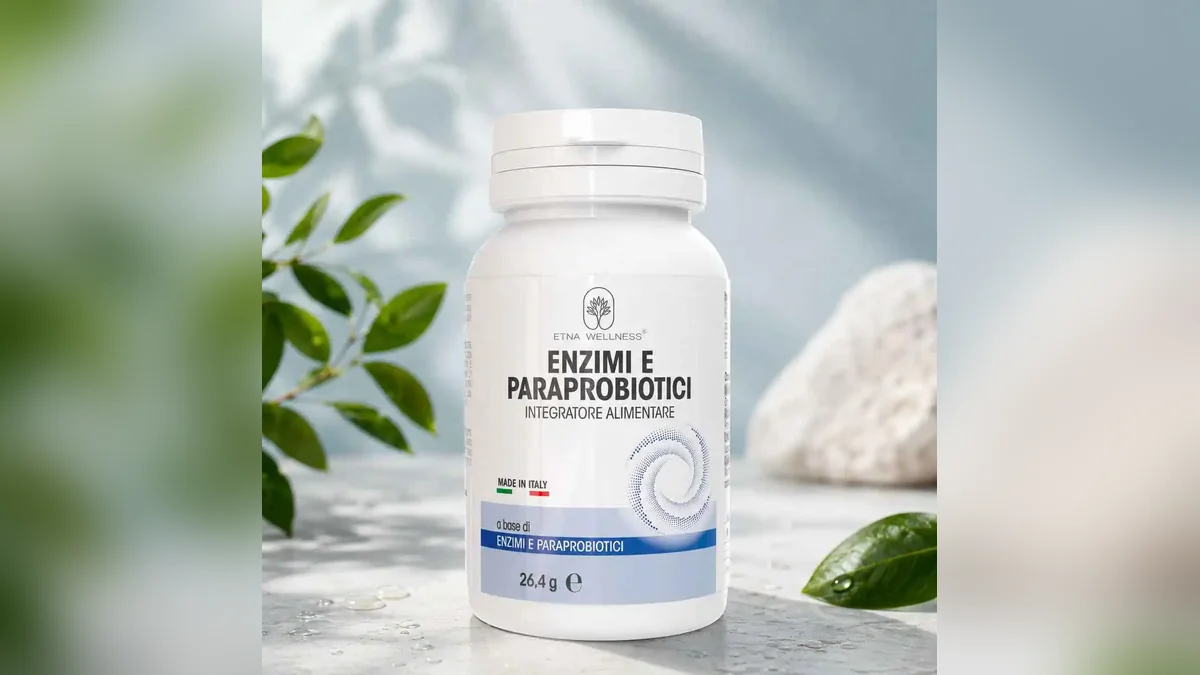
Yes. A multi-ingredient digestive supplement can combine enzymes with probiotic or paraprobiotic components. That does not mean the combined formula is automatically superior. Each component should still be evaluated according to its own declared amount, role and evidence.
What about fibre?
Fibre belongs to another category again. If your question is enzyme support versus fibre-led regularity or stool-bulk support, use Digestive Enzymes vs Fibre. Keeping these three categories separate makes the internal decision path much clearer.
Do probiotics work the same for everyone?
No. NCCIH notes that different probiotic types may have different effects and that evidence varies by condition, strain and population. Strong evidence is lacking for many marketed uses. People who are seriously ill or immunocompromised may face greater risks and should obtain professional guidance.
When are prescription enzymes different?
People with diagnosed pancreatic conditions may be prescribed pancreatic enzyme replacement. That is a medical treatment context and should not be confused with choosing an ordinary over-the-counter digestive supplement.
How to compare a digestive formula
Identify whether the main role is enzyme, probiotic, fibre or a blend.
Check enzyme names and activity units where available.
Check probiotic organism or strain information where relevant.
Read the full serving instructions.
Do not infer treatment of digestive disease from a food-supplement label.
Seek assessment for persistent pain, unexplained weight loss, blood in stool or other concerning symptoms.
Strain identity and enzyme activity answer different label questions
For a probiotic, useful label information includes the microorganism identity, strain where provided, the amount declared at the relevant point in shelf life and the storage conditions. For an enzyme product, the meaningful questions are different: which enzymes are included, what substrates they act on, how activity is expressed and what serving the manufacturer recommends.
That is why a large number on one type of product cannot be compared directly with a large number on the other. Colony-forming units, cell counts and enzyme-activity units do not describe the same thing.
Symptoms can change the decision pathway
Occasional digestive discomfort is not the same as persistent pain, unexplained weight loss, blood in the stool, recurrent vomiting or a major change in bowel habit. Ongoing or concerning symptoms need appropriate medical assessment rather than a trial-and-error supplement comparison.
For everyday product research, stay with the label: formula role, declared ingredients, serving, warnings and evidence boundaries. That keeps the comparison useful without turning probiotics or enzymes into a self-diagnosis tool.
Etna Wellness routing
The ETNA.COM digestive cluster already separates enzyme-led comparison from fibre-led comparison. Start with Digestive Enzyme Supplements: What to Look For when evaluating a finished enzyme formula, or Super Fibre when your question is specifically fibre-led.
Keep the digestive decision simple
First decide whether your question is about probiotics, digestive enzymes, fibre or persistent symptoms that need assessment. Once the role is clear, the relevant comparison becomes much easier.
Magnesium for sleep supplements have become highly visible online, but the search phrase can make the evidence sound more certain than it is. Magnesium is an essential mineral, yet that does not automatically mean that taking more magnesium improves sleep in every person.
A better buying decision starts with four questions: which magnesium form is used, how much elemental magnesium is supplied, what else is in the formula, and what does the evidence actually support?
A magnesium-containing formula can be compared by form and elemental amount without treating magnesium as a proven insomnia treatment. — www.etnawellnesselitegroup.com
Does magnesium help you sleep? Keep the evidence in perspective
The US National Center for Complementary and Integrative Health notes that research on magnesium supplements for insomnia and sleep disorders is limited. Reviews have reported mixed or low-quality findings, so a magnesium supplement should not be presented as a proven treatment for insomnia.
That distinction matters because a mineral can have established nutritional functions without automatically having a proven therapeutic effect on sleep.
Which magnesium is best for sleep? Check the form first
Labels may list magnesium citrate, glycinate, oxide or other forms. The form tells you which compound supplies the magnesium, but it does not by itself prove that one product will produce a better sleep outcome.
When comparing products, avoid choosing solely from claims such as “best absorbed” or “best for sleep” unless the statement is supported by appropriate evidence and the actual dose is clear.
Elemental magnesium is the number that matters
The weight of a magnesium compound is not the same as the amount of magnesium itself. A transparent label should make it possible to identify the actual magnesium amount supplied by the recommended serving.
Compare the recommended daily serving rather than a single capsule if the product requires more than one capsule or scoop.
What else is in the formula?
Some sleep-oriented formulas combine magnesium with melatonin, herbs, amino acids or vitamins. Once that happens, the product is no longer a magnesium-only comparison. Each ingredient has its own evidence, dose and safety considerations.
Magnesium is a mineral. Melatonin is a hormone with a different regulatory status and evidence base. They should not be merged into one generic “sleep ingredient” category.
That difference is especially important for UK readers, where melatonin has a different legal and supply context from ordinary food supplements.
Safety: more is not automatically better
NCCIH notes that high supplemental magnesium intakes can cause gastrointestinal effects such as diarrhoea, nausea and abdominal cramping, and very high intakes can be dangerous. People with medical conditions or those taking medicines should check suitability with a healthcare professional rather than increasing intake based on social-media advice.
Separate a nutrient claim from a sleep-treatment claim
Magnesium has authorised nutritional functions in Europe and Great Britain when the relevant conditions of use are met, but those functions should not be converted into a promise that a magnesium supplement treats insomnia or guarantees deeper sleep.
This distinction is especially important online, where terms such as “sleep magnesium” can make the product category sound more established than the evidence. A careful comparison should report the magnesium form and elemental amount, then discuss the sleep evidence separately and with its limitations.
If sleep difficulty is persistent, the supplement question becomes secondary
Short periods of disrupted sleep can have many causes, from routine and timing to stress, caffeine or travel. Persistent insomnia, significant daytime impairment, loud snoring with breathing pauses, or sleep problems linked to medicines or another health condition deserve appropriate professional assessment.
A supplement comparison can help you read labels more clearly; it cannot determine why someone is sleeping poorly. That boundary protects the decision from becoming an unsupported self-treatment pathway.
How R-Mineral fits the wider Etna Wellness structure
R-Mineral Etna Wellness belongs to a mineral-support context and contains magnesium alongside other minerals and vitamin D. It should not be re-labelled as a dedicated sleep supplement simply because magnesium appears in the formula.
A label-first magnesium comparison
Label check
Why it matters
Magnesium form
Identifies the compound used without assuming that one form automatically guarantees a sleep benefit.
Elemental magnesium
Shows the amount of magnesium actually supplied by the recommended serving.
Serving size
Clarifies how many capsules or scoops are needed to reach the labelled amount.
Other active ingredients
Helps distinguish a magnesium supplement from a broader multi-ingredient sleep formula.
Warnings and medicines
Keeps safety and suitability part of the buying decision rather than an afterthought.
A practical magnesium-for-sleep checklist
Exact magnesium form
Elemental magnesium per recommended serving
Number of capsules or scoops per day
Other active ingredients
Warnings and medicine-use considerations
Whether the product is a magnesium supplement or a multi-ingredient sleep formula
Whether sleep claims go beyond the available evidence
Before you choose magnesium for sleep
Keep the decision label-led: identify the magnesium form, elemental amount, serving and full formula, then separate those facts from claims about sleep outcomes.
There is no single bedtime timing rule that has been proven to make magnesium a reliable sleep treatment. If you use a magnesium supplement, follow the product directions and compare the recommended serving, elemental magnesium amount and full formula rather than assuming that taking it at a particular hour will improve sleep.
How long does magnesium take to work for sleep?
There is no reliable universal time-to-effect for sleep. Research does not support promising that magnesium will work within a set number of minutes, nights or weeks. If sleep difficulty is persistent or affects daytime function, appropriate clinical assessment matters more than extending a supplement trial.
Frequently asked questions
Does magnesium cure insomnia?
No. Current evidence is not strong enough to present magnesium supplements as a proven treatment for insomnia.
Is magnesium glycinate automatically the best form for sleep?
No. Product choice should consider elemental magnesium, serving size, the full formula and evidence rather than relying on one popular form name.
Can I take more magnesium if I cannot sleep?
Do not increase supplemental doses simply for that reason. Follow the label and seek professional advice when sleep problems persist or when medicines or health conditions are involved.
If you search for protein supplements for weight gain, the results often mix ordinary protein powders with mass gainers, meal shakes and high-energy products. Those are not the same thing.
A protein powder can add protein without providing a large amount of energy. A mass gainer usually increases total energy much more deliberately. Understanding that difference is more useful than assuming “more protein” automatically means “more weight gain”.
Protein powder and mass gainer are different product roles; compare total energy, protein and serving size before choosing. — www.etnawellnesselitegroup.com
Weight gain requires more than a protein label
Body weight changes when overall energy intake and expenditure change over time. Protein can be part of a balanced eating pattern, but an ordinary protein supplement is not automatically designed to create the higher energy intake associated with weight gain.
The NHS recommends a gradual approach to healthy weight gain, using a balanced diet and additional energy rather than relying on sugary foods or drinks. Unintentional or sudden weight loss should be medically assessed.
Protein powder and mass gainer: the core difference
Feature
Protein-focused powder
Mass-gainer style product
Main emphasis
Protein provision
Higher total energy plus protein
Carbohydrate
Can be modest
Often much higher
Serving size
Often smaller
Often substantially larger
Best comparison
Protein grams, source, ingredients
Total energy, protein, carbohydrate, serving practicality
Check total energy per prepared serving
Do not judge from dry-powder weight alone. Compare the complete serving, including the recommended amount of powder and the preparation liquid. A product mixed with water may have a very different energy total from the same powder mixed with milk.
Check protein, carbohydrate and serving size together
For weight-gain intent, protein is only one part of the picture. A much larger serving with more carbohydrate may supply considerably more energy than a concentrated protein powder. That does not make it universally better; it makes it a different format.
When an ordinary protein supplement may not match the search intent
A mass-gainer comparison should use the prepared serving, not just the powder in isolation. The amount of powder, the recommended liquid and any additional ingredients can change total energy substantially. A large serving mixed with milk can sit in a very different nutritional range from a smaller protein serving mixed with water.
For that reason, compare kilocalories, protein, carbohydrate, fat and serving size on the same prepared basis. This also makes it easier to see whether a formula is genuinely designed as a high-energy product or is simply an ordinary protein powder used in a larger serving.
Healthy weight gain is a whole-diet question
A supplement can make food intake more convenient, but it does not replace the wider pattern. The NHS guidance on healthy weight gain emphasises gradual increases in energy intake alongside balanced meals and snacks rather than relying on high-sugar choices.
If body weight is falling without an obvious reason, or if swallowing, appetite, digestion or another health issue is making it difficult to maintain weight, that changes the decision completely. In those situations, the priority is appropriate medical or dietetic assessment rather than selecting a higher-calorie powder independently.
Where Protein Plus fits
Protein Plus Etna Wellness is presented as a protein-first supplement, not as a dedicated mass gainer. Its value should therefore be judged by its protein content, serving size and formula rather than by implying that it is designed to produce weight gain.
Safety and context matter
If you have lost weight unexpectedly, have difficulty maintaining weight, have a medical condition affecting appetite or absorption, or are considering a major dietary change, professional assessment is more appropriate than treating a supplement as the solution.
Weight-gain comparison checklist
Total energy per prepared serving
Protein grams and source
Carbohydrate and sugars
Fat and fibre
Recommended serving size
Number of servings per pack
Allergens and dietary suitability
Whether the product is genuinely a mass gainer, a protein supplement or a different type of shake
Before you choose a weight-gain product
Decide whether you actually need a protein-first supplement, a higher-energy mass-gainer format or professional support for the wider diet. That distinction makes the next product comparison much clearer.
The phrase low-calorie protein supplement sounds straightforward, but it can hide several different product types. A small serving can look low in calories simply because the portion is small, while another formula may provide more energy because it includes carbohydrate, fibre or other nutrients.
The useful question is not “Which powder has the lowest number?” It is how much protein and total nutrition do you receive for the serving you will actually use?
Compare energy and protein using the serving you will actually prepare, not a headline number in isolation. — www.etnawellnesselitegroup.com
“Low calorie” has a regulatory meaning
In EU nutrition-claim rules, “low energy” is not a casual marketing phrase. Specific energy thresholds apply, and “energy-reduced” requires a meaningful reduction compared with a similar product. That is why this guide uses “low-calorie” primarily as a search and comparison intent rather than automatically applying it as a claim to any specific Etna Wellness product.
Compare energy per serving first
Start with the prepared serving. Note the grams of powder, the liquid used for preparation and the total kilocalories. If one product uses 20 g and another 40 g, comparing only the dry-powder percentage can create the wrong impression.
Water adds no meaningful energy, while milk or other liquids change the prepared total. Keep the preparation method consistent when comparing products.
Then compare protein density
A useful protein-focused comparison looks at both protein grams per serving and the total energy of that serving. A product can be lower in energy but also lower in protein because the portion is smaller.
EU rules also define when foods may use “source of protein” or “high protein” claims. The nutrition panel is therefore more informative than an unsupported front-of-pack phrase.
Low calorie does not mean meal replacement
A protein shake does not become a meal replacement just because it is filling, fortified or relatively low in energy. Meal-replacement products belong to a different regulatory and nutritional context.
Check sugars, fat and fibre without reducing the decision to one number
Lower sugar may matter to one person; fibre may matter to another. Fat is not automatically undesirable, and a small difference in sugars can be irrelevant if serving sizes are different. Read the complete nutrition table.
What if you are also searching for low-carb snacks?
Low calorie and low carbohydrate are separate ideas. If your intent is snack comparison, the Low-Carb Snacks guide explains how to compare carbohydrate, sugars, protein and portion size without turning a search phrase into an unsupported product claim.
Why the prepared serving can change the comparison
A powder may look relatively low in energy when the nutrition panel is read for the dry product, but the final drink depends on how it is prepared. Water contributes essentially no energy, while milk and other beverages can materially change the prepared total.
That is why two products should be compared on a consistent basis. Check the stated powder serving, the recommended preparation, the energy of the prepared serving and the amount of protein delivered by that same serving. This avoids rewarding a product simply because its scoop is smaller.
When lower energy should not be your only priority
Choosing the lowest energy value is not automatically the same as choosing the formula that best fits your goal. Someone looking for a convenient protein source, a meal-format product, additional fibre or a more substantial snack may reasonably prioritise different features.
If calorie restriction is part of a medically advised diet, or if appetite, unintended weight loss or another health issue is involved, individual professional advice is more appropriate than selecting a supplement from one nutrition-panel number.
Etna Wellness protein options: keep the roles separate
Protein Plus Etna Wellness is a protein-first supplement. Shake Plus belongs to a broader shake and meal-structure context. The exact current variant and nutrition panel should decide whether either one fits a “lower-calorie” comparison.
A practical comparison table
Check
Why it matters
Energy per serving
Shows the amount you actually consume.
Protein per serving
Separates protein density from serving size.
Carbohydrate and sugars
Helps compare formulas with different roles.
Fat and fibre
Adds context that calorie count alone misses.
Preparation
Milk or other liquids can change the final energy value.
Product role
Protein supplement and meal replacement are not automatic equivalents.
Ready to compare the right protein format?
Use energy, protein, serving size and preparation together. Then compare only the formulas that fit the role you actually want rather than choosing from one calorie number.
Search language such as “low-calorie protein” is not treated here as a claim for any specific product. Always verify the exact current nutrition panel and preparation instructions.
Searching for protein supplements for vegetarians can quickly blur several different questions together. Vegetarian does not automatically mean vegan, plant-based does not automatically mean complete for every use, and a product that contains whey or milk protein may still fit many vegetarian diets while being unsuitable for someone avoiding dairy.
The useful comparison starts with the label: what is the protein source, how much protein is provided per serving, what else is in the formula, and does the product actually match your dietary boundaries?
Protein sources can fit vegetarian diets in different ways; always check the full ingredient and allergen label. — www.etnawellnesselitegroup.com
Vegetarian protein is a broader category than vegan protein
A vegetarian diet may include dairy products and eggs depending on the individual pattern. That means whey, casein, milk proteins, egg protein, soy, pea and other plant proteins can all appear in products marketed to vegetarian consumers. The word “vegetarian” therefore does not tell you enough about allergens, lactose, vegan suitability or the exact protein source.
The NHS notes that vegetarian diets can obtain protein from beans, pulses, eggs, dairy foods and alternatives such as tofu, mycoprotein, textured vegetable protein and tempeh. Supplements can add convenience, but they do not replace the need for a varied diet.
Start with the protein source
When you compare a powder or ready-to-mix formula, identify whether the protein comes from whey, milk, soy, pea, rice, egg or a blend. This matters for dietary preference, allergens, texture and the rest of the ingredient list.
If dairy is acceptable to you, a whey-based product can still be vegetarian. If you avoid all animal-derived ingredients, use a vegan-specific comparison instead of assuming “vegetarian” means plant-only.
Compare protein per serving, not just the front label
The useful number is the amount of protein in the serving you are actually expected to prepare. A large percentage on the front of the pack may refer to the dry powder rather than the prepared serving. Compare serving size, protein grams, total energy, carbohydrate, sugars and fat together.
Under EU nutrition-claim rules, “source of protein” and “high protein” have defined conditions. A marketing phrase should therefore be checked against the nutrition information rather than treated as a free-form promise.
Protein-first supplement or broader shake?
A protein supplement can be designed mainly to add protein, while another shake may include fibre, vitamins, minerals, carbohydrate or other ingredients for a broader nutritional role. Those products should not be treated as interchangeable simply because both contain protein.
Different protein sources have different amino-acid profiles. That does not mean a plant protein is automatically inferior or that every user needs an isolated amino-acid score. A practical consumer comparison should first establish the total protein amount, source or blend, serving pattern and how the product fits the rest of the diet.
Vegetarian, vegan and lactose-free are three different checks
These labels answer different questions. Vegetarian may still allow dairy or egg ingredients depending on the individual diet. Vegan excludes animal-derived ingredients. Lactose-free describes lactose status, not whether the protein source is animal- or plant-derived.
A whey product can therefore be vegetarian for many consumers while being neither vegan nor necessarily lactose-free. A soy or pea formula can be plant-based, but that still does not tell you the serving size, protein amount, sweeteners, allergens or whether every processing aid fits your dietary preferences.
For a reliable decision, treat each dietary term as a separate label check rather than assuming one automatically proves the others.
How Etna Wellness formulas fit this comparison
Etna Wellness has separate protein and shake formats, so the product name alone should not decide the role. Protein Plus is a protein-first formula with whey and soy protein, while Shake Plus belongs to a different meal-structure and shake context. Check the current formula and allergens for the exact variant you are considering.
A quick way to compare vegetarian protein labels
Check
Why it matters
Protein source
Shows whether the formula is based on dairy, soy, egg or another source and whether that fits your vegetarian pattern.
Protein per serving
Lets you compare what the declared serving actually provides rather than relying on front-of-pack wording.
Allergens
Milk, soy, egg and other allergens need an explicit label check.
Dietary wording
Vegetarian, vegan and lactose-free answer different questions and should not be treated as interchangeable.
Product role
Separates a protein-first supplement from a broader shake or meal-format product.
A simple vegetarian protein checklist
Does the protein source fit your version of a vegetarian diet?
How many grams of protein are provided per prepared serving?
What are the energy, carbohydrate, sugar and fat values?
Are milk, soy, egg or other allergens present?
Are you choosing a protein-first supplement or a broader shake?
Does the current label support every dietary claim being made?
Ready to narrow the protein choice?
Once you have separated protein source, dietary fit, allergens and product role, the next step is to compare only the formulas that genuinely match those requirements.
Many lacto-vegetarians use dairy-derived whey protein. Whether it fits your diet depends on your own vegetarian pattern and the complete ingredient list.
Is vegetarian protein the same as vegan protein?
No. Vegetarian products may contain dairy or egg ingredients. Vegan products exclude animal-derived ingredients and should be verified from the current label.
Do I need a protein supplement on a vegetarian diet?
Not automatically. Vegetarian diets can provide protein through ordinary foods. A supplement is mainly a convenience tool when it fits an individual dietary pattern.
This article is general information, not personalised dietary or medical advice. Check the current product label, allergens and suitability for your own dietary requirements.
If you have started looking at prostate supplements, you are probably not looking for another long list of ingredients. You want to understand whether a formula makes sense for your situation, what you can realistically expect from it and when a supplement should not be the first step at all.
That distinction changes the whole decision. A product name can make a formula feel targeted, but the name does not tell you whether the ingredient, daily amount, evidence and routine actually fit what you need. A more useful starting point is to separate the reason you are searching from the product you are being shown.
Start here: if you are simply comparing men’s-health supplements, continue with the formula check below. If you are searching because urination has changed, symptoms are persistent or something feels clearly different from your normal, the first value comes from understanding the cause — not from buying quickly.
The real need comes before the supplement category
It is easy to move straight from a concern to a product: you notice a change, search online, see “prostate support” and begin comparing capsules. But that shortcut can hide the most important question: what are you actually trying to solve?
For one person, the need may simply be to understand a supplement already recommended or noticed online. For another, it may be concern about urinary frequency, interrupted sleep or a change in flow. Those are not the same buying situation. The second deserves more caution because symptoms can have different causes and a supplement cannot diagnose them for you.
This is also why a responsible decision can feel slower at first but become easier afterwards: once you know whether you are dealing with a general wellness choice or a symptom that needs assessment, much of the confusion disappears.
What a good prostate-supplement decision should help you clarify
Question
Why it matters
What to verify
Why am I considering this?
A general wellness choice is different from trying to self-treat symptoms.
Your actual reason for searching; whether medical assessment is more appropriate.
What is the active ingredient?
The front label may say “prostate”, but the ingredient determines what evidence is relevant.
Botanical identity, extract type, standardisation and daily amount.
What does the evidence actually show?
Traditional use, marketing and clinical evidence are not the same thing.
Evidence for the exact ingredient and the limits of that evidence.
Can I realistically use it as directed?
Routine fit is part of value; an unused supplement has no practical value.
Dose, frequency, warnings, medicines and whether the routine is sustainable.
Saw palmetto / Serenoa: why the ingredient name can sound more decisive than the evidence
Saw palmetto, also known as Serenoa repens, is one of the best-known botanical ingredients in products marketed for men’s urinary and prostate-related concerns. That familiarity can create an automatic assumption: if the ingredient is common, it must be strongly proven.
The current evidence is more cautious. Major evidence summaries report that saw palmetto used on its own provides little or no benefit for urinary symptoms associated with benign prostate enlargement. That does not make the ingredient “worthless”; it means the evidence should not be turned into a promise that a finished supplement will relieve urinary symptoms or treat an enlarged prostate.
This is an important reframing when you are comparing products: the value of transparency is different from the value of a medical claim. A clear formula tells you what you are taking. It does not automatically prove what outcome you will experience.
Why extract type and standardisation matter more than a headline number
When comparing saw-palmetto formulas, a milligram number is only useful when you know what preparation it describes. Whole berry, powder and lipid-sterolic extracts are not interchangeable descriptions.
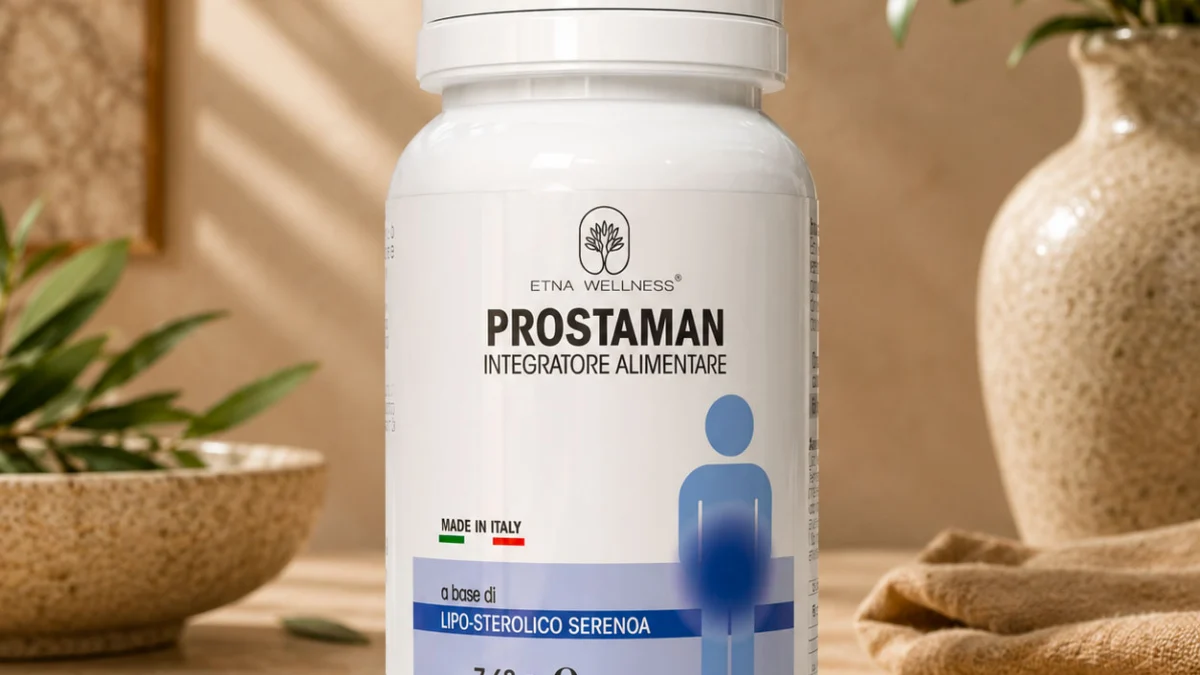
The current official ProstaMan page identifies a lipid-sterolic extract of Serenoa repens fruit standardised to 90% total fatty acids. That is a more reliable current comparison point than repeating a dose figure that is not shown on the public product page.
So instead of asking whether a single milligram number is “strong”, ask: what exact preparation is used, how is it standardised, what is the labelled daily use, and what evidence applies to that preparation?
Where ProstaMan fits in the Etna Wellness range
Once the decision criteria are clear, the Etna Wellness product can be understood in context rather than treated as the starting point.
The current official Etna Wellness page identifies ProstaMan as a 24-capsule product based on lipid-sterolic Serenoa repens fruit extract standardised to 90% total fatty acids, with a labelled use of one capsule per day. That gives you two useful pieces of information: the formula is centred on one recognisable botanical route, and the routine is simple to understand.
What those facts do not prove is equally important. They do not establish that ProstaMan treats benign prostate enlargement, reduces urinary symptoms, changes PSA, prevents disease or replaces a medical evaluation.
The value of a simpler formula is clarity, not certainty
There can be practical value in a formula that is easy to read. You know what the main botanical is, what the daily amount is and how often it is taken. That can reduce one type of uncertainty: what am I actually buying?
But reducing formula uncertainty must not be confused with creating outcome certainty. A simpler ingredient story is useful because it makes comparison easier; it is not a reason to overstate what the product can do.
This is where perceived value becomes more meaningful. Instead of value being “more ingredients” or “stronger claims”, value becomes clarity, relevance, routine fit and an informed reason for choosing.
Picture the decision before you picture the bottle
Imagine the next few weeks, not just the moment of purchase. If you are using a supplement as part of a general wellness routine, can you explain to yourself why you chose it, what the main ingredient is, how you take it and what you are not expecting it to do?
If the answer is yes, the decision is becoming more conscious. If the reason is still “because the word prostate was on the label”, you probably need another layer of information before buying.
And if your real concern is a urinary change that is affecting sleep, daily comfort or confidence, imagine the value of resolving the uncertainty first. Knowing whether the issue needs clinical assessment can be more useful than adding another product to the routine.
When the smartest next step is not a supplement
Changes in urination can have different causes. Seek medical advice if you have persistent difficulty starting or passing urine, increasing frequency or other ongoing urinary changes. Urgent assessment is important if you are unable to urinate, have blood in your urine or have significant pain.
That safety boundary does not weaken the supplement decision. It strengthens it, because it separates a general wellness purchase from situations where a diagnosis matters more than a product.
Five questions to ask before buying a prostate supplement
What is my real reason for considering it? General wellness or an attempt to manage symptoms?
What exactly is in the daily serving? Plant, extract type, standardisation and amount.
What does the evidence support — and what does it not support?
Does the routine fit me? Dose, frequency, medicines, warnings and consistency.
Would I still choose it if the front-of-pack marketing disappeared? If not, compare again.
A more conscious purchase usually feels simpler, not more exciting
Good supplement decisions often become less dramatic as they become more informed. You move from “I need the strongest product” to “I understand what I am comparing”. You move from “this ingredient is famous” to “I know what the evidence actually says”. And you move from buying because of a concern to choosing only when the product genuinely fits the role you have defined for it.
That is the point at which a product can have higher perceived value without exaggeration: you understand why it is there, what it contains, how it fits your routine and where its limits are.
Choose the next step that matches your level of certainty
If you are still working out what kind of support you are actually looking for, start with the wider needs guide. If you already understand the role of the formula but want to verify ProstaMan’s current details, ask for information. If the formula and routine are already clear to you, you can create customer access and check the current product, price and availability before deciding whether to order.
Creating customer access does not place an order. On mobile, scroll down on the registration page, complete your customer details, enter the shop and verify the current product, format, price and availability before ordering.
Frequently asked questions
What is saw palmetto?
Saw palmetto is the common name for Serenoa repens, a botanical ingredient widely used in men’s-health supplements.
Does saw palmetto treat an enlarged prostate?
Current evidence reviews do not support presenting saw palmetto used alone as an effective treatment for urinary symptoms associated with benign prostate enlargement. A food supplement should not be presented as treating, preventing or curing a medical condition.
How is the Serenoa extract described?
The current official product page identifies a lipid-sterolic Serenoa repens fruit extract standardised to 90% total fatty acids. It does not publish a separate milligram amount for the extract on the public page.
How is ProstaMan taken?
The current official product page states one capsule per day. Always recheck the current label before use.
When should urinary symptoms be checked medically?
Persistent urinary changes should be discussed with a healthcare professional. Inability to urinate, blood in the urine or significant pain require prompt medical assessment.
Bottom line
A prostate supplement should be the end of a decision process, not the beginning of one. Start with the reason you are searching, separate general wellness from symptoms that need assessment, compare the exact ingredient and daily amount, understand the evidence limits and only then decide whether the formula adds meaningful value to your routine.
A few useful notes before you choose
Use the formula check as a confidence step, not a reason to rush. Recheck the current label and serving, and remember that persistent or changing urinary symptoms are better assessed for their cause before a supplement becomes part of the decision.
This article does not adopt disease-treatment claims for ProstaMan or for saw palmetto supplements generally. Persistent or concerning urinary symptoms require appropriate medical assessment.
If you are comparing urinary tract supplements, you are probably looking for something more useful than a familiar ingredient name on the front of a bottle. You want to understand what the formula is built around, how it fits a daily routine and whether the product actually matches the reason you started searching.
That distinction is important because cranberry, D-mannose, Aloe-based formulas and men’s prostate products can all appear close together in a wellness range while answering very different needs. A clearer choice begins by separating those routes before choosing the product.
Start with the role: are you looking for a simple urinary-wellness formula, trying to compare cranberry with D-mannose, or actually dealing with a different need such as prostate support or general drainage? Once the role is clear, the label becomes much easier to interpret.
Why the ingredient name alone does not tell you enough
Cranberry is familiar. D-mannose is increasingly familiar. That familiarity can make the buying decision feel almost automatic: if both appear together, the formula must be “complete”.
But a more useful comparison asks what each ingredient contributes to the formula, whether the amounts are clearly declared, how often the product is taken and what evidence exists for the type of outcome you have in mind.
This reframes the choice from “which urinary supplement sounds strongest?” to “which formula is transparent enough for me to understand why I am choosing it?”
Cranberry and D-mannose are not interchangeable
Cranberry is a fruit-derived ingredient used in many urinary-wellness products. D-mannose is a simple sugar used in a different way within supplement formulas. Putting both in the same category does not make them the same ingredient or give them identical evidence.
This matters because the formula can look simple while the decision behind it is more nuanced. A product containing both ingredients may be convenient, but convenience should not replace understanding.
What you are comparing
Why it matters
Useful label check
Cranberry
Evidence varies by population and product preparation.
Exact cranberry preparation, amount and any declared standardisation.
D-mannose
It has its own evidence base and should not borrow claims from cranberry.
Exact daily amount and serving instructions.
Combination formula
Combining ingredients can improve convenience, but not automatically efficacy.
Whether both ingredients are quantified clearly enough to make a meaningful comparison.
What the current evidence means for a conscious choice
Cranberry has a more developed evidence base than many people realise, but the useful conclusion is not “cranberry always prevents UTIs”. A large Cochrane review found evidence of reduced recurrent symptomatic, culture-verified UTIs in some groups, including women with recurrent UTIs, while results were not the same across every population or preparation.
D-mannose should be considered separately. A large UK randomised placebo-controlled trial in women with recurrent UTIs found that daily D-mannose did not reduce the proportion experiencing another medically attended UTI over six months.
This difference is valuable because it prevents the common mistake of treating two popular ingredients as if they had the same strength or type of evidence. A thoughtful purchase does not require dismissing either ingredient; it requires understanding what the evidence can and cannot tell you.
Where CistinStop fits
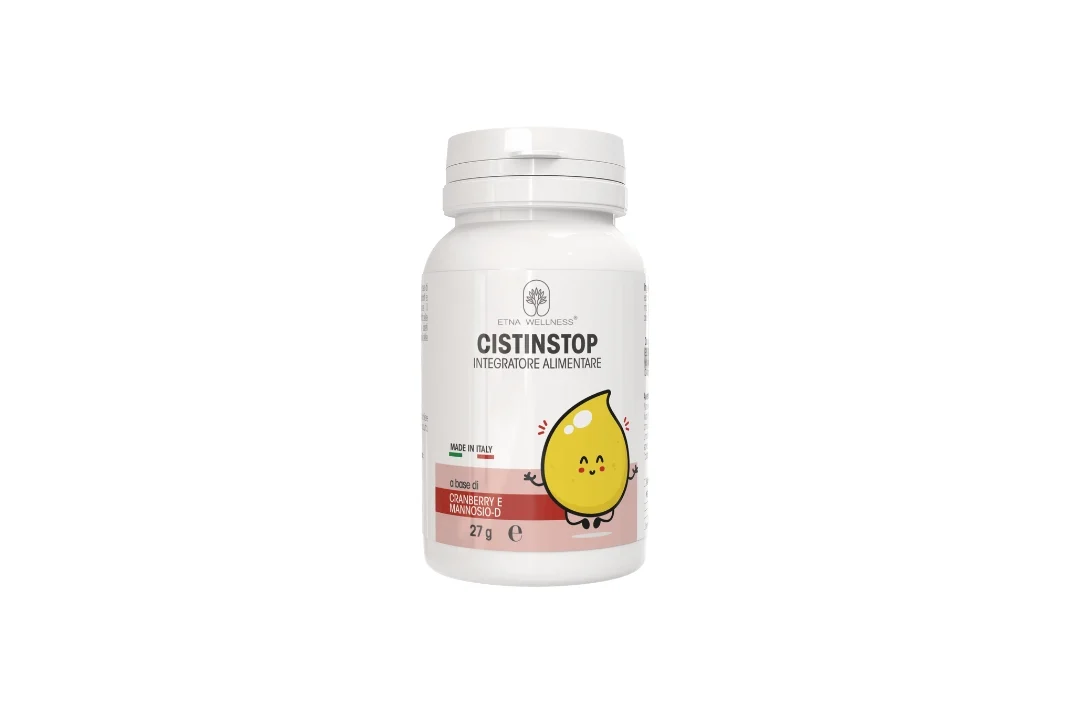
The current English Etna Wellness catalogue identifies CistinStop as a formula containing cranberry and D-mannose. The current catalogue direction is 1 capsule per day with water.
That gives the product a clear role inside the range: it is the most direct urinary-wellness bridge when you specifically want a cranberry + D-mannose combination in a simple capsule routine.
The current source set does not yet give a direct current English technical sheet with the exact cranberry and D-mannose quantities. Those milligram amounts therefore remain intentionally unpublished here rather than being reconstructed from older or secondary material.
This is actually useful for the buying decision. It keeps the value proposition honest: you can understand the formula identity and daily routine now, while the exact quantitative comparison remains something to verify on the current label before purchase.
Why one capsule a day can increase practical value
A simple routine has value when simplicity is part of what you are looking for. One capsule per day is easy to understand and easy to remember compared with a product that requires several servings at different times.
That does not make CistinStop “better” than every other urinary formula. It simply gives it a practical advantage for someone whose priority is a straightforward cranberry + D-mannose route.
Imagine the routine three weeks after purchase rather than on the first day. If you can see yourself taking the product consistently without reorganising your day around it, the formula may already have more practical value for you than a more complicated option.
Keep Aloe Nettle in its own adjacent role
Aloe Nettle sits close to urinary and drainage themes because its formula combines Aloe with nettle, but it should not be presented as a substitute for the direct cranberry + D-mannose route.
The current Aloe Nettle sheet describes 90% Aloe Vera gel, 6.5% honey and 2% nettle extract, with a daily amount of 100 ml divided into two or three servings.
That creates a different decision. CistinStop is a simple capsule formula centred on cranberry + D-mannose; Aloe Nettle is a drinkable Aloe-plus-botanical formula. If the need is specifically urinary-formula comparison, CistinStop remains the clearer direct route. If the desired routine is broader and Aloe-led, Aloe Nettle belongs in that separate comparison.
Keep prostate support separate too
Urinary searches can sometimes overlap with men’s prostate concerns, but they should not be merged into one buying path. A man looking at urinary changes may have a very different decision from someone simply comparing a cranberry-based supplement.
For that reason, ProstaMan and the dedicated Prostate Supplements guide remain a separate route rather than being folded into this article.
This separation increases clarity: each product is easier to evaluate when it is connected to the need it was actually designed to address.
How ethical upselling should work in the urinary category
The wrong approach would be to turn every urinary-wellness search into a bundle of CistinStop + Aloe Nettle + drainage products + prostate support.
The better approach is much simpler: identify the dominant need, choose the most coherent route and add a second formula only if there is a second distinct reason that can be explained clearly.
That makes the decision more persuasive because the customer sees why an extra product might add value — and equally why it may not be necessary.
Upselling becomes a question of relevance, not quantity.
What to check when comparing two urinary supplements
Formula identity: cranberry, D-mannose, both, or another route entirely?
Exact quantities: are the main ingredients clearly quantified?
Preparation: what form of cranberry is used and is any standardisation declared?
Daily routine: how many capsules, scoops or servings are required?
Evidence: are you looking at ingredient-level evidence or a claim about the finished product?
Fit: can you realistically see yourself following the routine consistently?
When these points are clear, the label stops feeling like a collection of reassuring words and starts becoming a decision tool.
Picture the choice after the marketing disappears
Imagine the front label without words such as “urinary”, “bladder” or “support”. Would you still understand what the product contains, how you take it and why you selected it?
If the answer is yes, your decision is becoming more conscious. You are choosing the formula rather than the promise.
For CistinStop, the current decision is straightforward: cranberry + D-mannose, one capsule per day, with the exact quantitative details to be checked on the current label when you access the product.
Choose the urinary route first, then verify the current formula
If you are still deciding whether your need is urinary wellness, Aloe/botanical support, prostate support or general drainage, start from the wider needs guide. If the cranberry + D-mannose route is already clear, ask for current product information or create customer access and verify CistinStop’s present label, price and availability before deciding whether to order.
Creating customer access does not place an order. On mobile, scroll down on the registration page, complete your customer details, enter the shop and verify the current product, formula, format, price and availability before ordering.
Frequently asked questions
Does CistinStop contain cranberry and D-mannose?
Yes. The current English Etna Wellness catalogue identifies both ingredients in the formula.
How is CistinStop currently taken?
The current English catalogue states one capsule per day with water.
Why are the exact cranberry and D-mannose amounts not shown here?
Because the current project source set does not yet include a direct current English technical sheet that confirms those quantitative values. They should be checked on the current label rather than inferred.
Is cranberry the same as D-mannose?
No. They are different ingredients with different evidence bases and should be evaluated separately even when combined in one formula.
Can a cranberry or D-mannose supplement treat an active UTI?
A supplement should not be treated as a substitute for appropriate assessment or treatment of an active urinary infection. The formula comparison in this guide is intended for an informed wellness-product decision.
Bottom line
The strongest urinary-supplement decision is not the formula with the most familiar ingredient names. It is the one whose role, evidence, daily routine and label transparency you understand. CistinStop currently offers a simple cranberry + D-mannose capsule route, while adjacent Aloe, drainage and prostate products remain separate choices for separate needs.
A few useful notes before you choose
Urinary discomfort is common, and many people first notice changes such as needing to urinate more often, urgency or discomfort. When you are simply comparing a wellness product, the ingredient framework above is a useful way to make the choice feel clearer.
If symptoms suggest an active UTI, NHS guidance provides a straightforward route to appropriate care. In England, many women aged 16–64 who are not pregnant or breastfeeding can start with a pharmacist. Some situations — including pregnancy, male urinary symptoms, blood in the urine, fever or shivering, back pain, recurrent infections or symptoms that worsen or do not improve — merit more direct medical advice. This is a useful context check rather than a reason to feel alarmed.
Cranberry evidence also depends on who is using it and for what purpose. Cochrane’s 2023 review found benefit for prevention in some recurrent-UTI populations, but not uniformly across every group, while a separate Cochrane review found no good-quality evidence that cranberry treats an existing UTI. D-mannose also has a separate evidence base: a large 2024 UK primary-care trial did not find a preventive benefit in women with recurrent UTIs.
As a simple final check, follow the current label for the exact product you choose. If pregnancy, regular medicines, recurring urinary problems or an existing health condition are relevant to you, checking suitability with an appropriate healthcare professional can add confidence to the decision.
Product-specific facts in this draft are anchored to the current English Etna Wellness catalogue and project source reconciliation: CistinStop = cranberry + D-mannose, one capsule per day with water. Exact ingredient quantities remain gated until a direct current English technical sheet or label is available. Aloe Nettle formula details use the current product sheet already supplied for this project. External evidence context was refreshed on 21 September 2026 against NHS UTI guidance, the 2023 Cochrane cranberry reviews and the 2024 UK randomised D-mannose trial. No finished-product claim to prevent or treat UTI is adopted.
When you search for immune supplements, the category can look much simpler than it really is. Vitamin C, medicinal mushrooms, antioxidant formulas and broader nutrition products can all appear under the same “immune support” umbrella, even though they are supported by very different kinds of evidence.
The useful decision is not to look for the product that sounds like the strongest “immune booster”. It is to understand which formula type matches the role you actually want and how much confidence the current evidence gives you.
Start from the route: are you looking for a nutrient-led formula with authorised claim language, a mushroom-based botanical route, a broader antioxidant formula, or simply stronger everyday nutrition? Once the route is clear, the product comparison becomes much easier.
www.etnawellnesselitegroup.com
For an Etna-specific antioxidant and micronutrient formula, continue with the OxyPlus Etna Wellness guide. For a separate nutrient-formula example with detailed daily amounts, see the AC Plus ingredients guide.
Why “immune support” is not one single product category
Many products sit next to each other because they are marketed around the same broad idea, but that does not mean they should inherit the same claims.
A vitamin-C formula can be compared using exact nutrient amounts and authorised claim conditions. A mushroom formula needs a different comparison: species, extract, standardisation and dose. An antioxidant blend may need to be read primarily through its nutrient composition rather than through broad marketing language.
This distinction matters because it changes the buying question from “which one is strongest?” to “which type of evidence fits the type of formula I am considering?”
Four routes worth separating before you choose
Formula route
What gives it value
What to compare
Vitamin / mineral
Clear nutrient identity and, where conditions are met, authorised normal-function claims.
Exact nutrient amount, daily serving and claim conditions.
Mushroom / botanical
A specific extract-based route with its own quality criteria.
Species, fruiting body/sporophore, extract type, standardisation and daily dose.
Antioxidant-oriented
A broader formula that may combine several nutrients and botanicals.
Exact formula, qualifying nutrients and which claims are actually authorised.
Nutrition-led
A broader daily nutrition route rather than a narrow single-ingredient supplement.
Protein, vitamins, minerals, serving structure and how the product fits the rest of the diet.
Vitamin C: the clearest route when you want claim transparency
Vitamin C is one of the easiest examples of why formula type matters. Where the relevant conditions of use are met, vitamin C can use authorised normal-function wording within the Great Britain claims framework.
That gives a nutrient-led formula a practical advantage in comparison: the label can be evaluated against a defined standard rather than against vague “immune boosting” language.
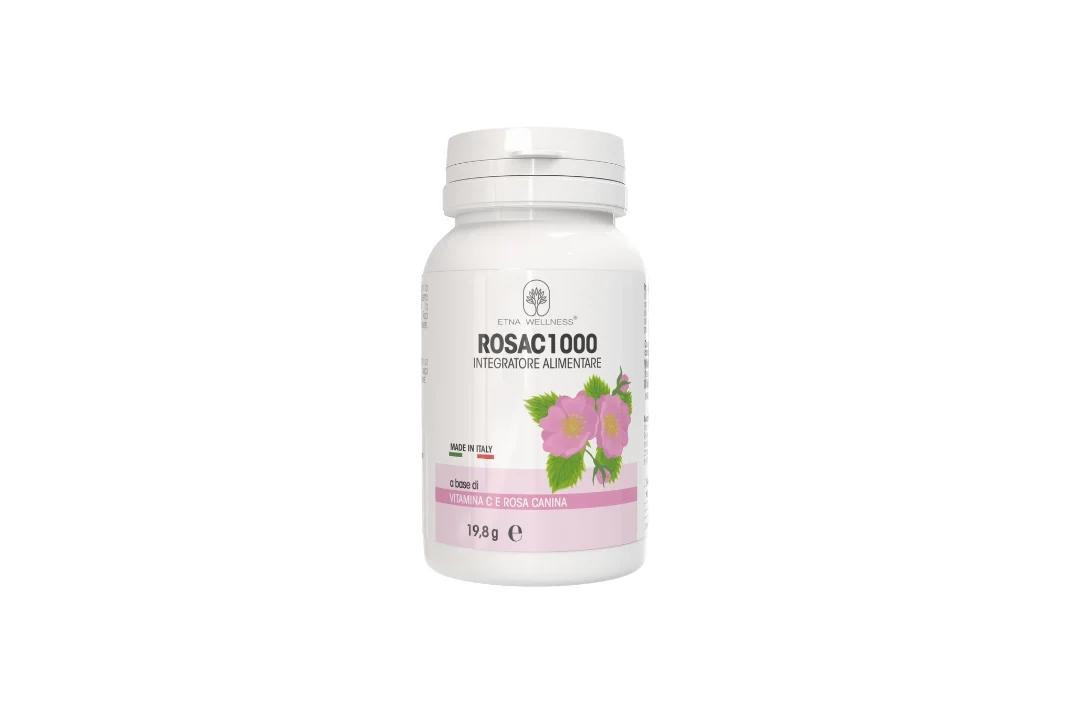
In the current ETNA.COM source set, Rosa C1000 is the vitamin-C-focused branch. Existing project material identifies it as a vitamin-C-led product, but exact English-market quantitative details remain gated until a direct current English technical source confirms them.
So the value proposition is already clear at category level: Rosa C1000 belongs in the nutrient-led route, where label amount and authorised wording matter most.
Reishi Puro: a different decision because the formula class is different
Reishi Puro belongs to the mushroom route, not the vitamin route.
Current project technical material identifies Ganoderma lucidum sporophore extract with declared polysaccharide standardisation. That makes the useful comparison about the mushroom source, extract and standardisation rather than about borrowing a vitamin-C claim.
This is an important value distinction: a mushroom formula can be attractive because of its specific extract architecture, but that does not mean it should be described with the same evidence language as a qualifying vitamin formula.
OxyPlus: when a broader antioxidant formula changes the comparison
OxyPlus sits in the broader antioxidant-oriented branch.
Project source material describes a formula involving vitamins A, C and E, selenium and a botanical component, but the current English source lock is not yet strong enough to support broader finished-product claims.
That means the useful comparison is structural: OxyPlus is a broader formula than a single nutrient or single mushroom product. Its value should be judged from the exact composition and qualifying nutrient claims once those are directly confirmed in the current English source set.
Keep Shake Plus in the nutrition route
Shake Plus already has its own protected product owner and should not be pulled into this page as if it were just another “immune supplement”.
Its role is broader nutrition. If the reader’s real need is meal structure, protein, vitamins and minerals within a daily nutrition routine, that should remain a separate path.
This separation protects the usefulness of both articles: the Immune Supplements page helps you choose a formula class, while the Shake Plus owner explains the product itself.
How ethical upselling should work here
The wrong approach would be to turn “immune support” into a stack of vitamin C + Reishi + OxyPlus + Shake Plus by default.
The better approach is to ask whether there is one need or more than one.
If the reader simply wants a nutrient-led immune-support route, a qualifying vitamin formula may already be enough. If they specifically want a mushroom-based routine, that is a different choice. A broader antioxidant or nutrition product should only be added when it answers another clearly identified need.
That is how upselling becomes useful rather than mechanical: each additional product needs its own reason to be there.
Why “more ingredients” is not the same as “more immune support”
A larger ingredient list can look more complete, but completeness depends on the purpose.
If your priority is claim transparency, a simple nutrient formula may actually be easier to assess. If your priority is a specific mushroom extract, a focused botanical formula may make more sense. If you deliberately want a broader multi-nutrient formula, then the added complexity can create more value.
The useful question is not how many ingredients are present. It is whether every major ingredient makes the formula more coherent for the need you started with.
Picture the routine before you decide
Imagine the product already sitting in your daily routine three weeks from now. Do you know why you are taking it? Can you explain whether it is nutrient-led, mushroom-led, antioxidant-oriented or part of broader nutrition?
If the answer is yes, the formula is starting to make sense beyond the marketing.
That is where perceived value becomes stronger: the product feels relevant because you understand its role, not because the label sounds dramatic.
A six-question fit check
What kind of formula do I actually want? Nutrient, mushroom, antioxidant or broader nutrition?
What exact ingredients are driving my decision?
Are the key amounts directly confirmed on the current label?
Is the health wording authorised for this exact nutrient and serving?
Would a second product answer a genuinely different need?
Can I picture this routine staying simple enough to follow?
When those answers are clear, the choice becomes easier to trust and easier to explain.
Choose the formula route before you choose the product
If you are still deciding whether your need is nutrient-led, mushroom-led, antioxidant-oriented or part of a broader nutrition routine, start from the needs guide. If the route is already clear, ask for help comparing the current formulas. Then create customer access and verify the present product, format, price and availability before deciding whether to order.
Creating customer access does not place an order. On mobile, scroll down on the registration page, complete your customer details, enter the shop and verify the current product, formula, format, price and availability before ordering.
Frequently asked questions
Are all immune supplements supported by the same evidence?
No. Nutrient claims, mushroom evidence and broader antioxidant formulas belong to different evidence classes and should be compared separately.
Does vitamin C automatically justify any immune claim?
No. The exact product must meet the relevant conditions of use and use authorised wording correctly.
Is Reishi Puro the same type of product as Rosa C1000?
No. Reishi Puro belongs to the mushroom/botanical route, while Rosa C1000 belongs to the nutrient-led vitamin-C route.
Should several immune-support products automatically be combined?
No. A combination only makes sense when each product answers a separate, clearly identified need.
Bottom line
The useful immune-supplement decision is not “which formula sounds like the strongest booster?” but “which evidence class and formula type match what I actually want?” Keep vitamin claims, mushroom evidence, antioxidant formulas and broader nutrition in their own lanes, then choose the simplest route that gives you a clear reason to buy.
A few useful notes before you choose
Immune-support language can become exaggerated very quickly online, so a reassuring way to compare products is to stay close to the current label and the evidence class behind the formula.
For Great Britain, commercial supplement communication should remain within the authorised nutrition and health claims framework. In practical terms, that means qualifying nutrients can use authorised normal-function wording when conditions are met, while products should not be presented as preventing or treating colds, flu or other infections.
As a simple final check, follow the current label for the specific product you choose. If pregnancy, breastfeeding, regular medicines, allergies or an existing condition are relevant to you, checking suitability with an appropriate healthcare professional can add confidence.
Sources and verification
This draft follows the current ETNA.COM immune-support owner map. Rosa C1000 remains the vitamin-C branch; Reishi Puro remains the mushroom branch; OxyPlus remains the broader antioxidant branch; Shake Plus remains a separate protected nutrition owner. Exact English-market Rosa C1000, Reishi Puro and OxyPlus quantities and finished-product claims remain gated until direct current English technical sources are closed. No infection-prevention or disease-treatment claim is adopted.
Spirulina looks like a simple supplement until you try to choose one. Capsules, tablets and powders can all carry the same familiar name, yet the daily routine, serving size, source information and label transparency can feel very different.
The useful decision is therefore not “which spirulina sounds strongest?”. It is which format and formula make the most sense for the way you actually want to use it.
Start from the routine: do you want the convenience of capsules, or do you genuinely prefer measuring and mixing a powder? Once the format is clear, dose, source and label quality become much easier to compare.
www.etnawellnesselitegroup.com
For the Etna-specific capsule format, continue with the Spirucaps Etna Wellness guide. If you are comparing spirulina with broader multi-ingredient wellness formulas instead, see the Immune Supplements comparison guide and compare each formula by its actual declared ingredients.
Why format changes the value of the product
Two spirulina products can contain the same general ingredient category but create very different daily experiences.
A powder asks you to measure, mix and accept the taste. Capsules remove those steps and make the serving more portable. Neither format is automatically more effective, but one may be much easier for you to use consistently.
This is where perceived value becomes practical: the product that fits your routine better may be the product you are more likely to keep using.
Capsules vs powder: what are you really choosing?
Format
Practical value
What to check
Capsules
Simple, portable and easy to repeat without measuring.
Capsule count, amount per capsule, total daily serving and other ingredients.
Powder
Flexible serving format for people who prefer mixing into drinks or foods.
Serving weight, measuring method, taste, storage and source information.
Why the species and source deserve more attention than the word “superfood”
“Superfood” is a marketing shortcut. It tells you very little about the exact product.
A better label comparison starts with the declared species or source. Spirulina products commonly identify Arthrospira platensis, but what matters commercially is whether the exact product tells you clearly what it contains, how much you take and where any quality or organic statement comes from.
That shift is useful because it turns an emotional label into a practical decision: you are no longer buying the reputation of spirulina; you are choosing a specific product with a specific routine.
Dose transparency matters more than a bold milligram number
One of the easiest mistakes is comparing the biggest number on the front of the pack.
A meaningful comparison should tell you the recommended daily amount, not only the amount in one capsule or scoop. A product with smaller capsules taken several times can provide a different daily total from a product with fewer larger capsules.
More milligrams do not automatically mean more value. The useful question is whether the amount is clearly documented and whether the serving fits the routine you want.
Where Spirucaps fits
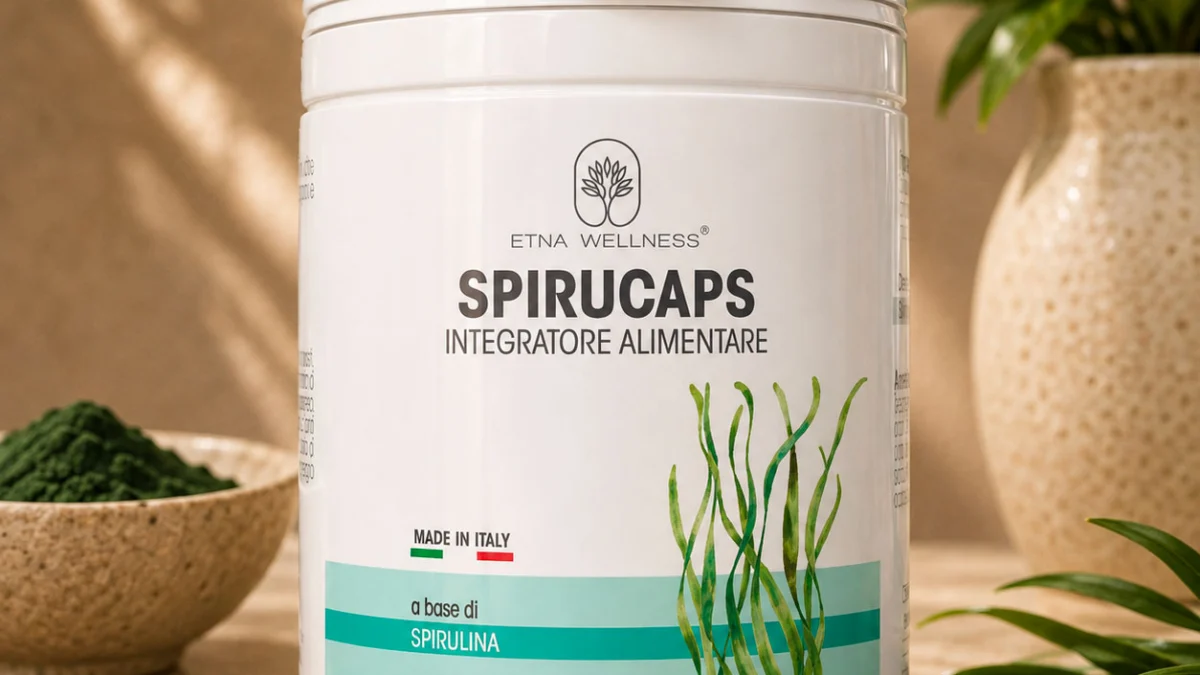
The current English Etna Wellness catalogue identifies Spirucaps as a capsule-format supplement containing Arthrospira platensis, with current directions of 3 capsules per day, away from meals.
That gives Spirucaps a clear place in the decision tree: it is for the person who values a simple capsule routine rather than preparing spirulina powder.
The current project source set does not yet provide a direct current English technical sheet confirming the exact amount per capsule or total daily milligrams. Those figures are therefore intentionally left out rather than carried forward from older material.
This does not weaken the comparison. It makes the value proposition clearer: Spirucaps currently wins on routine simplicity and label identity, while the quantitative detail remains something to verify on the current product label before purchase.
When capsules may create more perceived value
Imagine a normal weekday rather than the first day you open the product. If you travel, eat away from home or simply dislike measuring green powder, capsules may make the routine feel much easier.
That convenience is not evidence of greater biological effectiveness. It is evidence of better behavioural fit.
And behavioural fit matters because an inconvenient product can have high theoretical value but low practical value if you stop using it.
When powder may still be the better fit
Powder can make more sense when you already prepare smoothies, shakes or other measured drinks and prefer seeing the amount you add yourself.
For that person, the extra preparation is not friction; it is part of the ritual.
The important point is that neither format should be positioned as universally superior. The stronger decision is the one that matches the routine you can realistically maintain.
How ethical upselling should work in the spirulina category
Spirulina should not automatically become a reason to add an energy product, an immune product or a multivitamin.
A second product should enter only when there is a second need that is genuinely separate. If the reader is simply looking for a convenient spirulina routine, adding more products does not automatically increase value.
Upselling becomes useful only when the additional formula answers another clearly identified need and the customer can understand why it belongs there.
A five-point spirulina decision check
Format: capsules or powder — which one fits your day?
Identity: is the species/source clearly declared?
Daily serving: can you see the total recommended amount, not just one unit?
Transparency: are organic, sourcing or quality claims documented clearly?
Routine fit: can you picture yourself using it consistently after the novelty has passed?
When those five points are clear, the decision becomes much simpler and the perceived value becomes more concrete.
Picture the routine after three weeks
Imagine that the product is already part of your day. You are not thinking about marketing anymore; you are simply following the routine.
Do three capsules away from meals feel easy? Would you prefer measuring powder? Does the label give you enough information to feel confident about what you are taking?
That future view is often more useful than comparing dramatic claims because it tells you whether the product actually fits the life you have.
Choose the format first, then verify the current Spirucaps label
If you are still deciding whether spirulina is the right route for your need, start from the wider needs guide. If a capsule-format spirulina already fits what you are looking for, ask for current product information or create customer access and verify the present Spirucaps label, price and availability before deciding whether to order.
Creating customer access does not place an order. On mobile, scroll down on the registration page, complete your customer details, enter the shop and verify the current product, formula, format, price and availability before ordering.
Frequently asked questions
Is spirulina powder better than capsules?
Not automatically. The main difference is format and routine. The better option is the one whose current serving and preparation fit you more naturally.
What species is listed for Spirucaps?
The current English catalogue identifies Arthrospira platensis.
How is Spirucaps currently used?
The current English catalogue states three capsules per day, away from meals.
Why is the exact milligram amount not shown here?
Because the current project source set has not yet closed that quantitative fact with a direct current English technical sheet or label.
Does a higher spirulina dose automatically mean a better product?
No. Dose is only one part of the comparison; source transparency, serving instructions, formula quality and routine fit also matter.
Bottom line
The useful spirulina decision is not “powder or capsules: which is stronger?” but “which format gives me the clearest, easiest routine with a label I understand?” Spirucaps currently offers a simple capsule route built around Arthrospira platensis and three capsules per day, while exact quantitative details should be confirmed on the current label.
A few useful notes before you choose
Spirulina is often surrounded by broad “superfood”, detox, immunity and energy language online. A calmer way to compare products is to keep those broad messages separate from the exact formula in front of you and focus on what the current label actually documents.
For Great Britain, commercial supplement communication should remain within the authorised nutrition and health claims framework, so general enthusiasm for spirulina should not be turned into promises to prevent, treat or cure disease.
As a simple final check, follow the current label for the specific product you choose. If pregnancy, breastfeeding, regular medicines, allergies or an existing condition are relevant to you, a suitability check with an appropriate healthcare professional can add confidence.
Sources and verification
This draft uses the current ETNA.COM project source lock for Spirucaps: capsule format, Arthrospira platensis and three capsules per day away from meals. Exact per-capsule and daily milligram quantities remain intentionally gated until a direct current English technical sheet or label is available. No detox, disease-treatment, immunity or weight-loss claim is adopted.
Moringa supplements can look similar on the front of the pack while using very different parts of the plant and very different preparations. That is why “moringa” alone is not enough information to make a useful comparison.
For a broader framework covering vitamins, minerals, botanicals and stimulant-style formulas, see the energy supplement comparison guide.
The clearer route is to check which plant part is used, whether the formula is an extract or a simple powder, whether any standardisation is declared, what the daily serving is and how transparent the label is.
Start with the raw material: seed and leaf products should not be treated as interchangeable just because both are sold as “moringa”.
Moringa products may use leaves, seeds or other plant material. Those are not automatically equivalent ingredients, and research or traditional use associated with one part should not simply be transferred to another.
For that reason, a good label should tell you clearly which part of Moringa oleifera is actually present.
Seed vs leaf: the first comparison to make
Many online articles discuss moringa generically, but the useful consumer question is more specific: is this a leaf-based product or a seed-based product?
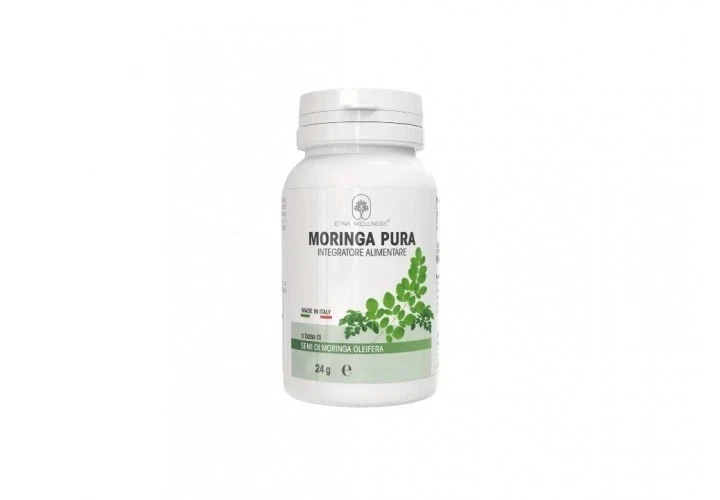
Moringa Pura, the Etna Wellness example used in this guide, is currently identified by the official English product page as a Moringa oleifera seed dry extract.
That immediately places it in a different comparison category from a simple moringa leaf powder.
Extract vs powder: another important distinction
A dry extract and a simple powder are different preparation types.
A powder is generally the milled raw material. An extract has undergone a process intended to concentrate selected components. That does not mean an extract is automatically “better”; it means the formulas should be compared on their own terms.
When the label tells you the preparation type clearly, you can make a more meaningful comparison.
What standardisation tells you
The current official English Moringa Pura information states that the seed dry extract is standardised to 40% polysaccharides.
That is a useful compositional fact because it tells you that a particular group of compounds has been measured and declared consistently.
It should not be turned into a promise of a specific health outcome. Standardisation improves transparency; it does not, by itself, prove that a finished product will deliver weight-loss, digestive, circulation or metabolic results.
Daily serving matters more than capsule marketing
The current official English page gives a use of 1–2 capsules per day with water and identifies a 60-capsule pack.
The exact 400 mg-per-capsule figure seen in older secondary material is not repeated in the current English page used for this editorial lock, so it is deliberately not presented here as a current customer-facing fact.
This is the safer comparison approach: use what the current direct source confirms and keep unresolved quantitative details out until they are re-verified.
Where Moringa Pura fits
Moringa Pura is a seed-extract route. Its value is therefore not that it represents every kind of moringa supplement, but that it provides a clearly defined formula structure within the category.
If you are specifically looking for a leaf powder, it belongs to a different comparison. If you are looking for a standardised seed extract in capsule form, Moringa Pura is the more relevant route to evaluate.
Why broad “moringa benefits” lists are not enough
Moringa is often marketed online with very broad claims touching digestion, circulation, cholesterol, glucose, weight management, immunity, beauty and more.
The problem is that generic botanical discussion can easily blur three separate things:
research on a plant or plant part;
the exact composition of a finished supplement;
what a finished product is actually allowed and able to claim.
A stronger buying decision keeps those three layers separate.
How to compare moringa products more intelligently
What to check
Why it matters
Plant part
Seed and leaf are not interchangeable.
Preparation type
Extract and simple powder are different product formats.
Standardisation
Helps describe composition more precisely.
Daily serving
Lets you compare the actual routine, not only the front label.
Claim quality
Prevents generic botanical language from becoming a finished-product promise.
Why more botanical ingredients are not automatically better
A formula with more plants can appear more complete, but a larger ingredient list only adds value when each additional ingredient serves a separate, clearly understood purpose.
If your aim is specifically to evaluate moringa, a focused formula can make the decision easier because the role of the product remains obvious.
How ethical upselling should work with moringa
Moringa Pura should not automatically lead to a detox, weight-management, beauty or immune product.
A second product only makes sense when there is a distinct second need. If the customer is simply evaluating moringa as a standalone botanical route, adding products for unrelated reasons creates complexity rather than value.
Picture the routine after the first month
Imagine the supplement becoming part of an ordinary week rather than a new purchase. Would a 1–2 capsule routine be easy to maintain? Do you understand why you chose a seed extract rather than a leaf powder? Can you explain what the 40% standardisation means without turning it into a promise?
If those answers are clear, the product has become easier to evaluate and easier to use consistently.
A six-question moringa fit check
Which part of the plant does the product use?
Is it an extract or a simple powder?
Is a standardisation declared?
Is the daily serving clear?
Are broad botanical claims being separated from finished-product evidence?
Does this formula type match what I actually want to buy?
Choose the moringa type before you choose the product
If you are still deciding whether moringa fits your need, start from the needs guide. If you already know you want to compare seed extract vs other moringa formats, ask for help comparing the current formula. Then create customer access and verify the current product, format, price and availability before deciding whether to order.
Creating customer access does not place an order. On mobile, scroll down on the registration page, complete your customer details, enter the shop and verify the current product, format, price and availability before ordering.
Frequently asked questions
Is Moringa Pura made from moringa leaf?
No. The current official English product page identifies it as a Moringa oleifera seed dry extract.
What does 40% polysaccharides mean?
It is the current declared standardisation of the seed extract. It describes the composition of the ingredient but should not be treated as a guaranteed measure of effectiveness.
How is Moringa Pura currently used?
The current official English information states 1–2 capsules per day with water.
How many capsules are in the current pack?
The current official English information identifies a 60-capsule format.
Why is the 400 mg-per-capsule figure not shown?
Because that figure is not stated in the current direct English page used for this source lock, so it remains gated until a current direct source confirms it.
Bottom line
The useful moringa decision is not “which product mentions the most benefits?” but “what type of moringa formula am I actually buying?” Separate seed from leaf, extract from powder, check standardisation and daily use, and keep broad botanical claims separate from finished-product evidence.
A few useful notes before you choose
Moringa is discussed online in many different health contexts, but that does not mean every moringa supplement has proven or authorised claims for digestion, circulation, weight loss, cholesterol, glucose control, immunity or other outcomes.
The most reassuring way to compare products is to stay close to the current label and to the exact plant part and preparation used.
As a simple final check, follow the current label for the exact product you choose. If pregnancy, breastfeeding, regular medicines, allergies or an existing condition are relevant to you, a suitability check with an appropriate healthcare professional can add confidence.
Sources and verification
This draft uses the current official English Moringa Pura facts locked in the ETNA.COM editorial evidence matrix: 60 capsules, Moringa oleifera seed dry extract, standardised to 40% polysaccharides, with directions of 1–2 capsules per day with water. The 400 mg-per-capsule figure remains excluded because it is not confirmed by the current direct English page. Broad weight-management, digestive, circulation and metabolic claims are not adopted.