Searching for the “best protein supplements UK” can make every product look like a competition for the highest protein number. That is too simple. A whey-based protein powder, a soy/pea blend, a fortified shake and a meal-replacement-style product can all look similar in a search result while serving different nutritional roles.
The useful question is not “which tub wins?” but which protein source, serving, formula and routine fit your actual goal?
Quick answer: compare protein supplements by protein grams per serving, protein source, serving size, sugars, fat, fibre, allergens, preparation, labelled role and cost per useful serving. Do not treat “highest protein” as the only quality criterion.
Why a ranked “best protein” list can be misleading
Protein supplements differ in more than protein quantity. They can use:
- whey protein;
- soy protein;
- pea protein;
- mixed animal-and-plant proteins;
- fortified shake formulas with fibre and micronutrients;
- specialised low-sugar or meal-structure formulas.
A product can be excellent for one use and a poor fit for another. That is why criteria matter more than a universal ranking.
Step 1: define the job you want the product to do
Start by choosing the role:
- add protein to an otherwise adequate diet;
- support a post-training routine with a convenient protein serving;
- create a practical snack;
- use a broader fortified shake with fibre and micronutrients;
- follow a meal-replacement strategy where the exact product and label support that role;
- avoid dairy or animal-derived ingredients for dietary reasons.
These are not interchangeable buying decisions.
Step 2: compare protein grams per serving
Use the amount in the serving you will actually take, not the percentage printed most prominently on the pack.
Check:
- serving size in grams;
- protein grams per serving;
- how many servings per pack;
- whether one serving matches the manufacturer’s suggested use.
This makes comparison much more transparent.
Step 3: check the protein source
Protein source affects dietary suitability, allergens and the nutritional profile.
Whey protein
Whey is dairy-derived and is commonly used in sports and high-protein formulas. It is not suitable for vegans and may not suit people who need to avoid milk-derived ingredients.
Soy protein
Soy can provide a concentrated plant protein source, but soy is also an allergen that needs to be checked on the current label.
Pea protein
Pea protein is plant-based and often used in vegan or dairy-free formulas. It should still be judged by the exact amount, formulation and role rather than assumed superior because it is plant-based.
Step 4: compare protein concentration, not only tub size
A 500 g tub can deliver less protein per serving than a smaller but more concentrated formula.
A useful comparison is:
protein grams ÷ serving size
This helps distinguish a protein-dense powder from a broader shake where fibre, vitamins, minerals or carbohydrates contribute more of the serving.
Step 5: check sugars, carbohydrates, fat and fibre
Protein is only one part of the formula.
Compare:
- total carbohydrate;
- sugars;
- fat;
- fibre;
- salt;
- added ingredients that materially change the role.
A low-sugar product is not automatically higher quality, and a higher-carbohydrate formula may simply be designed for a different use.
Step 6: distinguish “no added sugars” from “sugar free”
These phrases are not interchangeable.
A product can contain naturally occurring sugars or other carbohydrate sources while still having no added sugars. Always use the current nutrition table rather than reading one front-of-pack phrase in isolation.
Step 7: check whether the formula is protein-first or broader
| Formula type | Primary comparison | What not to assume |
|---|---|---|
| Protein-first powder | Protein grams, source, concentration, allergens. | That it is a complete meal. |
| Fortified shake | Protein + fibre + micronutrients + prepared serving. | That it is automatically a regulated meal replacement. |
| Meal replacement | Exact labelled role and full compositional conditions. | That any shake can perform this role. |
Step 8: compare the prepared drink, not only the powder
If a product is mixed with water, the final nutrition stays close to the powder values. If it is mixed with milk, soy drink or another beverage, the total calories, protein, carbohydrate and fat change.
This matters when comparing a simple protein powder with a shake designed around a prepared serving.
Step 9: check allergens and dietary fit
Common issues include:
- milk-derived whey;
- soy;
- other flavouring or manufacturing allergens;
- animal-derived vs plant-based protein sources.
Always verify the current label rather than assuming “plant protein”, “low sugar” or “protein shake” answers every suitability question.
Step 10: compare cost per useful serving
Price per tub is not enough.
Compare:
- servings per pack;
- protein grams per serving;
- cost per serving;
- cost per 20 g of protein where a direct comparison makes sense;
- whether you are paying for extra ingredients you actually value.
Current prices and promotions change, so editorial comparisons should not hard-code a “best value” winner without live verification.
A practical UK protein-supplement scorecard
| Criterion | Strong signal | Question to investigate |
|---|---|---|
| Protein amount | Clearly stated per serving. | Is the headline percentage hiding a small serving? |
| Source | Whey, soy, pea or blend clearly declared. | Does the source fit diet and allergies? |
| Serving role | Protein supplement vs fortified shake is explicit. | Is a shake being presented as a meal without support? |
| Sugars/fibre | Nutrition table is easy to compare. | Are front-of-pack claims doing more work than the numbers? |
| Preparation | Water/milk instructions are clear. | How does the prepared drink change nutrition? |
| Routine fit | Simple serving and realistic taste/format. | Will you actually use it consistently? |
How Protein Plus fits this framework
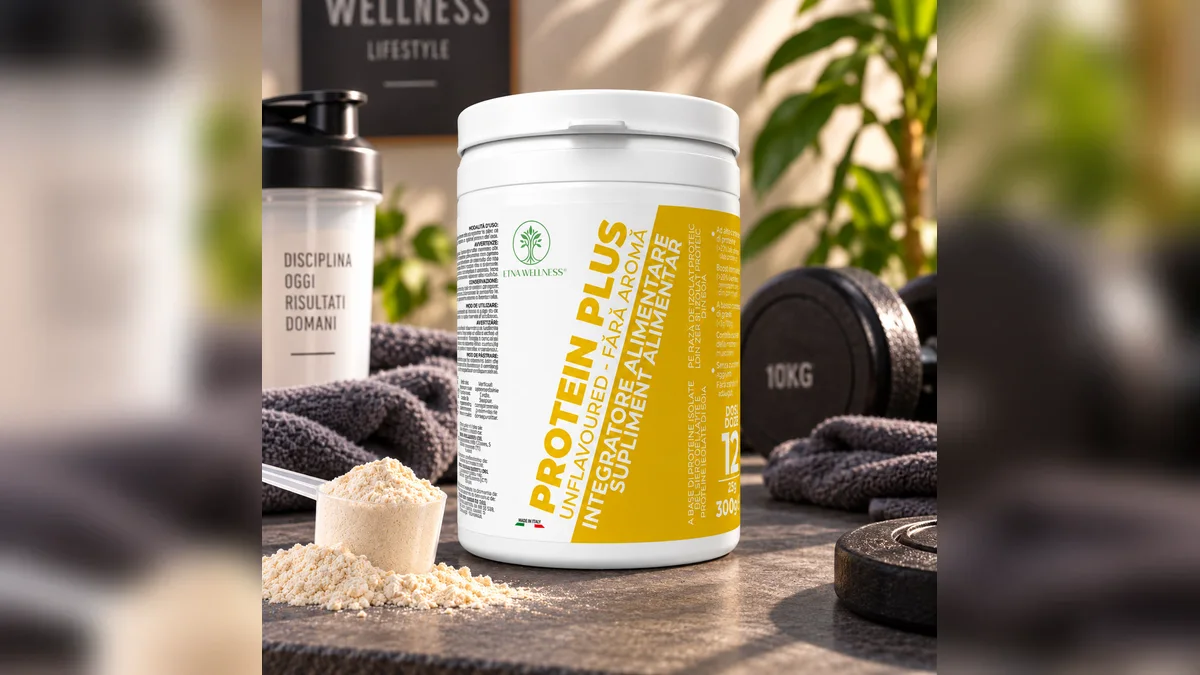
Protein Plus Etna Wellness is the clearest protein-first example in the current Etna Wellness product evidence.
The current technical source describes:
- 25 g serving mixed with about 200 ml water;
- 20.04 g protein per serving;
- 130 kcal;
- 2.51 g carbohydrate;
- 0.615 g sugars;
- 0.68 g fat;
- 60% instant whey protein;
- 32% isolated soy protein.
This makes its role easy to interpret: it is protein-dense and should be compared primarily as a protein supplement, not as a meal replacement.
How Shake Plus standard differs
For the dedicated product guide, see Shake Plus Etna Wellness.
Shake Plus standard uses a broader formula architecture based on soy protein, fibre, vitamins and minerals.
Per 25 g powder serving, the current product label declares approximately:
- 100 kcal;
- 9 g protein;
- 4.5 g fibre;
- 8.5 g carbohydrate;
- 5.75 g sugars.
It is prepared with 250 ml of semi-skimmed milk or soy drink, so the finished drink should not be compared with Protein Plus using powder values alone.
How Shake Plus Low Sugar changes the decision
The Low Sugar variant is a different formula again. Per 25 g powder serving, the current product label declares approximately:
- 85 kcal;
- 13.1 g protein;
- 3.65 g fibre;
- 2.11 g carbohydrate;
- 0.32 g sugars.
Its ingredient profile includes isolated pea protein prominently, which makes it materially different from standard Shake Plus.
Which Etna Wellness protein option is “best”?
There is no useful universal winner.
If the priority is maximum protein density, Protein Plus is the cleaner comparison. If the priority is a broader fortified shake, Shake Plus belongs in a different category. If lower sugar is particularly important, the Low Sugar variant changes the comparison again.
That is a decision framework, not a ranking.
What if you need vegan protein?
Do not assume every plant-containing shake is vegan. Verify the complete ingredient list and preparation instructions.
Protein Plus contains whey and is therefore not a vegan protein product. A pea-protein-containing formula may still include other non-vegan ingredients depending on the exact variant.
What if you need lactose-free protein?
“Lactose free” should be verified from the exact product label rather than inferred from the protein source.
Whey-derived products and milk-prepared shakes require particular attention. If lactose avoidance is essential, use only a current label that clearly supports that requirement.
Protein supplement vs meal replacement
A protein supplement and a meal replacement are not automatically the same thing.
Use Meal Replacement Protein Supplements: What Changes & What to Check for the category-level decision, and Protein Shake vs Meal Replacement for the direct comparison.
How this page differs from the broad Protein Supplements owner
This page owns the transactional/comparison intent around best protein supplements UK.
The broader Protein Supplements: Types, Uses & How to Choose remains the main category explainer and should carry the wider education about protein-source and format differences.
Picture the routine before choosing
Imagine the exact moment you plan to use the product. Is it after exercise, between meals, at breakfast, or when you need a broader shake rather than a protein-only supplement?
If that moment is clear, the formula role becomes easier to choose. If it is not, the “highest protein” number can distract from what you actually need.
Choose the protein role before the brand
If you are still deciding between protein-first, fortified-shake and meal-replacement routes, start with the needs guide. If you want help comparing current labels, ask for information. If you are ready to inspect current Etna Wellness products, create customer access and verify the live formula, serving, price and availability before ordering.
Ask for help comparing protein formulas
Create customer access & check current products
Creating customer access does not place an order. On mobile, scroll down, complete your customer details, enter the official shop, then verify the current product, serving, price and availability before ordering.
Frequently asked questions
What is the best protein supplement in the UK?
There is no single best option for everyone. Compare protein source, grams per serving, serving size, sugars, fibre, allergens, preparation and intended role.
Is whey better than plant protein?
Not universally. Whey, soy and pea proteins differ in source, dietary suitability and formula context. Choose according to your needs, allergies and the exact product composition.
How much protein is in Protein Plus?
The current technical source declares 20.04 g protein per 25 g serving.
How much protein is in Shake Plus?
The current standard label declares 9 g protein per 25 g powder serving, while the Low Sugar variant declares 13.1 g per 25 g serving.
Is Protein Plus a meal replacement?
No meal-replacement status is established by the current technical source. It is a protein-first food supplement.
Should I choose the product with the most protein?
Only if protein density is actually your main need. A broader fortified shake may be more relevant for a different routine, while a meal-replacement product belongs to another role entirely.
A few useful notes before you choose
Use the current label as the final reference for ingredients, allergens, preparation, serving size and nutritional values. If you have a medical condition, kidney disease, are pregnant or breastfeeding, follow a prescribed diet or are making a major change to protein intake, seek appropriate professional advice.
Food supplements should not be used as substitutes for a varied, balanced diet and healthy lifestyle.
Sources and verification
- ETNA.COM — Protein Supplements: Types, Uses & How to Choose.
- ETNA.COM — Protein Plus Etna Wellness.
- ETNA.COM — Meal Replacement Protein Supplements: What Changes & What to Check.
- ETNA.COM — Protein Shake vs Meal Replacement.
- Current supplied Protein Plus technical sheet and current Shake Plus standard / Low Sugar English labels — primary sources for formula and serving facts.
Independent distributor notice: this website is operated by an independent Etna Wellness distributor and is not the official corporate website. This guide provides comparison criteria rather than a ranked recommendation, and current product details should be verified from the live label and official shop.