“Lactose-free protein” sounds simple until you start reading labels. A product can be dairy-derived and still contain very little lactose, while a plant protein can be naturally dairy-free. Those are different situations, and the words lactose-free, dairy-free and vegan should not be treated as synonyms.
The safest buying decision starts with one question: what exactly are you trying to avoid — lactose, all milk-derived ingredients, or animal-derived ingredients entirely?
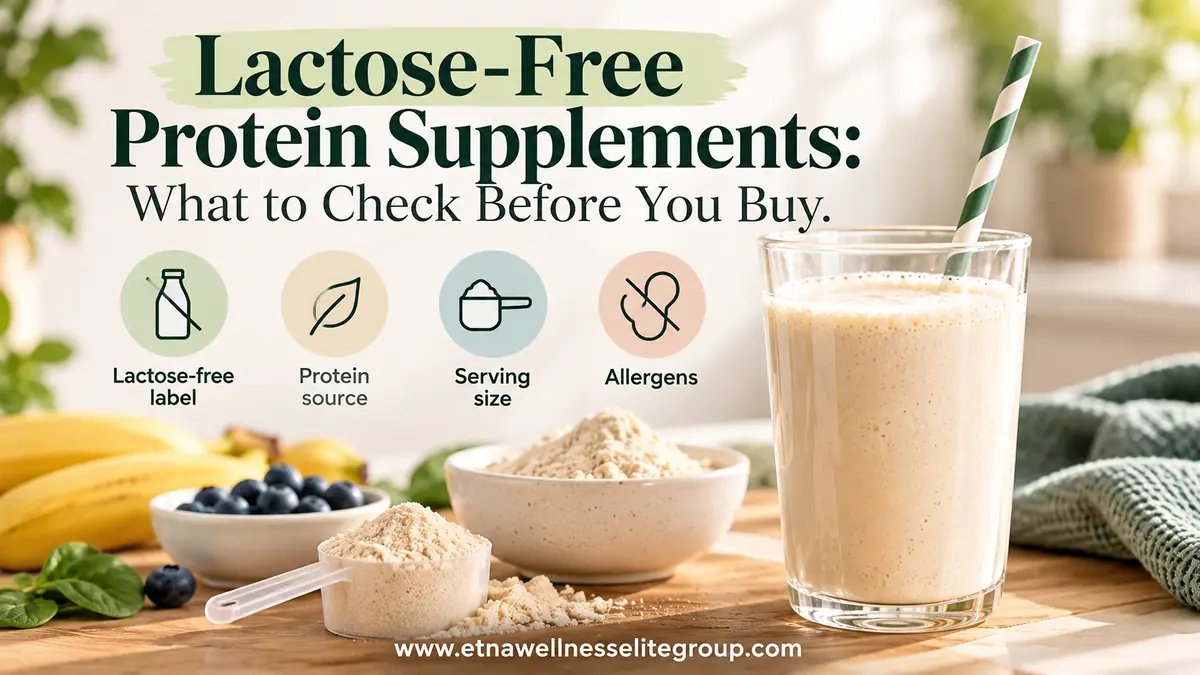
Quick answer: if you need a lactose-free protein supplement, do not infer suitability from “whey isolate”, “low sugar”, “plant protein” or “vegan style”. Check the exact current label for lactose-free status, milk allergens, protein source, preparation instructions and cross-contamination wording.
Lactose-free, dairy-free and vegan are three different filters
| Label concept | What it usually means | What it does not automatically mean |
|---|---|---|
| Lactose-free | Lactose is absent or below the applicable threshold/claim standard for the market. | No milk-derived ingredients. |
| Dairy-free | No dairy ingredients in the formula. | Automatically vegan if other animal-derived ingredients are present. |
| Vegan | No intentionally animal-derived ingredients in the finished product. | A specific lactose-free claim unless the label confirms it. |
Why whey protein needs careful label reading
Whey comes from milk. Processing can reduce lactose substantially, especially in more refined whey isolates, but that does not mean every whey isolate is automatically lactose-free.
If lactose avoidance is essential, the product should be assessed from its exact current label or manufacturer declaration rather than from the ingredient category alone.
What about whey concentrate?
Whey concentrate generally contains more of the non-protein components of milk than a highly refined isolate, so the lactose question becomes even more important.
Do not assume two whey products have the same lactose profile just because both are marketed as protein powders.
Plant protein is a different route
Pea, soy, rice and other plant proteins do not originate from milk, so they can provide a practical route for people who want to avoid dairy-derived protein sources.
However, plant-based does not automatically answer every suitability question. The finished product may contain:
- milk-derived flavouring or processing ingredients;
- soy or other allergens;
- manufacturing cross-contact statements;
- sweeteners or thickeners you may want to compare;
- other animal-derived ingredients in a non-vegan formula.
Lactose intolerance is not the same as milk allergy
This distinction matters.
Lactose intolerance relates to the digestion of lactose, the sugar found in milk. Milk allergy concerns proteins from milk and can require avoidance even when a product contains little or no lactose.
Someone with a diagnosed milk allergy should not use “lactose-free” as a shortcut for “safe for milk allergy”. The allergen statement matters more.
Step 1: identify the exact protein source
Start with the ingredient list. Common protein sources include:
- whey protein concentrate;
- whey protein isolate;
- casein;
- soy protein isolate;
- pea protein isolate;
- rice protein;
- mixed plant proteins.
The source determines which dietary and allergen questions you need to ask next.
Step 2: look for an explicit lactose-free statement
If the product must be lactose-free, an explicit current label statement is stronger than inference.
A front-of-pack phrase, technical specification or official manufacturer declaration should support the status. If it does not, treat the point as unresolved rather than assuming.
Step 3: read the allergen declaration separately
A lactose-free product can still contain milk proteins.
Check:
- milk;
- soy;
- other declared allergens;
- “may contain” statements where relevant to your situation.
Step 4: check the preparation liquid
A powder itself can fit your needs and still become unsuitable if the recommended preparation uses ordinary milk.
Compare the powder and the prepared drink separately. If the product can be mixed with water or a suitable plant drink, that may change practical fit.
Step 5: compare protein grams after suitability is confirmed
Only after the product passes your dietary filter should you compare:
- protein grams per serving;
- serving size;
- calories;
- carbohydrates and sugars;
- fat;
- fibre;
- price per serving.
Suitability comes before “best protein” ranking.
Step 6: decide whether you need protein-first or a broader shake
A lactose-free protein powder can be a protein-first product, while a plant-based fortified shake can combine protein with fibre, vitamins and minerals.
These are different formula roles.
For the broader comparison, see Protein Supplements: Types, Uses & How to Choose.
How Protein Plus fits this question
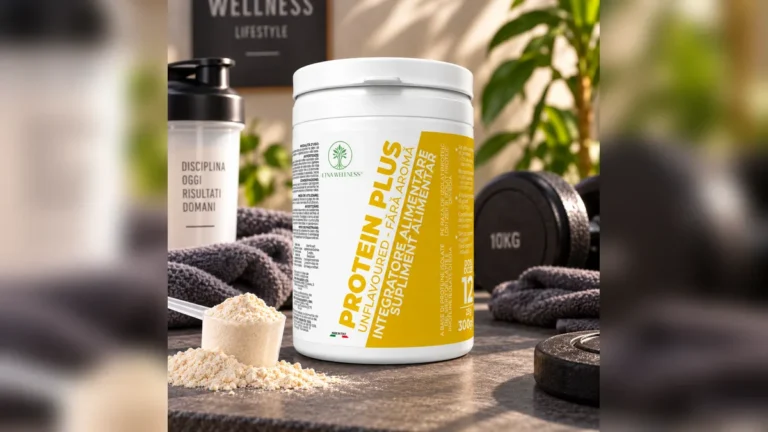
Protein Plus Etna Wellness contains whey protein together with isolated soy protein.
The current product technical documentation does not provide a confirmed lactose-free claim. For that reason, this article does not present Protein Plus as lactose-free.
If lactose avoidance is essential, verify the current official label or manufacturer confirmation before purchase.
How Shake Plus standard fits
For the dedicated product guide, see Shake Plus Etna Wellness.
Shake Plus standard is based on soy protein, fibre, vitamins and minerals, but its supplied current preparation uses semi-skimmed milk or soy drink.
That means the final drink can differ significantly depending on what you mix it with.
This article does not infer a lactose-free finished drink unless both the powder and the chosen preparation support that requirement.
How Shake Plus Low Sugar fits
The current Low Sugar formula prominently uses isolated pea protein and has a different nutritional profile from standard Shake Plus.
That makes it relevant to a plant-protein comparison, but the current product documentation does not justify turning that fact into a blanket lactose-free or vegan claim for every market and variant.
Again, exact current-label verification is the deciding step.
Can whey isolate be suitable for lactose intolerance?
Some whey isolates can contain very little lactose, but individual products differ.
Do not use the word “isolate” as a substitute for checking the label. If you know you react to lactose, choose only a product whose current documentation supports the level of avoidance you require.
Can lactose-free protein still contain milk?
Yes. Removing or reducing lactose does not remove milk proteins automatically.
This is why lactose intolerance and milk-protein allergy must not be treated as the same issue.
Is plant protein automatically better?
No. Plant protein may be a better fit for someone avoiding dairy, but quality still depends on protein amount, source, amino-acid profile, digestibility, formulation, allergens and routine fit.
A practical lactose-free protein checklist
| Check | What you want to see |
|---|---|
| Protein source | Clearly stated whey, soy, pea, rice or blend. |
| Lactose status | Explicit current label/manufacturer confirmation if required. |
| Milk allergen | Read separately from lactose status. |
| Preparation | Suitable mixing liquid for your dietary need. |
| Protein amount | Clearly stated per serving. |
| Role | Protein-first, fortified shake or another defined role. |
How this page differs from Best Protein Supplements UK
This page owns the lactose-free/dairy-avoidance filter.
The broader Best Protein Supplements UK page compares products across source, protein amount, sugars, fibre, allergens and formula role without making lactose avoidance the primary decision criterion.
What if your priority is vegan protein instead?
Vegan protein is a separate filter. A product can be lactose-free without being vegan, and vegan suitability involves the full ingredient list rather than milk sugar alone.
Do not collapse the two searches into one decision unless both requirements matter to you.
Picture the label before the marketing
Imagine the front-of-pack claims disappear. All you can see is the protein source, allergen statement, lactose status, preparation instructions and nutrition table.
If you can still tell whether the product fits your needs, the decision is being driven by useful information rather than assumptions.
Verify suitability before comparing protein numbers
If lactose avoidance is essential, first verify the exact current label. If you then need help comparing the remaining formulas, use the needs guide or ask for information. If you want to inspect current Etna Wellness products, create customer access and verify the live ingredients, allergens, preparation, price and availability before ordering.
Ask for current allergen and formula information
Create customer access & check current products
Creating customer access does not place an order. On mobile, scroll down, complete your customer details, enter the official shop, then verify the current product, ingredients, allergen statement, preparation, price and availability before ordering.
Frequently asked questions
Is whey protein lactose-free?
Not automatically. Some whey isolates can contain very little lactose, but the exact current product should explicitly support lactose-free suitability if that requirement matters to you.
Is lactose-free the same as dairy-free?
No. A lactose-free product can still contain milk proteins or other dairy-derived ingredients.
Is plant protein lactose-free?
Plant proteins themselves do not come from milk, but the finished product still needs to be checked for other ingredients and manufacturing statements.
Is Protein Plus lactose-free?
The current product technical documentation does not provide a confirmed lactose-free claim, so this article does not present Protein Plus as lactose-free.
Is Shake Plus Low Sugar lactose-free?
The current supplied source confirms a pea-protein-led formula, but it does not justify a blanket lactose-free claim here. Check the exact current label for your market and variant.
Can someone with milk allergy use lactose-free protein?
Not on the basis of the lactose-free claim alone. Milk allergy concerns milk proteins, so the allergen declaration must be checked separately.
A few useful notes before you choose
If you have a diagnosed milk allergy, severe food allergy, gastrointestinal condition or significant dietary restriction, use the current product label and appropriate professional advice rather than relying on category wording alone.
Food supplements should not be used as substitutes for a varied, balanced diet and healthy lifestyle.
Sources and verification
- ETNA.COM — Protein Supplements: Types, Uses & How to Choose.
- ETNA.COM — Best Protein Supplements UK.
- ETNA.COM — Protein Plus Etna Wellness.
- Current supplied Protein Plus technical sheet and current Shake Plus standard / Low Sugar English labels — used only for protein-source, serving and preparation facts.
Independent distributor notice: this website is operated by an independent Etna Wellness distributor and is not the official corporate website. Current label and allergen information should be verified before purchase.