Protein supplements are easy to compare badly. A large protein number can look impressive, but the useful choice depends on what you actually want the product to do: add protein to the day, support a snack, fit a lower-sugar routine, work around dairy preferences, or provide a broader fortified shake.
For narrower buying comparisons, see the UK protein supplement comparison guide and the lactose-free protein supplement guide.
The best starting point is therefore not “which protein powder is strongest?” but which type of protein supplement matches the job I need it to do?
Quick answer: compare protein source, grams per serving, energy, sugars, fat, fibre, allergens, added nutrients and labelled use. A protein-first supplement and a broader fortified shake can both be useful, but they are not the same product category.
If your decision is more specific, continue with the vegetarian protein supplement guide, the low-calorie protein supplement guide, or the protein-for-weight-gain comparison. Each route uses a different decision framework rather than treating every protein product as interchangeable.
Start with the role, not the ingredient list
Protein supplements can serve several different purposes. Some are deliberately concentrated around protein. Others combine protein with fibre, vitamins, minerals or other ingredients to create a broader food-supplement format.
That distinction matters because a product with fewer ingredients can be the better fit when your only goal is to add a measurable protein serving. A broader formula can make more sense when you value fibre, micronutrients or a more substantial shake routine.
The main protein supplement formats
| Format | What usually defines it | What to check |
|---|---|---|
| Protein-first powder | Most of the formula is built around protein ingredients. | Protein grams, source, calories, sugars, fat, allergens and serving size. |
| Fortified protein shake | Protein plus fibre, vitamins, minerals or other functional ingredients. | Whole nutrition profile, preparation, exact label role and routine fit. |
| Plant-based protein formula | Protein comes mainly from pea, soy, rice or other plant sources. | Protein quality, blend, allergens, texture and total protein per serving. |
| Dairy-based formula | Whey, milk protein or casein is prominent. | Milk allergens, lactose context, protein grams and preparation. |
Protein source changes the comparison
Whey, soy, pea and other protein sources differ in origin, amino-acid profile, digestibility, allergen status and suitability for different dietary preferences.
That does not mean one source is universally “best”. The more useful question is whether the source works for your diet, tolerance and intended use. Someone avoiding dairy may prioritise a plant-based option; someone comfortable with dairy may value whey for its concentrated protein profile.
How much protein per serving should you compare?
The number that matters is the protein supplied by the actual recommended serving, not the percentage printed on the front of the tub.
For example, a product can be 60% whey protein as an ingredient and still need the nutrition table to tell you how many grams of protein the finished 25 g serving provides. Compare the finished serving, not only the ingredient percentage.
Calories, sugars and fat still matter
A protein supplement is not “just protein”. Energy, carbohydrate, sugars and fat can differ meaningfully between products.
If your aim is simply to add protein without a large amount of extra energy, a concentrated protein-first product may fit more naturally. If you want a broader shake with fibre and micronutrients, slightly different calories and macros may be expected.
Also remember that “without added sugars” is not the same as “sugar free”. The nutrition table is the final reference for the sugars actually present.
Fibre can change the product role
A formula containing several grams of fibre behaves differently as a food choice from a near-fibre-free protein powder. That does not make one better; it changes what the product contributes to the routine.
This is one reason fortified shakes should not be compared with protein-first powders using protein grams alone.
Protein supplement vs meal replacement: keep the boundary clear
A protein supplement is not automatically a regulated meal replacement. A product may be used as a snack or at breakfast and still be labelled as a food supplement rather than as a meal replacement for weight control.
For the full distinction, use our Protein Shake vs Meal Replacement guide. That page owns the legal and nutritional comparison between protein-first products, fortified shakes and true meal-replacement roles.
What authorised protein claims actually mean
Within the EU nutrition-and-health-claims framework, protein has authorised claims relating to growth and maintenance of muscle mass and maintenance of normal bones when the relevant conditions of use are met.
Those claims should not be expanded into promises of automatic muscle gain, weight loss or body transformation. Protein contributes within the wider diet; it does not override total energy intake, training, health status or the rest of the nutritional pattern.
Where Protein Plus fits
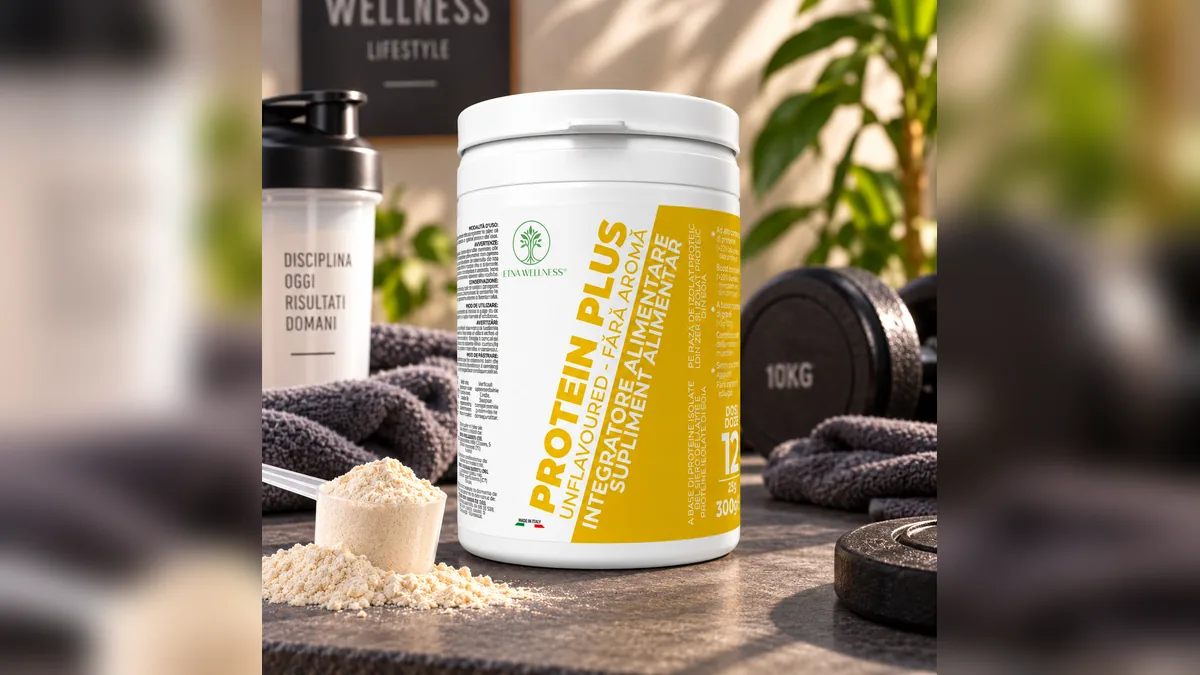
The current Protein Plus technical sheet describes a 300 g tub with 12 servings. One serving is 25 g mixed with around 200 ml of water.
The formula contains 60% instant whey protein, 32% isolated soy protein and maltodextrin. One 25 g serving provides 20.04 g protein, 130 kcal, 2.51 g carbohydrate, 0.615 g sugars, 0.68 g fat, 0.08 g fibre and 0.116 g salt.
That makes Protein Plus the clearest protein-first example in the current Etna Wellness range. Its value is easy to understand when the real need is a compact, measurable protein serving.
For the dedicated product analysis, see Protein Plus Etna Wellness: Ingredients, Protein Content & Use.
Where Shake Plus fits
For the dedicated product guide, see Shake Plus Etna Wellness.
The current standard Shake Plus English label describes it as a food supplement based on soy protein, fibre, vitamins and minerals. Per 25 g powder serving it declares approximately 9 g protein, 4.5 g fibre, 100 kcal, 8.5 g carbohydrate and 5.75 g sugars.
That is a broader nutritional architecture than Protein Plus. The decision is therefore not “which has more protein?” but whether you want a concentrated protein serving or a wider fortified shake.
Shake Plus Low Sugar is different again: the current product label declares approximately 13.1 g protein, 3.65 g fibre, 85 kcal, 2.11 g carbohydrate and 0.32 g sugars per 25 g serving, with isolated pea protein prominent in the formula.
Do not assume every Shake Plus variant is nutritionally interchangeable
The standard and Low Sugar versions differ in protein source, protein grams, sugars, fibre and energy. So the exact variant matters.
This is a useful general rule for protein supplements: compare the specific label in front of you, not the family name.
How to compare two protein supplements in 60 seconds
- Check protein grams per serving.
- Check the protein source.
- Check calories, sugars and fat.
- Check fibre and added micronutrients.
- Check allergens and dietary fit.
- Check the exact labelled use.
- Decide whether you want protein-first or a broader shake.
When lactose-free or plant-based protein becomes the better route
If dairy avoidance or lactose is a real decision factor, do not force a whey-based product into the comparison simply because it contains more protein per serving. Filter first by suitability, then compare the remaining options.
Likewise, plant-based does not automatically mean lower protein or nutritionally inferior. Compare the specific serving, source and whole formula.
What about “best protein supplements” lists?
A generic ranking often hides important differences in user need. Someone seeking a whey/soy protein-first formula and someone wanting a fortified pea-protein shake are not making the same purchase.
A more useful comparison is criteria-led: identify the role first, then compare products that genuinely belong in that role.
Picture the routine before you buy
Imagine you already have the product at home. When would you use it? What would you mix it with? Are you replacing nothing and simply adding protein, or are you using it as part of breakfast or a snack?
If the routine is unclear, the product role is probably still unclear too.
When combining protein products does not add value
There is usually no reason to stack multiple protein powders simply because they use different sources. A second product only makes sense if it solves a separate practical need — for example, a different dietary requirement, format or routine context.
More protein products do not automatically create a better nutrition plan.
Choose the protein role before the product
If you are still deciding whether you need a protein-first supplement or a broader shake, start with the needs guide. If you already know the role but want help comparing formulas, ask for information. If you are ready to check current products, create customer access and verify the live label, format, price and availability in the official shop.
Ask for help comparing protein formulas
Create customer access & check current products
Creating customer access does not place an order. On mobile, scroll down, complete your customer details, enter the official shop, then verify the current product, format, price and availability before ordering.
Frequently asked questions
What is a protein supplement?
It is a food supplement designed to provide protein in a convenient format. Formulas can be protein-first or can also include fibre, vitamins, minerals or other ingredients.
Which protein source is best?
There is no universally best source. Whey, soy, pea and other proteins differ in origin, suitability, allergens and formula characteristics. Choose by dietary fit and the exact product profile.
Is more protein per serving always better?
No. Protein grams matter, but so do calories, sugars, fat, fibre, allergens and the actual role you want the product to play.
Can a protein shake replace a meal?
Not automatically. A protein shake and a regulated meal replacement are different roles. Use the exact current label rather than assuming equivalence.
How much protein is in Protein Plus?
The current technical sheet declares 20.04 g protein per 25 g serving.
How much protein is in standard Shake Plus?
The current supplied standard label declares approximately 9 g protein per 25 g powder serving.
How much protein is in Shake Plus Low Sugar?
The current supplied Low Sugar label declares approximately 13.1 g protein per 25 g powder serving.
A few useful notes before you choose
Use the current label as the final reference for serving size, ingredients, allergens and preparation. Protein supplements should complement, not replace, a varied and balanced diet unless a product is specifically formulated and labelled for a different regulated role.
If you have kidney disease, a medically prescribed diet, significant food allergies or other conditions that affect protein intake, seek appropriate professional advice before making major changes.
Sources and verification
- Current Protein Plus technical sheet — primary source for serving size, ingredients and nutrition values.
- Current Shake Plus standard and Shake Plus Low Sugar English labels — primary sources for formula role and nutrition values.
- ETNA.COM — Protein Shake vs Meal Replacement — protected comparison owner for meal-structure intent.
- ETNA.COM — Protein Plus Etna Wellness — protected branded product owner.
- Commission Regulation (EU) No 432/2012 — authorised EU protein health-claim wording and conditions of use.
Independent distributor notice: this website is operated by an independent Etna Wellness distributor and is not the official corporate website. Product information is provided for general informational purposes and does not replace the current product label or professional medical advice.