Etna Wellness Elite Group

Independent Representative

This website is managed by an independent Etna Wellness representative.

Author: wpusername8240

  • Water Retention: Fluid Balance, Causes & Different Support Needs

    Water Retention: Fluid Balance, Causes & Different Support Needs

    Water retention can feel frustrating because the signs are often visible before the cause feels clear. Your rings may feel tighter, your clothes may sit differently, your legs may feel heavier at the end of the day or the number on the scale may move more quickly than your body composition realistically could.

    That is exactly why the first useful step is not to reach for the “strongest drainage product”. It is to understand what kind of fluid-balance need you are actually dealing with and which type of support, if any, fits that situation best.

    Reframe the decision: water retention is not one single problem and “drainage” is not one single solution. The more clearly you identify the pattern, the easier it becomes to choose a routine that feels relevant rather than simply more intense.

    For the distinction between temporary fluid change and body-fat loss, see Water Retention vs Weight Loss. If the main question is the sensation of heavy legs rather than fluid balance in general, continue with the Heavy Legs vs Water Retention guide.

    What is water retention — and why can it be confused with weight gain?

    Fluid shifts can change how your body feels and how the scale behaves over a short period. That can create the impression that you have suddenly gained body fat, even though body-fat change and fluid balance are different processes.

    This distinction matters because it changes the solution. If the real issue is temporary fluid fluctuation, a weight-management strategy and a drainage-style routine are answering different questions. If the goal is body-fat reduction, reducing temporary water weight is not the same outcome.

    Understanding that difference removes one of the most common sources of confusion and helps you make a more conscious choice.

    What everyday water retention can feel like

    People often describe the experience in practical rather than medical terms: feeling “puffy”, noticing that socks or rings leave more of a mark than usual, seeing day-to-day scale changes or feeling heavier after long periods sitting or standing.

    The important point is not to label every one of those experiences as the same condition. They can arise for different reasons, and the support route should reflect the pattern rather than just the word “water”.

    Four different support routes that should not be merged automatically

    Need pattern What you are really comparing Etna Wellness route
    General fluid-balance / drainage routine Drinkable botanical formulas, daily volume, stimulant profile and how naturally the routine fits your day. Tea Dren Mix / Tea Dren Infuso Forte, depending on the exact current formula and your stimulant preference.
    Water-retention / body-comfort routine A formula built around a daily drink with botanicals selected for a more targeted route. CelluTea.
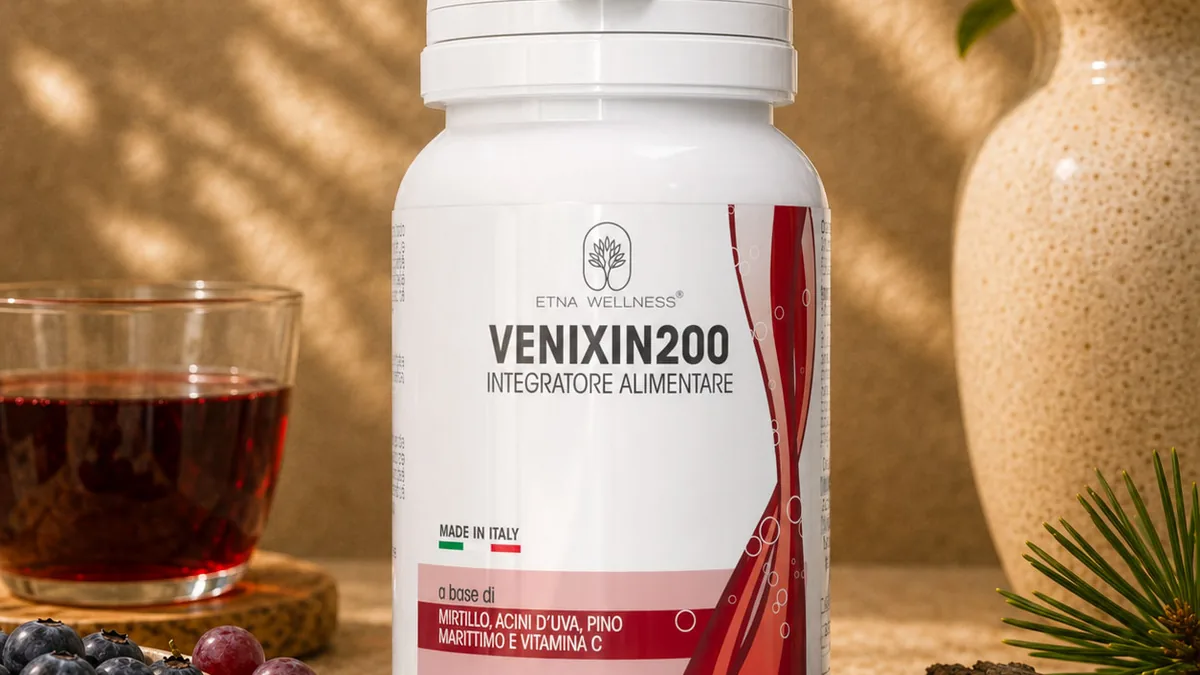
    Heavy-leg / microcirculation-style need A leg-comfort route rather than a general drainage decision. Venixin200.
    Weight-management goal Body-fat and meal/routine strategy rather than fluid fluctuation. Use the dedicated weight-management route rather than treating drainage as fat loss.

    General drainage: when the routine itself is part of the value

    For some people, the main appeal of a drainage-style product is not a highly specialised formula but the fact that it creates a simple daily hydration ritual.

    A drink mixed into water and used consistently through the day can feel easier to integrate than several separate products. That practical fit matters because the perceived value of a supplement is not just what appears on the ingredient list; it is whether the product creates a routine you are actually comfortable following.

    This is where Tea Dren-style formulas fit best conceptually: not as “weight-loss drinks”, but as part of a fluid-balance-oriented routine whose exact formula, caffeine level and directions should be checked on the current label.

    Tea Dren Infuso Forte: when stimulant profile becomes part of the decision

    The current Tea Dren Infuso Forte sheet describes a 2 g daily serving with black tea, green tea, guaranà, karkadè and cardamom. The quantified sources provide a total of 46 mg caffeine per daily serving.

    That makes the decision more specific. If you are comfortable with a caffeinated botanical drink and the timing fits your day, the formula may feel coherent. If you are already using several caffeine sources, a non-stimulant or lower-stimulant route may feel more appropriate.

    The value here comes from fit, not intensity. “Stronger” is not automatically “better” when the routine does not match your day.

    CelluTea: when you want a more targeted drinkable formula

    The current official CelluTea product page gives a more specific formula structure. The recommended use is one scoop per day in 500 ml of still water. The current ingredient declaration lists bromelain, Centella asiatica extract standardised to 2% total triterpene derivatives, green tea extract standardised to 5% caffeine, and red grape-seed extract standardised to 95% procyanidins.

    The public product page does not publish per-serving milligram amounts for those ingredients or a per-serving caffeine quantity, so this guide does not infer them.

    This makes CelluTea a different proposition from a generic “drink more water” style routine. The formula is more deliberately structured, and its value is easier to understand when the reader wants a targeted daily drink rather than simply the broadest possible list of drainage botanicals.

    For the product-specific formula, serving and safety details, continue with the CelluTea Etna Wellness guide.

    Venixin200: when the need feels more like heavy legs than general water retention

    If the main concern is the feeling of heavy legs rather than a general sense of puffiness or temporary fluid fluctuation, the decision should move into the leg-comfort route.

    The current Venixin200 source identifies bilberry fruit extract, grape-seed extract, French maritime pine bark extract and vitamin C, with a recommended use of 2 capsules per day.

    That is a different formula logic from CelluTea or a Tea Dren drink. It should not be treated as simply “another draining product”. Its role is more specific, which is why the separate Heavy Legs vs Water Retention guide remains important.

    How ethical upselling should work here

    The wrong way to upsell is to assume that “water retention” automatically means Tea Dren + CelluTea + Venixin200 together.

    The better approach is to start with the dominant need. If one route answers it clearly, that may be enough. A second product only adds value when there is a second distinct need that can be explained in a simple sentence.

    For example, a general drainage routine and a separate heavy-leg concern are two different reasons. If both are genuinely present, comparing two routes can make sense. If they are not, adding more products may create complexity without increasing useful value.

    Why daily habits matter more than a short-term “flush” mentality

    Water-retention searches often come from a desire to feel lighter quickly. That makes short-term thinking understandable, but a better decision comes from asking what pattern you can actually improve in your routine.

    Long periods sitting or standing, high-salt meals, hydration habits, movement and the timing of your day can all influence how you feel. A product can sit inside that routine, but it is most useful when it supports a behaviour pattern you understand rather than replacing one.

    This is another way perceived value increases: the product becomes one part of a coherent strategy instead of a reaction to a frustrating day on the scale.

    Picture the routine before you buy

    Imagine a normal week rather than the first day of use. Would you naturally drink 500 ml of a prepared formula? Would a larger bottle carried through the day fit better? Would capsules be easier than a drink? Would caffeine later in the day work for you?

    These questions sound practical because they are. The solution with the greatest value is usually the one that matches both the need and the way you realistically live.

    A six-question water-retention fit check

    1. What am I actually noticing? General puffiness, short-term scale fluctuation, heavy legs or something else?
    2. Am I confusing fluid change with body-fat change?
    3. Do I want a drinkable routine or capsules?
    4. Is caffeine part of the formula, and does that fit my day?
    5. Does a second product answer a genuinely different need?
    6. Can I see myself following the routine consistently?

    When those answers are clear, the decision tends to feel calmer and more logical. You are no longer buying “something draining”; you are choosing a route for a reason you can explain.

    Choose the need first, then the formula

    If you are not yet sure whether your main need is general drainage, water-retention support, heavy-leg comfort or weight management, start from the needs guide. If the route is already clear, ask for help comparing the current formulas. When you understand the role, create customer access and verify the current product, format, price and availability before deciding whether to order.

    Start from your real need

    Ask for help comparing the routes

    Create customer access & check current products

    Creating customer access does not place an order. On mobile, scroll down on the registration page, complete your customer details, enter the shop and verify the current product, format, price and availability before ordering.

    Frequently asked questions

    Is water retention the same as weight gain?

    No. Fluid changes and body-fat changes are different processes. Temporary scale movement can reflect fluid balance without representing the same change in body fat.

    Are heavy legs and water retention the same thing?

    No. They can overlap, but the dominant need can be different. The separate Heavy Legs vs Water Retention guide is designed to keep those routes distinct.

    Should I take several drainage products together?

    Not automatically. Start with the dominant need and add another route only when there is a separate reason that can be explained clearly.

    Does Tea Dren Infuso Forte contain caffeine?

    Yes. The current sheet declares a total of 46 mg caffeine from the quantified black tea, green tea and guaranà sources in the daily serving.

    How is CelluTea used?

    The current official product page recommends one scoop per day dissolved in 500 ml of still water.

    Bottom line

    The useful water-retention decision is not “which drainage product is strongest?” but “which need am I actually trying to address?” Separate temporary fluid fluctuation from body-fat change, distinguish general drainage from heavy-leg comfort, compare the formula structure and choose only the level of support that adds clear value to your routine.

    A few useful notes before you choose

    Most day-to-day swelling or puffiness can have simple explanations, and NHS guidance notes that standing or sitting for long periods, salt intake, pregnancy and some medicines are among the possible contributors to oedema. Gentle movement and avoiding very long periods in the same position can also be useful parts of the wider routine.

    It is still helpful to notice when the pattern feels different from your usual experience. If swelling is severe, sudden, painful, one-sided, red or hot, or is accompanied by breathing difficulty or chest symptoms, NHS guidance recommends prompt medical assessment. This is simply a useful boundary so that a supplement decision stays in the right context.

    For product-specific use, follow the current label. The current CelluTea FAQ advises consulting a doctor during pregnancy and recommends checking with a healthcare professional when medicines are being used. For pregnancy or breastfeeding, rely on the current label and appropriate professional advice rather than assuming suitability. If regular medicines or an existing condition are relevant to you, a suitability check with an appropriate healthcare professional can add confidence.

    Sources and verification

    Product-specific facts are based on the current ETNA.COM project sources for CelluTea, Tea Dren Infuso Forte and Venixin200. Tea Dren Mix is used here only as a route-level example because its exact current technical sheet remains separate from the direct quantitative source locks used for the other products. External health context was refreshed on 21 September 2026 against current NHS guidance on oedema. No finished-product claim to treat oedema, cause fat loss or replace medical assessment is adopted.

  • Opucaps Etna Wellness: Ingredients, Dose & Prickly Pear Guide

    Opucaps Etna Wellness: Ingredients, Dose & Prickly Pear Guide

    Sometimes the problem is not wanting to do more for yourself. It is that every extra bottle, scoop, dilution or preparation makes the routine harder to follow. You may start with good intentions and then realise that convenience is not a detail — it is what decides whether a habit survives a busy week.

    If you like the idea of prickly pear but want something you can take without turning it into another daily task, the capsule format changes the experience completely.

    If prickly pear interests you but a bottle, measuring cup or daily dilution does not fit your routine, Opucaps Etna Wellness offers a much simpler format: a food supplement in capsules made with dry extract from the cladodes of Opuntia ficus-indica.

    Quick answer: the current official Etna Wellness page describes Opucaps as a 60-capsule supplement based on dry extract of Opuntia ficus-indica cladodes. Each capsule is listed as 400 mg and the directions are 2–3 capsules per day with a glass of water. The 400 mg figure is capsule-size information; this guide does not reinterpret it as a pure-extract dose.

    Why simplicity can be the real reason to choose a capsule format

    A product can look interesting on paper and still fail in real life if it is awkward to use. Opucaps has value when what you want is a compact routine: open the bottle, take the labelled serving with water and move on with your day.

    What makes Opucaps different when convenience matters to you

    • Product type: food supplement.
    • Main ingredient: dry extract of prickly pear (Opuntia ficus-indica L. Mill.) from cladodes.
    • Pack: 60 capsules × 400 mg, 24 g net weight.
    • Recommended use: 2–3 capsules per day with a glass of water.
    • Made in Italy.
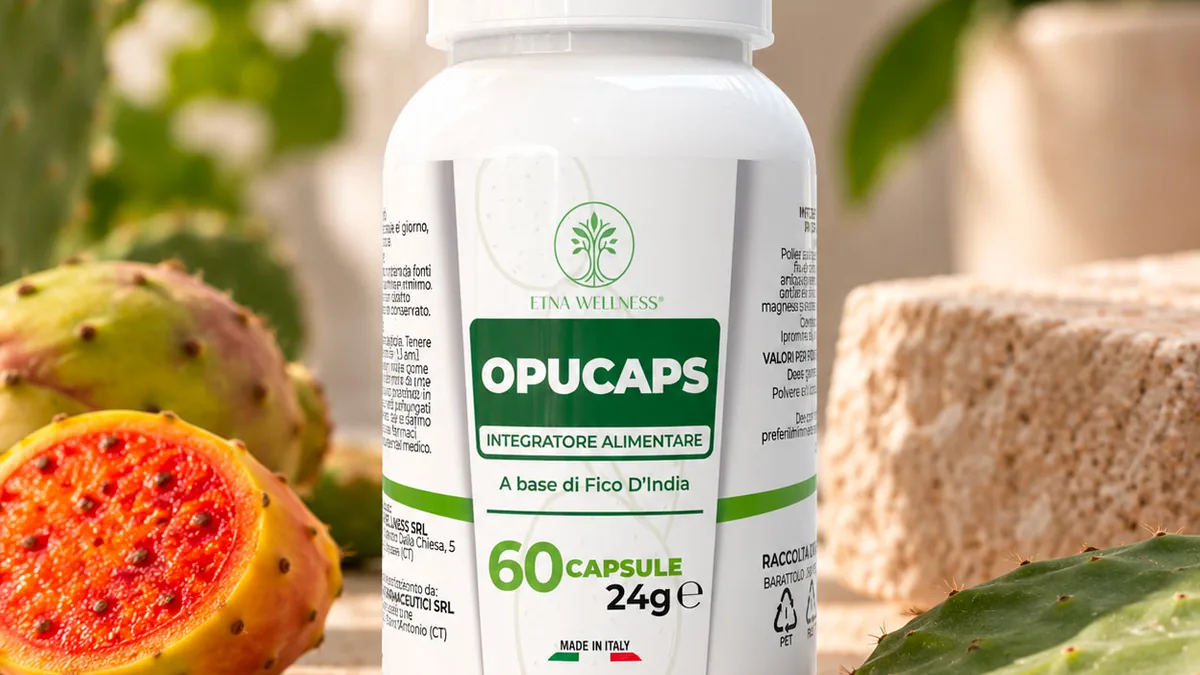
    Opucaps Etna Wellness prickly pear extract capsules
    Opucaps Etna Wellness: 60 capsules with dry prickly pear extract from Opuntia ficus-indica cladodes. — www.etnawellnesselitegroup.com

    If your goal is weight management, keep the product role separate from changes caused by fluid balance: Water Retention vs Weight Loss explains that distinction. If you are actually looking for a fibre-led daily routine rather than an Opuntia extract capsule, compare the K-Gel Etna Wellness guide.

    What is Opucaps Etna Wellness?

    Opucaps is a capsule-format supplement built around one botanical ingredient: dry extract of prickly pear cactus. The current official product page identifies the botanical as Opuntia ficus-indica L. Mill. and specifies that the extract comes from the cladodes.

    This distinction matters because the cactus fruit, seeds, flowers and cladodes are different plant materials with different compositions. Opucaps should therefore be evaluated from the exact part of the plant and the exact dose declared for this product, rather than from general claims about “prickly pear”.

    A short formula can be a strength — if it is the kind of simplicity you want

    For some people, fewer moving parts make a product easier to understand and easier to trust. Here the question is not whether the list is long enough, but whether the main ingredient and format match the role you want the product to have.

    The current official product page lists:

    • dry extract of prickly pear (Opuntia ficus-indica L. Mill. — cladodes);
    • microcrystalline cellulose;
    • pregelatinised starch;
    • maltodextrin;
    • magnesium stearate.

    The practical advantage of a simple ingredient list is transparency: you can see immediately that the product is centred on one botanical extract rather than a multi-ingredient blend.

    What are cladodes?

    Cladodes are the flattened green pads of the cactus. They are stems adapted to store water, not the ripe prickly pear fruit. A detailed scientific review of Opuntia ficus-indica describes cladodes as a plant material containing carbohydrates, fibre, minerals and mucilage, while also stressing that composition varies with cultivar, maturity and growing conditions. Read the peer-reviewed review on the composition of Opuntia ficus-indica cladodes.

    That background helps explain why cladodes are studied as a botanical and food ingredient. It does not mean that every property reported for whole cladodes, foods or experimental extracts can automatically be attributed to Opucaps.

    What does the 400 mg capsule figure tell you?

    The current official product page describes a pack of 60 capsules of 400 mg, with a total net weight of 24 g, and recommends 2–3 capsules per day with water.

    The 400 mg figure describes the capsule size shown in the current official product information. Because the ingredient list also includes excipients, this guide does not reinterpret that figure as 400 mg of pure prickly pear extract per capsule and does not calculate an unverified daily extract total.

    Current official detail What it means for comparison
    60 capsules × 400 mg Pack and capsule-size information
    2 capsules per day Approximately 30 days per pack
    3 capsules per day Approximately 20 days per pack
    Dry extract of Opuntia ficus-indica cladodes Declared botanical ingredient and plant part

    How to take Opucaps

    The current official product page gives a simple direction: take 2–3 capsules per day with a glass of water.

    It does not specify an exact number of minutes before a meal, a compulsory meal, or a morning/evening schedule. For that reason, this guide does not invent a timing rule that is not present on the product information.

    How long does one pack last?

    A bottle contains 60 capsules. At two capsules per day, it lasts approximately 30 days. At three capsules per day, it lasts approximately 20 days. This is one of the clearest practical differences to consider when choosing where within the 2–3 capsule direction your routine sits.

    Does prickly pear automatically mean weight loss?

    No. The product sheet positions Opucaps around body-weight balance and nutrient absorption, but that should not be translated into a promise that the finished product causes weight loss.

    A systematic review and meta-analysis of randomised clinical trials on Opuntia ficus-indica found no statistically significant overall effect on body weight, while noting that the available trials were few and heterogeneous. See the PubMed systematic review and meta-analysis.

    A more recent review similarly concludes that findings depend strongly on the specific preparation, dose and study design. See the 2024 review on Opuntia and metabolic outcomes. Neither paper studied Opucaps itself, so they should be used to understand the ingredient evidence — not to predict an individual result from this product.

    What about nutrient absorption?

    Research on certain specialised cactus-fibre complexes has investigated fat binding and nutrient-related mechanisms. Those studies use specific preparations that are not automatically equivalent to the dry extract in Opucaps. For that reason, this article does not transfer results from proprietary fibre complexes to the finished product.

    The useful distinction is simple: formula fact is not the same as clinical outcome. The label tells you what Opucaps contains and how much to take; clinical research tells you what has been studied in other preparations and under what conditions.

    Opucaps capsules vs liquid Opuntia products

    Capsules are not “better” than liquids in absolute terms. They solve a different practical problem. Opucaps removes measuring, dilution and flavour from the routine, while liquid products may appeal to people who prefer a drinkable format.

    • Choose capsules if: portability, pre-portioned use and simplicity matter most.
    • Choose a liquid format if: you prefer drinking the product and are comfortable measuring a serving.
    • Do not compare only by milligrams: dry extract and juice/concentrate are different preparations and should not be treated as interchangeable gram-for-gram.

    Before you add Opucaps to your routine, check the essentials

    Convenience is valuable, but it should never replace a sensible check of the label, serving and warnings. A routine feels better when you know why the product is there and how it is meant to be used.

    The current official product page says to store Opucaps in a cool, dry place away from heat sources and notes that the expiry date refers to the intact product when correctly stored. Follow the serving and warning instructions shown on the current pack, do not exceed the recommended daily amount, and keep food supplements within the wider context of a varied, balanced diet and healthy lifestyle.

    If you take medication, have a diagnosed condition, are pregnant or breastfeeding, or have concerns about gastrointestinal tolerance, ask an appropriate healthcare professional before use. Research on Opuntia preparations is not a substitute for personalised medical advice.

    Before you decide: can you genuinely see this fitting your day?

    Picture the version of the routine you are most likely to keep. If you prefer a capsule you can take quickly rather than a product you have to mix or measure, that practical fit may matter more than a long list of promises.

    • I prefer capsules to a liquid botanical product.
    • I am comfortable taking 2–3 capsules per day with water.
    • I understand that the extract comes from cladodes, not the fruit pulp.
    • I have checked the ingredient list and warnings.
    • I am not expecting guaranteed weight loss.
    • I understand that evidence on other Opuntia preparations cannot automatically be transferred to Opucaps.

    Your decision can be simple too: if you prefer a compact capsule routine and you value knowing the declared prickly-pear amount before you buy, Opucaps has a clear reason to be on your shortlist.

    If simplicity is what you want, here is how to check Opucaps

    Current price, stock and country availability can change. The safest route is to create customer access, enter the official Etna Wellness shop and verify the current product information for your market.

    1. Create your customer access.
    2. Enter the official Etna Wellness shop.
    3. Search for Opucaps.
    4. Check the current format, price and availability.
    5. Complete the order only if the product still fits your needs.

    Creating customer access does not place an order.

    If you want to understand the process first, read our step-by-step buying guide, the Etna Wellness shop and customer access guide, or the products and prices guide.

    Frequently asked questions

    What is Opucaps Etna Wellness?

    It is a food supplement containing dry extract of prickly pear (Opuntia ficus-indica) from cladodes.

    How many capsules are in one pack?

    There are 60 capsules of 400 mg, for a total net weight of 24 g.

    How many capsules should you take?

    The current official product page recommends 2–3 capsules per day with a glass of water.

    Does the current page state the exact daily amount of prickly pear extract?

    No separate milligram amount for pure prickly pear extract per daily serving is published on the current official product page. It states the 400 mg capsule size, the ingredient identity and the 2–3 capsule daily directions.

    Does Opucaps use the prickly pear fruit?

    The current ingredient list identifies the cladodes, the flattened green cactus pads, rather than the ripe fruit pulp.

    How long does a bottle last?

    Approximately 30 days at 2 capsules per day or 20 days at 3 capsules per day.

    Does Opucaps guarantee weight loss?

    No. It should not be presented as a guaranteed weight-loss product. Research on Opuntia ficus-indica varies by preparation and study design, and the finished Opucaps product has not been shown in the sources used here to guarantee weight loss.

    Where can I check the current price?

    Use customer access to enter the official Etna Wellness shop and verify the current price and availability for your country before ordering.

    If simplicity is the reason you are interested, let that guide the decision

    Opucaps is easy to understand when you separate the product facts from the marketing expectations: dry prickly pear extract from cladodes, 60 capsules of 400 mg and a 2–3 capsule daily direction.

    The strongest reason to choose it is not that capsules are universally superior. It is that this format may make a prickly-pear routine easier to maintain for someone who values portability and pre-portioned use.

    A few useful notes before you choose

    Use the current label, exact serving, directions and suitability as your final confidence check. The best choice is the one whose formula and routine genuinely fit the need you recognise, without assuming that a broader or more complex product is automatically better.

    Sources and verification

    Current product identity, ingredient declaration, capsule count, capsule size, directions and storage information in this guide are based primarily on the current official Etna Wellness Opucaps product page. External sources are used only to provide botanical and evidence context; they do not prove a medical or weight-loss effect for the finished product.


    Independent distributor notice: this website is operated by an independent Etna Wellness distributor and is not the official corporate website. Product information is provided for general informational purposes and does not replace the product label or professional medical advice. Food supplements should not be used as a substitute for a varied, balanced diet and a healthy lifestyle.

  • CelluTea Etna Wellness: Ingredients, How to Use It & What to Know

    CelluTea Etna Wellness: Ingredients, How to Use It & What to Know

    There are days when your legs seem to tell you exactly how long the day has been. Hours sitting, hours standing, heat, travel, a rushed routine — by the evening you may feel less light, less comfortable and more aware of your body than you would like.

    That is often when you start wanting something simple you can actually keep doing every day: not a complicated ritual, but a small action that feels consistent with the way you want to take care of yourself.

    Some supplement choices start with a very practical feeling: your legs feel heavy, your routine feels inconsistent, or you simply want a drinkable product that is easy to use every day. If that is why CelluTea Etna Wellness caught your attention, the useful question is not whether it sounds “strong”, but whether its format, ingredients and daily use actually fit what you are looking for.

    Quick answer: CelluTea is a 120 g water-soluble food supplement. The current official product page recommends one scoop per day in 500 ml of still water. The current ingredient declaration lists bromelain, Centella asiatica extract standardised to 2% total triterpene derivatives, green tea extract standardised to 5% caffeine, and red grape seed extract standardised to 95% procyanidins.

    Why the drinkable format can change the way the routine feels

    If another capsule feels like “one more thing to remember”, a drink can create a very different experience. You prepare it, keep it with you and turn the product into a visible part of the day. For some people, that makes consistency feel easier — and consistency is what gives any routine a chance to become real.

    What makes CelluTea easy to picture in a real day

    • Format: 120 g.
    • How to prepare it: 1 scoop in 500 ml of still water.
    • Main characterised ingredients: bromelain, Centella asiatica, green tea and red grape seed extract.
    • Use pattern: drinkable daily supplement rather than capsules.
    • Caffeine: green tea extract is standardised to 5% caffeine. The current public product page does not state a per-serving caffeine amount, so this guide does not infer one.

    This format matters. For some people, a supplement that becomes part of a 500 ml drink is easier to integrate into the day than another capsule or tablet. For others, it may simply not be the most convenient format. The right choice depends on the role you want the product to have in your routine.

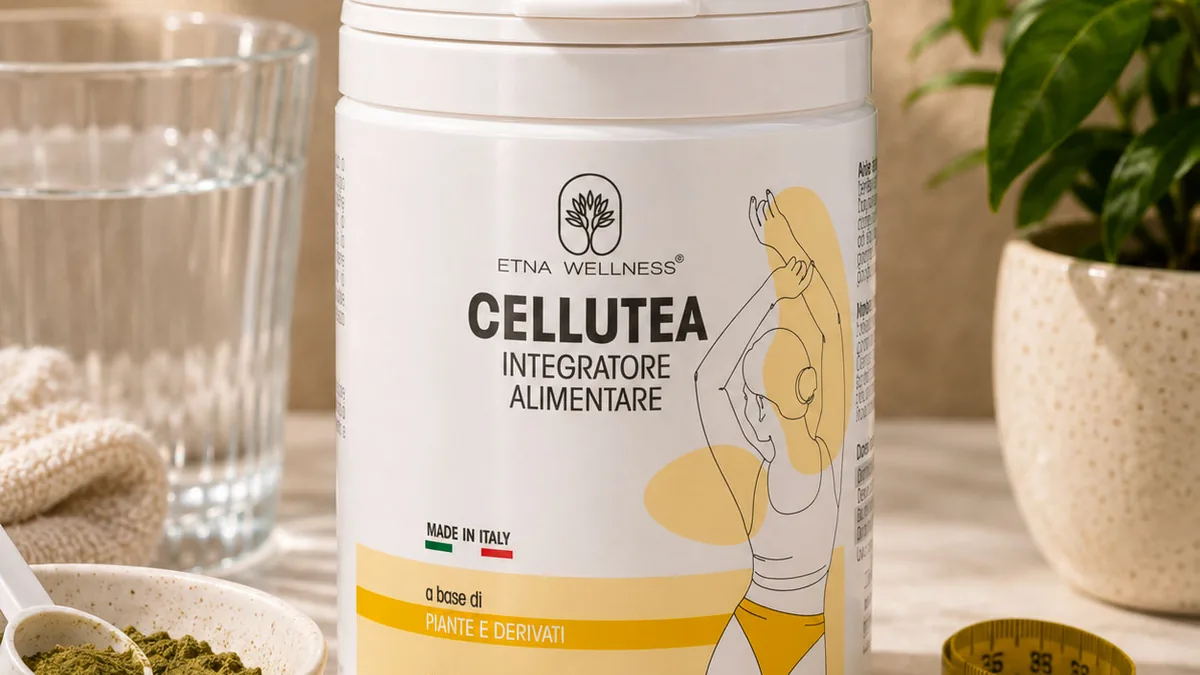
    CelluTea Etna Wellness drinkable supplement powder with water
    CelluTea Etna Wellness: 120 g drinkable food supplement. — www.etnawellnesselitegroup.com

    For the broader fluid-balance framework, see Water Retention: Fluid Balance, Causes & Different Support Needs. If the main concern is heavy-feeling legs, compare that route in Heavy Legs vs Water Retention.

    What need is CelluTea designed around?

    The current official product page presents CelluTea in the context of the appearance of cellulite, microcirculation and the sensation of heavy legs. Those are the product-positioning areas that explain why Centella, green tea and red grape seed appear together in the formula.

    That positioning should not be interpreted as a guaranteed cosmetic result, a treatment for a circulatory disorder or a promise of automatic fluid loss. A better way to evaluate CelluTea is to ask whether you want a drinkable botanical supplement that fits into a routine centred on leg comfort, hydration habits and body-care awareness.

    What you are actually putting into your daily drink

    Once CelluTea becomes part of a daily ritual, the formula deserves more than a quick glance. The ingredient declaration and standardisations help you understand what makes the product different and whether that difference feels relevant to you.

    The current official product page gives the following formula details:

    Ingredient Current official formula detail
    Bromelain (Ananas comosus) Listed in the current ingredient declaration
    Centella asiatica dry extract Standardised to 2% total triterpene derivatives
    Green tea dry extract Standardised to 5% caffeine
    Red grape seed extract Standardised to 95% procyanidins

    The ingredient list also includes crystalline fructose, food-grade maltodextrin and flavourings. This is useful to know if you are comparing CelluTea with capsule-based products, because the delivery format is part of the product itself.

    How to read the formula without turning hope into a promise

    It is easy to see familiar botanicals and mentally jump straight to the result you want. A better decision comes from staying close to what is genuinely supported while still asking whether the overall formula feels coherent with your goal.

    A multi-ingredient formula can look persuasive simply because several familiar botanical names appear together. But a good decision needs more than an ingredient list.

    There are three separate questions to keep apart:

    • What is actually in the product? The current product information answers this with the declared ingredients, standardisations and directions for use.
    • What claims may legally be made for an ingredient in a specific market? This depends on the applicable nutrition and health-claims framework.
    • What will the finished product do for you personally? That cannot be guaranteed from the ingredient list alone.

    This distinction is especially important around words such as “drainage”, “cellulite”, “circulation” and “weight loss”. CelluTea should be evaluated from its documented formula and intended routine, not from exaggerated interpretations of those terms.

    Bromelain: what the current formula confirms

    The current official ingredient declaration confirms bromelain from pineapple stem. The public product page does not state a per-serving milligram amount, so the useful comparison is the declared ingredient identity, the overall formula and the current directions for use.

    The presence of bromelain does not, by itself, prove that CelluTea will cause weight loss, remove cellulite or produce a specific cosmetic result. For ingredient-level background, the US National Center for Complementary and Integrative Health (NCCIH) notes that bromelain is a group of pineapple-derived enzymes and that evidence for oral use is limited or condition-specific. That evidence concerns bromelain as an ingredient, not CelluTea as a finished product. If you take medicines or have a medical condition, professional advice is sensible before adding a bromelain-containing supplement.

    Centella, green tea and red grape seed: what they add to the formula

    The current official formula lists Centella asiatica extract standardised to 2% total triterpene derivatives, green tea extract standardised to 5% caffeine and red grape seed extract standardised to 95% procyanidins. These are formula facts; they do not establish a guaranteed cosmetic, circulatory or weight-management outcome.

    Together, these ingredients explain the product’s positioning around a drinkable body-care and leg-comfort routine. For context, the European Medicines Agency (EMA) has published a European Union herbal monograph and assessment material for Centella asiatica. This is useful botanical background, but it is not evidence that the finished CelluTea product treats cellulite, a circulatory disorder or heavy legs.

    For red grape seed extract, NCCIH reports that human research exists for some specific health outcomes while evidence for other uses remains limited. Again, ingredient research should not be converted into a claim that CelluTea itself produces those outcomes. The more useful question is whether the documented combination has a distinct role compared with products you already use.

    How to take CelluTea

    The current official product page recommends one scoop per day dissolved in 500 ml of still water.

    It also states that the product should be stored in a cool, dry place away from heat sources, and that the best-before date refers to the intact product when correctly stored.

    The current official pack size is 120 g. Follow the scoop and preparation directions shown on the current product label.

    Does CelluTea contain caffeine?

    Yes. The current official ingredient declaration lists green tea extract standardised to 5% caffeine. The public product page does not publish a per-serving caffeine amount, so this guide does not calculate one.

    Because the public product page does not give a per-serving caffeine quantity, it is better not to characterise the amount as high or low. For wider safety context, EFSA’s caffeine assessment notes that sensitivity and timing matter, including possible sleep effects in some adults at substantially higher single intakes. The EFSA figures are population-level safety references, not a recommendation to consume more caffeine and not evidence of a CelluTea benefit. If caffeine is something you actively limit, the product declaration is still worth checking before use.

    CelluTea vs Tea Dren Mix: do they have the same role?

    No. CelluTea and Tea Dren Mix sit in a related area of the Etna Wellness range, but they should not be treated as interchangeable just because both are drinkable products.

    CelluTea has its own formula and product positioning, with bromelain, Centella, green tea and red grape seed. Tea Dren Mix has a separate composition and should be evaluated according to its own current product information and intended role.

    If you are choosing between them, compare formula, timing, format and the specific need you are trying to address rather than assuming that the product with the strongest-sounding name is automatically the better fit.

    What CelluTea can realistically add to the way you care for your legs

    Think of the value in layers: first the ritual of preparing the drink, then the fact that the formula has a defined daily serving, then the confidence of knowing exactly which botanical ingredients you are using. That does not create a guaranteed cosmetic result — but it can make the routine feel more intentional and easier to maintain.

    CelluTea gives you a clearly defined daily format: one scoop in 500 ml of water and a documented set of botanical ingredients.

    That makes it potentially useful for someone who prefers a drinkable supplement and wants a structured daily action within a broader body-care or leg-comfort routine.

    What it should not become is a shortcut narrative. It is not reasonable to present one supplement as a guaranteed solution for cellulite, fluid retention, circulation or weight loss. The value of the product comes from whether its formula and format make sense within your broader habits.

    Before you make CelluTea part of your day, check the practical details

    The right product is not simply the one that sounds attractive; it is the one that fits your routine, your preferences and your individual circumstances without adding avoidable uncertainty.

    The current official product page advises following the pack directions and not exceeding the recommended daily amount. Its FAQ also recommends checking with a healthcare professional when medicines are being used and consulting a doctor during pregnancy.

    As with food supplements generally, the product should not be treated as a substitute for a varied, balanced diet and a healthy lifestyle.

    If you take medication, have a diagnosed condition, are particularly sensitive to caffeine or are unsure whether a botanical supplement is suitable for you, ask an appropriate healthcare professional before use.

    Before you decide: a quick fit check

    • I prefer a drinkable daily supplement rather than capsules.
    • I am comfortable preparing 500 ml of still water each day.
    • I understand the formula details and the current preparation instructions.
    • I have checked the warnings that apply to me.
    • I am not expecting an automatic cosmetic or weight-loss result.
    • I can identify a clear role for CelluTea in my routine.

    Picture the routine, not just the tub: one scoop, your bottle of water, one daily gesture that feels easy enough to repeat. If that image feels natural to you, the product is already solving an important part of the decision — practical fit.

    If you can see CelluTea fitting your day, check the current product here

    Price, stock, market availability and checkout conditions can change. For that reason, the safest buying path is to create customer access and verify the current product information inside the official Etna Wellness shop for your country.

    1. Create your customer access.
    2. Enter the official Etna Wellness shop.
    3. Search for CelluTea.
    4. Check the current format, price and availability.
    5. Complete the order only if the product still fits your needs.

    Creating customer access does not place an order.

    If you want to understand the complete process first, use our step-by-step buying guide. You can also review the Etna Wellness online shop and customer access guide or compare the wider range in the products and prices guide.

    Frequently asked questions

    What is CelluTea Etna Wellness?

    CelluTea is a 120 g water-soluble food supplement. Its current ingredient declaration includes bromelain, Centella asiatica, green tea and red grape seed extract.

    How do you take CelluTea?

    The current official product page recommends one scoop per day in 500 ml of still water.

    Does CelluTea contain bromelain?

    Yes. Bromelain from pineapple stem is listed in the current official ingredient declaration. The public product page does not state a per-serving milligram amount.

    Does CelluTea contain caffeine?

    Yes. The current official ingredient declaration lists green tea extract standardised to 5% caffeine. A per-serving caffeine amount is not stated on the public product page.

    What is the current pack size?

    The current official product page lists a 120 g format. Follow the current scoop and use instructions on the label.

    What if I am pregnant or breastfeeding?

    The current official FAQ advises consulting a doctor before use during pregnancy. For pregnancy or breastfeeding, use the current label and appropriate professional advice rather than assuming suitability.

    Is CelluTea the same as Tea Dren Mix?

    No. They have different formulas and should be evaluated as separate products. See our Tea Dren Mix guide for its own ingredients and role.

    Does CelluTea make you lose weight?

    CelluTea should not be presented as a guaranteed weight-loss product. Its formula and drinkable format can be evaluated within a broader routine, but body-weight change depends on many factors and should not be promised from this supplement alone.

    Where can I check the current CelluTea price?

    Create customer access, enter the official shop and verify the current price and availability for your market before ordering.

    The right choice should feel clear before you reach the shop

    CelluTea is easier to evaluate when you strip away exaggerated expectations. You know the format, the daily amount, the ingredient quantities, the caffeine declaration and the main warnings.

    That puts you in a better position to decide whether a drinkable botanical supplement belongs in your routine — and, just as importantly, whether it does not.

    A few useful notes before you choose

    Use the current label, exact serving, directions and suitability as your final confidence check. The best choice is the one whose formula and routine genuinely fit the need you recognise, without assuming that a broader or more complex product is automatically better.

    Sources and verification

    Product identity, ingredient standardisations, pack size and preparation instructions in this guide are aligned to the current official Etna Wellness CelluTea product page. Older quantitative technical-sheet values are not presented as current public-label facts. External references below are used only for ingredient-level, botanical or caffeine context. They do not replace the product label and should not be read as proof that CelluTea delivers a medical, cosmetic or weight-loss outcome. Current prices, stock and country availability should always be checked inside the official Etna Wellness purchasing environment.


    Independent distributor notice: this website is operated by an independent Etna Wellness distributor and is not the official corporate website. Product information is provided for general informational purposes and does not replace the product label or professional medical advice. Food supplements should not be used as a substitute for a varied, balanced diet and a healthy lifestyle. If you have a medical condition, take medication, are pregnant or breastfeeding, seek appropriate professional advice before using supplements.

  • Burn Night Etna Wellness: Ingredients, How to Take It & Safety

    Burn Night Etna Wellness: Ingredients, How to Take It & Safety

    You can do everything “right” during the day and still find that the evening is where the routine starts to loosen. Dinner is over, the pace drops, tiredness sets in, and suddenly the discipline that felt easy at 10 a.m. feels much harder to protect.

    If you are trying to manage your weight, that moment matters because it is not only about food or supplements. It is about wanting to finish the day feeling that you are still moving in the direction you chose for yourself — not starting again from zero tomorrow.

    There is a particular moment in many weight-management routines when good intentions become harder to hold on to: the evening.

    The day slows down, energy drops, habits become less structured, and it is easy to start looking for something that feels simple, practical and reassuring. If that is why Burn Night Etna Wellness caught your attention, the most useful thing you can do is not rush the decision.

    Instead, look at the product the way you would want any good advisor to present it to you: what it contains, when it is taken, what role it can realistically have, what the label does and does not support, and whether that role actually fits your routine.

    Quick answer: Burn Night is an evening-oriented food supplement in capsules. The recommended daily intake is two capsules after dinner or before going to bed. Its formula includes botanical extracts, acetyl L-carnitine, choline, magnesium, vitamin C and vitamin B6, with bitter orange extract standardised to 26% synephrine. The name “Night” describes its timing; it should not be interpreted as a guarantee of weight loss during sleep.

    If, after understanding the formula and the warnings, Burn Night still feels aligned with what you are looking for, you can then move to the practical step: check current availability, price and country conditions in the official shop before deciding.

    Burn Night Etna Wellness evening supplement bottle with capsules and glass of water
    Burn Night Etna Wellness: evening supplement in capsules. — www.etnawellnesselitegroup.com

    Burn Night belongs to a different decision path from drainage support. To keep those goals separate, see Water Retention vs Weight Loss: Why Drainage Is Not Fat Loss.

    Before the formula: what you may really be looking for at night

    Maybe what you want is not “another fat burner”. Maybe you want the evening to stop feeling like the weak point of the day. You want a routine that is simple enough to repeat, clear enough to trust and specific enough to have its own place.

    What you need to know before Burn Night earns a place in your evening

    • Format: 60 capsules.
    • Recommended daily amount: 2 capsules.
    • When to take it: after dinner or before going to bed.
    • Approximate pack duration: 30 days at the recommended daily dose.
    • Bitter orange: extract standardised to 26% synephrine in the current official formula.
    • Position in the routine: evening-oriented supplement.

    This is the first important distinction. Burn Night is not valuable because its name sounds dramatic. Its value has to come from whether the formula, timing and practical fit make sense for you.

    What need is Burn Night designed to fit?

    Burn Night is best understood as a product for someone who wants an evening component within a structured supplement routine.

    That does not mean you need an evening supplement simply because you are working on weight management. It means that, if evening is the point where you want your routine to feel clearer and more consistent, Burn Night gives you a defined format: two capsules, taken after dinner or before bed.

    The decision becomes more useful when you stop asking “Is this strong?” and start asking:

    • Does an evening format suit the way I organise my day?
    • Do I understand the ingredients and their amounts?
    • Have I checked the warnings that apply to me?
    • Does this product add a distinct role, rather than simply duplicating something I already use?

    That is the difference between adding another product and building a routine with intention.

    What is inside Burn Night — and why that matters to your decision

    The current official Etna Wellness product page describes Burn Night as a food supplement based on plant extracts, carnitine, choline, vitamins and magnesium. Its ingredient list includes Garcinia cambogia extract, acetyl L-carnitine HCl, bitter orange extract, milk thistle, magnesium, vitamin C, fennel, lemon balm, mallow, red vine, choline bitartrate and vitamin B6.

    For comparison purposes, the most useful current label details are the declared botanical standardisations. Bitter orange extract is listed at 26% synephrine, Garcinia cambogia at at least 60% hydroxycitric acid, milk thistle at at least 80% silymarin, lemon balm at 4% rosmarinic acid and red vine at 5% total polyphenols.

    The current public product page does not publish a complete milligram breakdown for the daily serving. For that reason this guide does not present unverified per-ingredient milligram amounts as current label facts.

    How to turn the ingredient list into a smarter buying decision

    This is where many people either overestimate a product or dismiss it too quickly. The better approach is to separate what is documented from what is merely suggested by a name or a familiar ingredient.

    When a supplement contains several ingredients, it is easy to mentally add together every benefit you have ever heard associated with each one. That is not a reliable way to evaluate a finished product.

    A stronger approach is to separate three levels:

    • Product facts: what is actually in Burn Night and in what amount.
    • Ingredient or nutrient claims: wording that may be authorised when the relevant legal conditions are met.
    • Finished-product promises: statements about what Burn Night itself will do for you.

    Those levels are not interchangeable. The presence of an ingredient does not automatically justify every claim connected with it, and an ingredient-level claim should not be expanded into a guaranteed result for the finished product.

    This is especially important for weight-management products, where phrases such as “burns fat while you sleep”, “guarantees weight loss” or “accelerates metabolism overnight” can sound powerful but go well beyond what should be inferred from the product name or timing alone.

    Why is it called Burn Night?

    The clearest documented answer is straightforward: because it is used in the evening.

    The recommended intake is two capsules after dinner or before going to bed. That makes Burn Night easy to distinguish from products intended for a different moment of the day.

    And that distinction is useful. It allows you to evaluate the product for what it actually is, rather than for what the word “Night” might make you imagine.

    Evening timing is a product fact. Automatic fat burning during sleep is not.

    How and when to take Burn Night

    The current official product page recommends 2 capsules per day, after dinner or before going to bed.

    At this dose, a pack of 60 capsules provides approximately 30 days of use.

    Do not exceed the recommended daily amount. If you are already using other supplements, compare their formulas and roles before combining products. A better routine is not necessarily the one with the greatest number of products; it is the one in which each product has a clear and appropriate purpose.

    Bitter orange and synephrine: the detail you should not overlook

    The current official ingredient list includes bitter orange (Citrus aurantium) dry extract standardised to 26% synephrine. That standardisation is useful when comparing formulas because it tells you more than the plant name alone.

    The current public product page does not state the milligram quantity of bitter orange extract or synephrine per daily serving, so this article does not calculate or imply a precise daily synephrine amount.

    If you use medicines, have a medical condition, are pregnant or breastfeeding, or are considering combining several supplements, check suitability with an appropriate healthcare professional before use.

    Burn Night vs Burn Plus: which role fits your routine?

    Burn Night and Burn Plus belong to the same broad product area, but they are not interchangeable.

    The clearest difference is timing and formula. Burn Night is explicitly positioned for evening use, while Burn Plus has a different composition and a different place in the day.

    So the useful question is not “Which is stronger?” but:

    Which product has the role that is actually missing from my routine?

    If your main concern is not timing but another part of the weight-management routine, it may be more useful to understand how Control Plus is positioned, or to review the separate AC Plus guide.

    These links are there to help you compare roles before buying, not to suggest that all products should be used together.

    What Burn Night can realistically add to your evening routine

    The value becomes easier to feel when you picture the role, not the promise: dinner is finished, you know exactly when the product belongs in your day, you know the dose, and you are not improvising. That sense of structure is often more useful than chasing a dramatic claim.

    There is a more convincing way to look at Burn Night than expecting a dramatic overnight result.

    You are looking at a product with:

    • a clearly defined evening timing;
    • a documented daily dose;
    • clearly identified ingredients and declared botanical standardisations;
    • a declared bitter-orange standardisation of 26% synephrine, without an inferred per-serving synephrine amount;
    • specific safety warnings that can be checked before use.

    That may sound less spectacular than a promise about “burning fat while you sleep”, but it gives you something much more valuable: a decision you can understand and defend to yourself.

    If what you want is a shortcut that works independently of diet, lifestyle and the rest of your routine, Burn Night should not be interpreted that way.

    If what you want is a defined evening supplement and you value knowing what you are taking before you buy, then Burn Night gives you concrete information to evaluate.

    Before you make it part of your evening, check these points

    A product only adds value when it fits you safely as well as practically. This is the point to slow down for a moment and make sure enthusiasm is matched by a sensible check.

    The current public product information should be read together with the label and warnings supplied with the pack. Do not exceed the recommended daily amount, and check suitability with a healthcare professional when medicines, medical conditions, pregnancy or breastfeeding are relevant.

    If you take medication, have a diagnosed condition or already use supplements containing stimulating botanicals, professional advice is particularly important before adding another product.

    Safety information should not reduce the value of a product in your eyes. The opposite is true: the more clearly you understand both the formula and its limits, the more confidently you can decide whether it belongs in your routine.

    Before you decide: a 30-second fit check

    Burn Night may be worth evaluating if you can answer “yes” to these questions:

    • I am specifically looking for an evening-oriented supplement.
    • I understand the recommended dose and timing.
    • I have checked the bitter-orange standardisation, the full formula and the warnings.
    • I understand that the product name is not a guarantee of weight loss during sleep.
    • I can identify a distinct role for Burn Night in my routine.

    If one or more answers are “no”, that is useful information too. A good purchase decision is not about convincing yourself to buy; it is about becoming clear enough to know whether the product genuinely fits.

    One final question before you move to the shop: are you choosing Burn Night because the evening is genuinely the point where you want more structure — or simply because the name sounds stronger? If the first is true, you now have enough information to check the product with a clear reason in mind.

    If Burn Night feels right for your evening, here is the next step

    Price, promotions, country access and stock can change. For that reason, this page does not lock you into a price that may later be outdated.

    The buying path is simple:

    1. Create your customer access.
    2. Enter the official Etna Wellness shop.
    3. Check Burn Night availability for your country.
    4. Review the current price and checkout conditions.
    5. Complete the order only if the product still fits what you are looking for.

    Creating customer access does not place an order.

    If you want to understand the process before registering, read the step-by-step Etna Wellness buying guide. You can also review the online shop and customer access guide or compare the wider range in the Etna Wellness products and prices guide.

    Frequently asked questions

    What is Burn Night Etna Wellness?

    Burn Night is an evening food supplement in capsules containing botanical extracts, acetyl L-carnitine, choline, magnesium, vitamin C and vitamin B6.

    How many Burn Night capsules should I take?

    The current official product page recommends 2 capsules per day, after dinner or before going to bed.

    What does the current label say about synephrine?

    The current official formula lists bitter orange dry extract standardised to 26% synephrine. The public product page does not state a per-serving synephrine amount, so this guide does not infer one.

    Does Burn Night burn fat while you sleep?

    The product has documented evening timing, but that timing does not by itself establish that it burns fat during sleep. The formula, dose, warnings and intended role are more useful points to evaluate than an exaggerated interpretation of the product name.

    Is Burn Night the same as Burn Plus?

    No. They differ in formula and timing. Burn Night is specifically used after dinner or before bed. See the dedicated Burn Plus guide for its composition and use.

    How long does one pack last?

    At the recommended dose of 2 capsules per day, a 60-capsule pack provides approximately 30 days of use.

    What if pregnancy, breastfeeding, medicines or a medical condition are relevant?

    Check the current pack warnings and ask an appropriate healthcare professional before use rather than relying on a general online guide.

    Where can I check the current Burn Night price?

    The safest approach is to create customer access, enter the official shop and verify the current product, price and availability for your country before ordering.

    When Burn Night makes sense, you should be able to explain why

    By this point, you know what Burn Night contains, when it is taken, how its bitter-orange extract is standardised, where it differs from Burn Plus, and which warnings deserve attention.

    That is where the real value of the decision changes.

    You are no longer choosing because a name sounds attractive. You are choosing because you understand the role the product could have in your routine and you can decide whether that role is useful to you.

    If Burn Night still feels aligned with what you are looking for, the next step is simply to verify the current conditions in the official shop and make the decision with the complete information in front of you.

    Create customer access → enter the official shop → check Burn Night availability

    A few useful notes before you choose

    Use the current label, exact serving, directions and suitability as your final confidence check. The best choice is the one whose formula and routine genuinely fit the need you recognise, without assuming that a broader or more complex product is automatically better.

    Sources and verification

    Product identity, qualitative formula, ingredient standardisations and recommended use in this guide are aligned to the current official Etna Wellness Burn Night product page. Older quantitative values are not treated as current-label facts unless independently current-locked. Nutrition and health wording must also comply with the rules applicable in the customer’s market.

    Etna Wellness — current Burn Night product page · Italian Ministry of Health: nutrition and health claims · Great Britain Nutrition and Health Claims Register


    Independent distributor notice: this website is operated by an independent Etna Wellness distributor and is not the official corporate website. Product information is provided for general informational purposes and does not replace the product label or professional medical advice. Food supplements should not be used as a substitute for a varied, balanced diet and a healthy lifestyle. If you have a medical condition, take medication, are pregnant or breastfeeding, seek appropriate professional advice before using supplements.

  • Heavy Legs vs Water Retention: How to Compare Them Before Choosing Support

    Heavy Legs vs Water Retention: How to Compare Them Before Choosing Support

    When your legs feel heavy or puffy, it is easy to group every sensation under “water retention”. But heaviness, visible swelling and general fluid-balance concerns are not identical questions, and they should not automatically lead to the same product path.

    The most reassuring way to compare options is to separate what you are feeling from the type of support you are actually looking for.

    Safety first: new, marked, painful or unexplained swelling — especially if it is one-sided or accompanied by other concerning symptoms — is not a routine supplement-selection question and deserves appropriate professional assessment.

    Heavy legs and fluid balance overlap only partly. For the broader fluid-balance framework, see Water Retention: Fluid Balance, Causes & Different Support Needs. For a product-specific leg-comfort route, compare the formula and daily use in the Venixin200 Etna Wellness guide.

    Heavy legs is a description, not a diagnosis

    People use “heavy legs” to describe tired-feeling legs, puffiness after long periods standing or a general sensation they associate with circulation. The phrase alone does not identify the cause.

    Venixin200: what the current English source supports

    The current official product information identifies Venixin200 as a 60-capsule formula containing bilberry dry extract standardised to 25% anthocyanins, grape-seed extract standardised to 95% procyanidins, French maritime pine bark extract standardised to 65% OPCs, plus vitamin C.

    The current use is 2 capsules per day with water. These are formula and use facts; they do not turn the product into a treatment for vascular disease.

    Water retention and drainage are separate routes

    CelluTea belongs to the water-retention category, while Tea Dren Mix belongs to the drainage category. Neither should automatically replace Venixin200, and the current comparison framework does not support automatic CelluTea + Tea Dren Mix stacking.

    Main question Path
    Leg heaviness / microcirculation-oriented comparison Venixin200 category
    Water-retention comparison CelluTea category
    Drainage comparison Tea Dren Mix category

    More products are not automatically better

    Once the path is clear, the comparison becomes simpler. The goal is not to build the largest combination, but to match the product category to the question you actually have.

    Use the pattern of the symptom to choose the next question

    The phrase “heavy legs” is most useful as a starting description. Ask when it appears, whether there is visible swelling, whether one or both legs are affected, whether the sensation changes after long periods standing or sitting, and whether there are other symptoms such as pain, skin changes or shortness of breath.

    Those details do not diagnose the cause, but they help prevent the supplement category from becoming the first assumption. A person mainly comparing a leg-comfort botanical formula is making a different decision from someone researching fluid balance, and both are different again from someone with persistent or sudden swelling that needs medical assessment.

    For product research, compare the documented formula, the recommended use and the permitted claims. For symptoms that are new, one-sided, painful, persistent or otherwise concerning, the safer next step is professional assessment rather than adding more products.

    A clearer decision path

    1. Identify whether the main concern is heaviness, visible swelling or a general drainage comparison.
    2. Check whether the situation is appropriate for a wellness-product comparison.
    3. Use the matching product path rather than combining categories by default.
    4. Verify the exact current label, dose and warnings.

    For Great Britain, commercial health claims must stay within the applicable nutrition and health claims framework. Ingredient reputation should never be turned into a disease-treatment promise.

    Ready to explore the right path?

    Once you know whether you are comparing heaviness, water retention or drainage, checking the current product becomes much easier.

    1. Open the relevant path.
    2. Create customer access.
    3. Check the current exact product, label, price and availability for your country.

    Start from your real need

    Ask about the most relevant support path

    Create customer access & explore the right path

    Creating customer access does not place an order.

    Frequently asked questions

    Are heavy legs and water retention the same?

    No. They can overlap as search terms, but they should not be treated as the same diagnosis or product need.

    How is Venixin200 currently used?

    The current official information states two capsules per day with water.

    Should CelluTea and Tea Dren Mix automatically be combined?

    No.

    A few useful notes before you choose

    A simple final check can make the decision clearer: separate heaviness, water-retention and drainage questions, then verify the current label and suitability of the matching route. New, marked, painful or unexplained swelling is better assessed professionally rather than treated as a routine supplement choice.

    Sources and important information

    • Current official Venixin200 product information — formula, standardisation and use.

    This page is educational and does not diagnose or treat medical causes of leg symptoms or swelling.

  • Water Retention vs Weight Loss: Why Drainage Is Not Fat Loss

    Water Retention vs Weight Loss: Why Drainage Is Not Fat Loss

    If the scale changes quickly, the first useful question is not “which weight-loss product should I add?” but “am I looking at body fat, fluid balance or something else?”

    Water retention and fat loss are often mixed together in marketing, yet they are not the same process. A drainage-oriented route may be relevant when the need is temporary fluid balance or a feeling of puffiness, while a structured weight-management route answers a different question.

    The key distinction: losing retained fluid can change body weight temporarily; it does not mean body fat has been reduced.

    To separate fluid-balance questions from other goals, compare this page with Water Retention: Fluid Balance, Causes & Different Support Needs. If the main concern is the sensation of heavy legs rather than body-weight change, the Heavy Legs vs Water Retention guide follows that different decision path.

    Why the distinction changes the product decision

    If someone interprets every short-term scale increase as fat gain, it becomes easy to choose the wrong type of product. The reverse is also true: a temporary drop in water weight can look like “weight loss” without representing a reduction in body fat.

    That is why the most useful comparison begins with the underlying need rather than the most persuasive label.

    Water retention: what the scale may be showing

    Body water can fluctuate for many everyday reasons, including dietary patterns, salt intake, menstrual cycle changes, travel, heat, activity and other factors. These shifts may affect scale weight without reflecting a meaningful change in body-fat mass.

    A drainage-oriented supplement should therefore be understood as a fluid-balance route, not a shortcut to fat loss.

    Weight management is a different objective

    A structured weight-management route generally focuses on a broader routine: meal structure, energy intake, food choices, movement, adherence and, where appropriate, products designed for that specific role.

    That is different from trying to influence temporary water balance.

    Products such as Shake Plus, Burn Plus or Control Plus belong to their own exact product owners and should not be reframed as drainage products. Likewise, Tea Dren Mix should not be presented as a fat-burning or weight-loss treatment.

    Drainage products should not inherit weight-loss claims

    The fact that a drainage product may be used in a body-composition journey does not mean the drainage action itself represents fat loss.

    This distinction protects the customer from a common decision error: assuming that a faster change on the scale is automatically a better weight-management result.

    Where Tea Dren Mix fits

    Tea Dren Mix belongs to the drainage / fluid-balance route. It can be considered when the actual decision is about drainage rather than fat loss.

    Its exact product information remains with the dedicated Tea Dren Mix owner. This comparison page does not convert it into a weight-loss product and does not claim that it treats oedema.

    Where structured weight-management routes fit

    If the real objective is a longer-term change in body weight or body composition, the decision should move away from drainage and towards a structured weight-management framework.

    That may include meal structure, appetite-related decision support, lifestyle consistency and products whose verified role belongs to the weight-management route.

    The useful question becomes: “What routine can I follow consistently?” rather than “How can I make the scale move fastest?”

    For a product-specific evening weight-management route, the Burn Night guide keeps timing, formula and safety information separate from drainage claims.

    If you are comparing a prickly-pear capsule route instead, the Opucaps guide covers its current formula, serving and evidence limits without treating temporary fluid change as fat loss.

    Why stacking drainage and weight products is not automatic

    It is easy to assume that combining more products must create a stronger result. That is not a sound decision rule.

    A drainage product and a weight-management product answer different needs. They should only appear together when both needs are genuinely present and each product has a distinct role.

    If the only need is fluid balance, adding several weight products creates unnecessary complexity. If the only need is weight management, adding drainage solely to make the scale move faster can create the wrong expectation.

    More products do not automatically mean more value

    Perceived value should come from fit, clarity and a routine that makes sense. A larger stack is only more valuable when each additional product solves a separate problem that has actually been identified.

    That is the basis of ethical upselling: second need first, second product second.

    Picture the next four weeks, not the next morning

    Imagine checking the scale tomorrow after a change in fluid balance. The number may move, but that single reading tells you little about body-fat change.

    Now imagine the next four weeks. Which routine would still make sense after the first few days: a temporary drainage focus, or a structured approach that you can repeat consistently?

    Future routine is a better decision criterion than short-term scale excitement.

    A six-question fit check

    1. Is my main concern temporary puffiness/fluid balance or longer-term weight management?
    2. Am I interpreting a short-term scale change as body-fat change?
    3. Does the product belong to a drainage route or a weight-management route?
    4. Is each product in the routine solving a distinct need?
    5. Am I expecting drainage to “burn fat” or create permanent weight loss?
    6. Can I explain the routine in a simple, realistic way?

    Choose the route before you choose the products

    If you are unsure whether your priority is drainage, weight management or another need, start from the Needs Guide. If the goal is weight management, use the dedicated configurator rather than treating drainage as a fat-loss shortcut.

    Start from your real need

    Explore the weight-management route

    Ask which route fits your need

    Create customer access & check the current range

    Creating customer access does not place an order. On mobile, scroll down on the registration page, complete your customer details, enter the shop and verify the current product, format, price and availability before ordering.

    Frequently asked questions

    Can water retention make the scale go up?

    Yes. Changes in body water can affect scale weight. That does not mean the same amount of body fat has been gained.

    If drainage lowers the scale, have I lost fat?

    Not necessarily. A short-term reduction in retained fluid is different from body-fat loss.

    Is Tea Dren Mix a fat burner?

    No. This comparison keeps Tea Dren Mix within its drainage / fluid-balance role and does not present it as a fat-burning treatment.

    Should drainage products always be combined with weight-management products?

    No. Combining products only makes sense when there are distinct needs and each product has a clear role.

    When is water retention not just a supplement decision?

    Persistent, sudden, one-sided or symptomatic swelling can have causes that need appropriate medical assessment rather than being reduced to a drainage-product choice.

    Bottom line

    Water retention, temporary water-weight change and body-fat loss are different things. Choose a drainage route when the need is drainage; choose a weight-management route when the objective is longer-term weight change. Do not use one to make claims for the other.

    A few useful notes before you choose

    Day-to-day body weight naturally fluctuates, so one reading should not be used to judge body-fat change or the effectiveness of a weight-management plan.

    Persistent or unexplained swelling deserves context rather than automatic supplementation. A simple suitability check can be reassuring if swelling is new, one-sided, painful, sudden, associated with shortness of breath or otherwise concerning.

    The practical rule is simple: drainage may influence fluid balance; it is not the same as fat loss, and it should not be used to treat oedema.

    Sources and verification

    This draft follows the ETNA.COM editorial evidence gate for the Drainage vs Weight Management owner: drainage and temporary water-weight change must remain distinct from body-fat loss; Tea Dren Mix ID32 remains the exact drainage product owner; Burn Plus, Control Plus and Shake Plus retain their own weight-management or meal-structure roles; automatic stacking is excluded.

  • Aloe Vera Supplements: Formats, Formulas & What to Check

    Aloe Vera Supplements: Formats, Formulas & What to Check

    If you are looking at Aloe Vera supplements, the first decision is not which bottle looks more natural. It is what kind of Aloe product you actually want in your routine.

    A high-Aloe drink, an Aloe-plus-botanical formula and a broader multi-ingredient liquid can all sit under the same “Aloe” mental category while doing very different jobs on the label. When those differences are not clear, it is easy to compare percentages, bottle sizes or marketing phrases without understanding what you are really buying.

    Start with your need: do you want Aloe to be the main feature of the formula, do you want Aloe combined with another botanical, or are you looking for a broader daily liquid where Aloe is only one part of a multi-ingredient routine?

    If you are comparing aloe formats rather than looking for a generic “best” product, continue with the Aloe Attiva Etna Wellness guide for the aloe-plus-joint-support formula, or the Aloe Vera 98 Etna Wellness guide for the high-aloe liquid format. The comparison is more useful when each formula is judged by its actual ingredients, serving instructions and intended role.

    Why “Aloe Vera supplement” is not one single choice

    The word Aloe can create a simple image: one plant, one type of product, one reason to use it. In practice, orally consumed Aloe products can differ by the part of the leaf used, the percentage of Aloe in the finished formula, flavouring, sweeteners, added vitamins and other active ingredients.

    That means the buying decision becomes much clearer when you stop asking “which Aloe is strongest?” and start asking “which formula structure best matches the reason I want an Aloe product?”

    This reframing matters because a higher percentage is not automatically a better fit. A concentrated Aloe-led drink and a multi-ingredient formula may both be useful comparisons, but they solve different decision problems.

    Four formula routes that look similar until you read the label

    Route What defines it Etna Wellness example Best question to ask
    Aloe-led drink Aloe is the dominant formula identity. Aloe Vera 98% Do I mainly want a simple Aloe-centred product?
    Aloe + honey Aloe remains central while honey changes flavour and formula profile. Aloe Vera with Honey Do I want an Aloe-led formula with honey rather than the peach/Stevia route?
    Aloe + botanical Aloe remains central but another plant changes the formula logic. Aloe Nettle Do I specifically value the added botanical rather than Aloe alone?
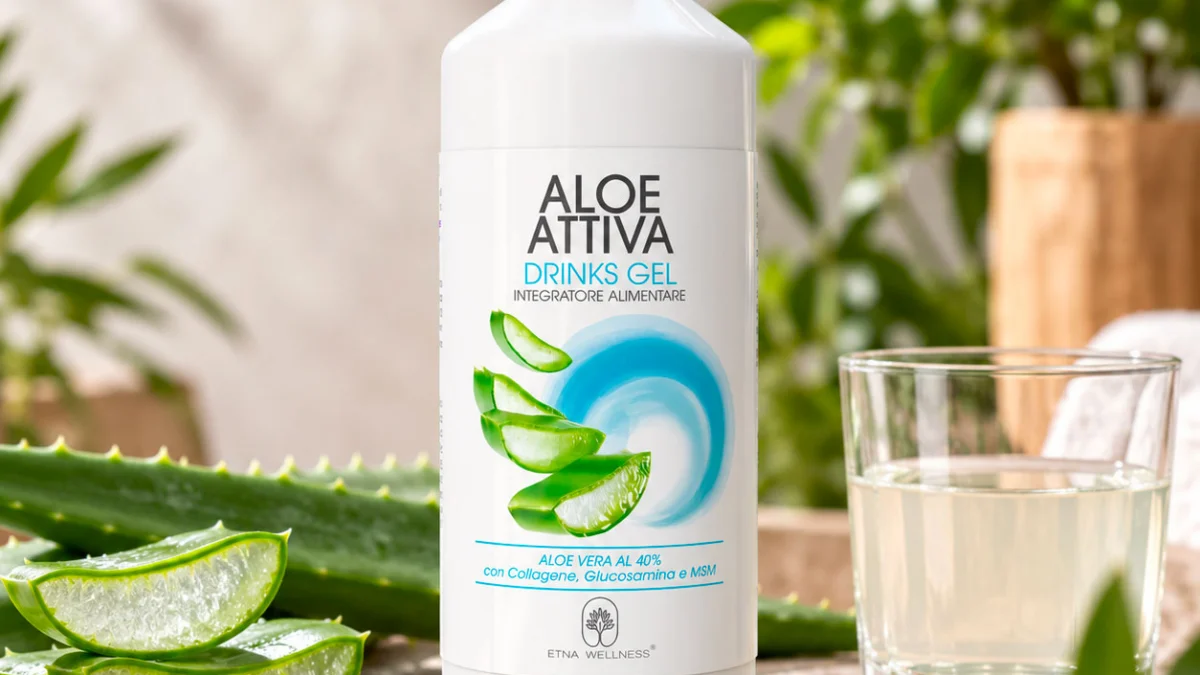
    Multi-ingredient liquid Aloe is one component inside a broader daily formula. Aloe Attiva Am I really choosing Aloe, or a wider glucosamine/chondroitin/MSM/collagen routine?

    Aloe Vera 98%: when the value is formula simplicity

    The newly supplied current product sheet confirms Aloe Vera 98% Peach as a 98% Aloe Vera gel formula. Its ingredient list also includes Stevia, inulin, xanthan gum, citric acid, flavouring and vitamin C. The recommended daily amount is 100 ml, divided into two or three servings, and the sheet declares 27.6 mg vitamin C per 100 ml.

    The important value here is not a promise of a particular health outcome. It is clarity. If your priority is to choose an Aloe-led drink rather than a formula where Aloe shares the spotlight with many other ingredients, this structure is easy to understand.

    That can make the choice feel simpler: you are not paying for a long list of co-ingredients you may not need, and you can evaluate the product primarily on Aloe concentration, taste, preparation, warnings and how naturally it fits into your routine.

    Aloe Vera with Honey: when you want Aloe to remain central but prefer a different formula experience

    The newly supplied current Aloe Vera Drinks Gel with Honey and Vitamin C sheet declares 90% Aloe Vera gel, 7% wildflower honey and vitamin C. The recommended daily amount is 100 ml, divided into two or three servings, and the sheet declares 80 mg vitamin C per 100 ml.

    This keeps Aloe at the centre of the decision while changing the flavour, sweetening profile and micronutrient contribution. It is therefore a different route from Aloe Vera 98% without becoming a complex multi-ingredient formula.

    The useful question is not whether honey makes it “better”, but whether this profile makes the product easier and more enjoyable for you to use consistently. When the added element improves routine fit, it can increase real perceived value.

    Aloe Nettle: when a second botanical is part of the reason for choosing

    The newly supplied current sheet confirms Aloe Nettle 90% as a formula with 90% Aloe Vera gel, 6.5% honey, 2% nettle extract and vitamin C. The recommended daily amount is 100 ml, divided into two or three servings, and the sheet declares 27.6 mg vitamin C per 100 ml.

    That makes it a different decision from Aloe Vera 98%. The question is no longer simply “how much Aloe is present?” but whether the added nettle is genuinely relevant to what you are looking for.

    A second botanical can increase perceived value when it has a clear role in your decision. It does not automatically increase value just because the ingredient list is longer. If you cannot explain why the added plant matters to you, the simpler formula may be easier to justify.

    Aloe Attiva: when Aloe is only one part of a broader formula

    Aloe Attiva changes the decision more substantially. Its current source-locked daily serving is 40 ml, and the formula includes 40% Aloe Vera gel alongside glucosamine sulphate, chondroitin sulphate, MSM, hydrolysed bovine collagen, vitamin C and vitamin E.

    The labelled 40 ml serving declares 450 mg glucosamine sulphate, 450 mg chondroitin sulphate, 200 mg MSM and 27.6 mg vitamin C. Vitamin E is also present. Hydrolysed bovine collagen is included in the ingredient list but is not quantified on the current sheet. The glucosamine sulphate is identified as being derived from crustaceans, which makes the allergen declaration relevant when deciding whether the formula is suitable for you.

    This means Aloe Attiva should not be chosen simply because the word “Aloe” appears on the front. Its value proposition is the opposite of Aloe Vera 98%: it is a broader multi-ingredient liquid routine. If that broader structure matches your priorities, the extra complexity can make sense. If your priority is simply an Aloe-centred drink, it may be more formula than you need.

    What the Aloe percentage tells you — and what it does not

    A percentage helps you understand how much of the finished formula is described as Aloe, but it does not tell you everything about the product. It does not by itself establish effectiveness, safety for every person, or superiority over a lower-percentage formula with a different purpose.

    Use the percentage as one decision signal, then look at the rest: which part of the plant is used, what other ingredients are present, whether the formula includes sweeteners or added nutrients, how much you take and what warnings apply.

    Picture the routine before you decide which formula has more value

    Imagine an ordinary morning. Do you want a simple Aloe-led drink that requires very little explanation? Would you prefer an Aloe-plus-botanical formula because the second ingredient is part of your reason for choosing? Or are you deliberately looking for a broader liquid routine with glucosamine, chondroitin, MSM and collagen?

    The answer matters because value is not the number of ingredients on the label. Value is how well the formula matches the role you want it to play in your day.

    A product that feels coherent with your routine is easier to use consistently. A product that looks impressive but contains several ingredients you did not actually want can create more complexity without increasing useful value.

    A seven-point Aloe supplement decision check

    1. Need: why are you looking for an Aloe product?
    2. Formula role: Aloe-led, Aloe-plus-botanical or broader multi-ingredient liquid?
    3. Aloe percentage: how much of the finished formula is Aloe?
    4. Plant part / preparation: gel, latex or whole-leaf context?
    5. Co-ingredients: do they add value for your specific reason for choosing?
    6. Safety: medicines, pregnancy/breastfeeding, digestive sensitivity and label warnings.
    7. Routine fit: can you realistically see yourself using the format as directed?

    When “more complete” is valuable — and when it is just more complex

    There is no automatic winner between a 98% Aloe-led product and a 40% Aloe multi-ingredient formula. They are answering different questions.

    If your decision is centred on Aloe itself, simplicity can increase value. If your decision is centred on a broader routine and you deliberately want the additional ingredients, the wider formula can increase value. The important step is being able to explain why the added complexity belongs in your routine.

    This is also the point where ethical upselling becomes useful rather than mechanical: you add a broader formula or a second route only when there is a second need you can identify clearly, not because “more products” automatically means “better results”.

    Choose the Aloe route first, then verify the current product

    If you are still unsure which formula structure fits your need, start from the needs guide. If you already know whether you want an Aloe-led drink, Aloe-plus-botanical formula or broader multi-ingredient liquid, ask for help comparing the exact current options. When the role is clear, create customer access and verify the current formula, format, price and availability before deciding whether to order.

    Start from your real need

    Ask for help comparing Aloe formulas

    Create customer access & check current Aloe products

    Creating customer access does not place an order. On mobile, scroll down on the registration page, complete your customer details, enter the shop and verify the current product, format, price and availability before ordering.

    Frequently asked questions

    Is a higher Aloe percentage always better?

    No. A higher percentage tells you that Aloe makes up more of the formula, but it does not automatically make the product more suitable for your need.

    What is the difference between Aloe Vera 98% and Aloe Attiva?

    Aloe Vera 98% is an Aloe-led peach-flavoured formula with Stevia and vitamin C. Aloe Attiva contains 40% Aloe gel inside a broader formula with glucosamine, chondroitin, MSM, hydrolysed bovine collagen and vitamins.

    What is Aloe Nettle?

    The current product sheet declares 90% Aloe Vera gel, 6.5% honey, 2% nettle extract and vitamin C. It is therefore a distinct Aloe-plus-botanical route rather than simply another flavour.

    Is oral Aloe the same as Aloe gel applied to the skin?

    No. Topical and oral Aloe products have different uses and safety considerations. Oral Aloe also differs according to whether the preparation involves inner-leaf gel, latex or whole-leaf material.

    Who should ask a healthcare professional before using oral Aloe?

    People who are pregnant or breastfeeding, who take regular medicines or who have medical conditions should seek professional advice before using oral Aloe products. Always follow the exact product label.

    Bottom line

    The useful Aloe decision is not “which bottle contains the most Aloe?” but “which formula structure best matches the role I want in my routine?” Start with the need, compare the formula rather than the headline, understand the plant preparation and safety context, then choose only the level of complexity that adds real value for you.

    A few useful notes before you choose

    A final detail worth knowing is that oral Aloe products can use different parts of the plant, so checking the exact preparation helps you compare them more confidently. Aloe gel comes from the inner portion of the leaf, while Aloe latex comes from the outer layer; whole-leaf preparations can contain both unless processed to remove anthraquinone compounds such as aloin. Short-term oral use of Aloe gel has been studied with generally reassuring safety findings, while Aloe latex has a different safety profile and is generally approached with more caution.

    The current product sheets also include a few product-specific notes that are useful to check before choosing. For example, the Aloe Vera with Honey sheet includes specific guidance for younger users, pregnancy or breastfeeding and prolonged use. Aloe Attiva also suggests checking suitability with a healthcare professional when there are existing conditions or ongoing medicines. Its crustacean-derived glucosamine also makes the allergen declaration relevant.

    You may come across many different benefit claims for Aloe online. The most useful approach is to keep those broad messages separate from the specific formula you are actually comparing. For Great Britain, supplement communication should stay within the authorised health-claim framework. Formula facts, authorised nutrient claims where applicable, safety and realistic expectations must remain separate from unsupported finished-product claims.

    As a simple final check, follow the current label for the specific product you choose. If pregnancy, breastfeeding, regular medicines, allergies or an existing condition are relevant to you, a quick suitability check with an appropriate healthcare professional can help you use the product with greater confidence.

    Sources and verification

    Product-specific facts are based on the current ETNA.COM project evidence for Aloe Vera 98%, Aloe Nettle and Aloe Attiva. Aloe Vera 98% formula proof is source-closed as 98% peach-flavoured Aloe Vera with Stevia and vitamin C. Aloe Nettle is source-locked as 90% Aloe Vera gel plus nettle dry extract and vitamin C. Aloe Attiva uses the current product-owner source lock for the 40 ml daily serving and multi-ingredient formula. External Aloe safety context was refreshed on 21 September 2026 against current NCCIH guidance; UK food-supplement claim boundaries were checked against current GOV.UK guidance. No disease-treatment claim is adopted for any finished product.

  • Lion’s Mane Supplements UK: Extract, Fruiting Body & Dose

    Lion’s Mane Supplements UK: Extract, Fruiting Body & Dose

    Choosing a Lion’s Mane supplement is easier when you stop comparing labels by hype and start comparing what is actually inside the capsule. The useful questions are practical: which part of the mushroom is used, is it an extract or a powder, is any standardisation declared, what is the daily serving and how transparent is the label?

    This matters because two products carrying the same “Lion’s Mane” name can be built very differently. The goal is not to find the most dramatic promise. It is to find the formula you can understand, compare and use with confidence.

    A useful comparison starts with five facts: mushroom part, extract type, declared standardisation, daily amount and serving format.

    If your main question is broader than Lion’s Mane itself, compare the ingredient roles in Focus Supplements: How to Compare Formula Types. If the issue is daytime energy rather than focus, the Energy Supplements guide separates stimulant, vitamin and mineral-support approaches.

    Why Lion’s Mane labels can be difficult to compare

    The front of the pack may simply say “Lion’s Mane”, yet that does not tell you whether the product uses the fruiting body, another fungal material, a dry extract or a simple powder. It also does not tell you whether a meaningful standardisation is declared.

    Those details do not automatically prove that one product will produce a better outcome. They do, however, make the formula easier to evaluate.

    1. Check which part of the mushroom is used

    Lion’s Mane is Hericium erinaceus. When comparing supplements, the label should make the raw-material identity as clear as possible.

    Hericium Puro, the Etna Wellness product used as the worked example in this guide, currently identifies a Hericium erinaceus sporophore dry extract. “Sporophore” refers to the fruiting body of the mushroom.

    That is useful information because it tells you exactly which part of the mushroom the current formula is built around.

    2. Separate extract from simple powder

    “Powder” and “extract” are not interchangeable terms. An extract has undergone a concentration process, while a simple powder is generally the ground raw material.

    That does not mean an extract is automatically superior in every context. It means you should compare like with like and understand what the manufacturer is declaring.

    3. Look for declared standardisation

    A standardisation figure can improve formula transparency when it tells you which group of compounds has been measured.

    The current official English information for Hericium Puro states that its sporophore dry extract is standardised to 30% polysaccharides.

    This should be read as a compositional fact, not as a guarantee of a cognitive result. Standardisation helps you understand the material more precisely; it does not by itself prove that a finished product will improve memory, concentration or mood.

    4. Compare the daily amount, not only the capsule strength

    One capsule strength tells you only part of the story. The useful number is the amount actually used per day.

    Hericium Puro currently contains 60 capsules of 400 mg, with directions of 2 capsules per day. That corresponds to 800 mg per daily serving.

    With two capsules per day, a 60-capsule pack corresponds to around 30 days of use when followed as directed.

    5. Ask whether the label gives you enough information to make a real comparison

    A useful Lion’s Mane label should let you answer basic questions without guessing:

    • Which species is used?
    • Which part of the mushroom is used?
    • Is it an extract or a powder?
    • Is a standardisation declared?
    • How much is taken per day?
    • How many days does the pack provide?

    When those points are clear, you can compare formulas on substance rather than presentation.

    Where Hericium Puro fits

    Hericium Puro is a single-mushroom route. That is important because it keeps the decision distinct from a broader focus formula containing several botanicals or nutrients.

    If your priority is specifically Lion’s Mane, a focused Hericium product gives you a cleaner comparison. If your real need is broader mental focus and you want to compare stimulant, mushroom and multi-ingredient botanical approaches, use the dedicated Focus Supplements guide instead.

    Single-mushroom vs broader focus formula

    Route What you are comparing When it may feel clearer
    Single Lion’s Mane Species, mushroom part, extract, standardisation and daily serving. When Lion’s Mane itself is the specific ingredient you want to evaluate.
    Broader focus formula Several ingredient families combined for a broader focus-oriented routine. When your need is broader than one mushroom ingredient.

    Why more ingredients do not automatically create more value

    A longer formula can look more complete, but it also changes the decision. If the reason you are shopping is specifically Lion’s Mane, adding several unrelated ingredients can make it harder to judge what you are actually choosing.

    A broader formula may still make sense when it answers a broader need. The point is not to minimise ingredients; it is to make sure each additional layer has a reason to be there.

    How ethical upselling should work here

    Hericium Puro should not automatically lead to a second focus, energy or immune product.

    A second product only adds value when you can describe the second need independently. If the customer simply wants a Lion’s Mane route, the focused choice may already be the clearest one.

    If another need genuinely exists, compare that need separately rather than building an automatic stack.

    Picture the routine after the novelty has passed

    Imagine the product sitting in your routine after two or three weeks. Two capsules per day is simple on paper, but the best routine is the one you can actually follow consistently.

    Would you prefer a single-ingredient mushroom product because the purpose stays obvious? Or would you rather use a broader formula because you are trying to address a wider focus-related need?

    That future routine is part of the value equation.

    A six-question Lion’s Mane fit check

    1. Is Lion’s Mane itself the ingredient I want to evaluate?
    2. Does the label identify the mushroom part clearly?
    3. Is it an extract or a simple powder?
    4. Is any standardisation declared?
    5. Is the daily serving clear?
    6. Do I want a focused single-mushroom route or a broader focus formula?

    Choose the formula structure before you choose the product

    If you are still deciding whether Lion’s Mane itself is the right route, start from the needs guide. If the route is already clear, ask for help comparing the current formula. Then create customer access and verify the current product, format, price and availability before deciding whether to order.

    Start from your real need

    Ask for help comparing Lion’s Mane formulas

    Create customer access & check Hericium Puro

    Creating customer access does not place an order. On mobile, scroll down on the registration page, complete your customer details, enter the shop and verify the current product, format, price and availability before ordering.

    Frequently asked questions

    What does “sporophore” mean?

    It refers to the fruiting body of the mushroom. The current Hericium Puro information identifies a Hericium erinaceus sporophore dry extract.

    What does 30% polysaccharides mean?

    It is a declared standardisation of the extract. It helps describe the composition of the raw material, but it should not be interpreted as a guaranteed measure of cognitive effect.

    How much Hericium Puro is used per day?

    The current official English information states two 400 mg capsules per day, equal to 800 mg per daily serving.

    How long does a pack last?

    At two capsules per day, the current 60-capsule pack provides around 30 days of use.

    Is Lion’s Mane the same as a general focus supplement?

    No. Lion’s Mane is a specific mushroom ingredient. A broader focus formula may contain several different ingredient families and should be compared separately.

    Bottom line

    A good Lion’s Mane comparison is not about finding the most impressive promise. Check the mushroom part, extract type, standardisation, daily amount and label transparency. Hericium Puro currently provides a clear single-mushroom example: 60 capsules of 400 mg, sporophore dry extract standardised to 30% polysaccharides, with two capsules per day.

    A few useful notes before you choose

    Lion’s Mane is often discussed online in connection with memory, focus, mood and other cognitive themes. Those discussions should not be turned automatically into finished-product claims. This article therefore keeps the product comparison centred on verified formula facts rather than promising a cognitive outcome.

    There is no guaranteed timetable for “feeling” a Lion’s Mane supplement, and a standardisation percentage should not be used as a shortcut to promise effectiveness.

    As a simple final check, follow the current label for the exact product you choose. If pregnancy, breastfeeding, regular medicines, allergies or an existing condition are relevant to you, a suitability check with an appropriate healthcare professional can add confidence.

    What UK readers should check before choosing

    In Great Britain, food supplements are regulated as foods rather than medicines. A supplement should therefore be compared from its actual label, ingredients, dose and permitted claims rather than from online promises about treating or preventing a condition.

    The Food Standards Agency food supplements guidance recommends following the label and checking suitability when medicines, pregnancy, breastfeeding or medical conditions are relevant. Commercial health claims in Great Britain must also fit the Great Britain nutrition and health claims register.

    This UK comparison does not assume that every Lion’s Mane formula, or any specific Etna Wellness product, is available in every UK sales channel. Availability and the current product label should be checked separately before ordering.

    Sources and verification

    This draft uses the current official English Hericium Puro facts locked in the ETNA.COM editorial evidence matrix: 60 capsules of 400 mg, Hericium erinaceus sporophore dry extract, 30% polysaccharides and two capsules per day. Finished-product claims for memory, concentration, ADHD, dementia, depression or mood are not adopted. The Lion’s Mane owner remains separate from the generic Focus Supplements owner.

  • Low-Carb Snacks UK: How to Compare Carbs, Sugar, Protein and Portions

    Low-Carb Snacks UK: How to Compare Carbs, Sugar, Protein and Portions

    Choosing well starts with understanding what you are actually comparing. “Low carb”, “low sugar” and “high protein” may look similar at a glance, but they describe different nutritional characteristics.

    A clearer choice comes from looking beyond the headline and checking the nutrition panel, the portion and the exact wording used on the current label.

    For Great Britain, there is an extra point worth knowing: current UK Department of Health and Social Care guidance says that “low carbohydrate” is not a permitted nutrition claim. Here, the phrase “low-carb snacks” is therefore used as a search and comparison topic, not as a blanket claim for the KE range.

    If your comparison is moving from snacks toward a structured protein or meal-format choice, use Protein Shake vs Meal Replacement to separate the two roles, then see Protein Supplements: Types, Uses & How to Choose for a broader formula comparison.

    Start with the label, not the impression

    The nutrition panel gives you a better basis for comparison than one front-of-pack phrase. In particular, carbohydrate and of which sugars are different values, and more protein does not automatically mean less carbohydrate.

    For a practical comparison, check total carbohydrate, sugars, protein, fibre, energy, serving size, ingredients, allergens and any exact authorised claim shown on the current label.

    Per 100 g and per serving answer different questions

    Per-100-g values make it easier to compare products on the same basis. Per-serving values help you understand what the declared portion contributes. Looking at both gives you a more complete picture.

    Format matters too

    A baked portion, biscuits, a crispbread-style product and pasta do not play the same practical role. Even within one product line, format, serving size and label details can change what makes sense for you to compare.

    Current KE shop snapshot

    In the official-shop snapshot checked on 14 September 2026, six KE food products were visible and addable: Plumcake KE vanilla & chocolate, Frollini vanilla with chocolate chips, Nuvolette orange, Nuvolette cocoa, Fette Biscottate KE and Pasta KE Penne.

    Why the date matters: this is a dated shop snapshot, not a permanent stock promise. Product naming, labels, prices and country availability should always be checked again in the official shop before purchase.

    How this guide helps you choose more clearly

    1. Choose the product format you actually want to compare.
    2. Read carbohydrate and sugars separately.
    3. Check protein, fibre and energy without assuming one number tells the whole story.
    4. Compare both per 100 g and per serving.
    5. Check ingredients and allergens.
    6. Confirm the current label and availability for your country in the official shop.

    Keep KE and Shake Plus decisions separate

    The KE guide focuses on KE food formats and label comparison. Shake Plus Low Carb and Shake Plus Low Sugar remain part of the separate Shake Plus product family, so their exact product details belong in the dedicated Shake Plus guide rather than being duplicated here.

    See the Shake Plus guide if that is the product family you are comparing.

    Want to see what is currently available?

    If the KE range looks relevant to what you are comparing, the next step is simple: create your customer access, enter the official shop and check the current products for your country.

    1. Create your customer access.
    2. Enter the official Etna Wellness shop.
    3. Open the current KE range.
    4. Check the exact label, price and availability before ordering.

    Start from your real need

    Ask about the current KE range

    Create customer access & check the current KE range

    Creating customer access does not place an order.

    Frequently asked questions

    Is low sugar the same as low carbohydrate?

    No. Sugars are one part of the carbohydrate information shown on a nutrition label.

    Is high protein the same as low carbohydrate?

    No. Protein and carbohydrate are separate nutritional values and should be checked independently.

    Why compare both per 100 g and per serving?

    Per-100-g values help with like-for-like comparison, while per-serving values show what the declared portion contributes.

    Why are older catalogue products not all listed as current?

    Because this guide separates historical catalogue coverage from the products visible in the dated official-shop snapshot.

    A few useful notes before you choose

    Treat the current shop and label as the final reference. Compare carbohydrate, sugars, protein, serving size, ingredients and allergens separately, because one front-of-pack phrase does not describe the whole nutritional profile.

    Sources and important information

    • UK Department of Health and Social Care, Nutrition legislation information sheet — Great Britain nutrition-claim framework; checked 14 September 2026.
    • Etna Wellness official-shop KE snapshot — current visible assortment checked 14 September 2026.

    This is an editorial comparison guide. It does not promise weight loss or turn a product-line name into evidence of a health benefit.

  • Best Network Marketing Company in the World: Evaluation Criteria

    Best Network Marketing Company in the World: Evaluation Criteria

    “Best network marketing company in the world” is a tempting search because it promises one simple answer to a complex business decision. But there is no universal company that is objectively best for every representative, leader, market and product category.

    A useful global comparison should ask a different question: which companies have the strongest combination of customer demand, financial stability, product value, compensation transparency, leadership quality, market reach, technology, compliance and representative support?

    Quick answer: do not choose a network marketing company because a website ranks it #1. Build your own evaluation using customer economics, product value, operating history, international support, compensation rules, compliance culture, technology and fit for the market you actually plan to work in.

    International business team using neutral criteria to evaluate network marketing companies globally
    www.etnawellnesselitegroup.com

    Why global rankings can mislead

    Many online lists rank companies using revenue, number of distributors, brand recognition or personal opinion.

    Those metrics can be useful, but each measures something different:

    • revenue can indicate scale, not representative fit;
    • company age can indicate stability, not growth potential;
    • number of countries can indicate reach, not market support quality;
    • product popularity can indicate demand, not compensation quality;
    • high commissions can look attractive but may hide difficult qualification rules.

    A company can score well on one dimension and poorly on another.

    Criterion 1: customer demand outside the opportunity

    The strongest starting point is customer value.

    Ask:

    • Would people buy the products if there were no business opportunity?
    • Are repeat purchases driven by genuine use?
    • Is pricing understandable relative to alternatives?
    • Do customers have a clear ordering and returns process?
    • Are product claims proportionate and compliant?

    A durable direct-selling business should not depend mainly on representatives purchasing products for qualification.

    Criterion 2: operating history and financial resilience

    A long operating history does not guarantee future success, but it gives you more evidence to evaluate.

    Look at:

    • years in operation;
    • ownership;
    • financial reporting where available;
    • management continuity;
    • major restructurings;
    • market exits;
    • changes to the compensation plan.

    For newer companies, the same questions matter even more because less historical data exists.

    Criterion 3: compensation-plan transparency

    A good compensation plan should be understandable enough that a serious representative can explain where commissions come from.

    Check:

    • retail margin;
    • personal-volume requirements;
    • team-volume requirements;
    • rank qualification;
    • rank maintenance;
    • bonuses;
    • compression rules;
    • return-related commission adjustments;
    • maximum payout conditions where applicable.

    A high headline percentage is not useful if the qualification structure is difficult to reach or maintain.

    Criterion 4: realistic earnings communication

    A company should not rely on extraordinary income stories as if they were typical.

    Strong practice includes:

    • clear income disclosures where required;
    • distinguishing revenue from profit;
    • acknowledging costs;
    • avoiding guaranteed-income language;
    • avoiding lifestyle pressure as a recruitment technique.

    Criterion 5: product differentiation

    Ask whether the company has a reason to exist beyond the compensation plan.

    That can include:

    • distinctive formulation;
    • strong customer service;
    • useful product categories;
    • credible quality controls;
    • repeat-purchase potential;
    • pricing that customers can understand.

    “Exclusive” is not enough unless the product creates real customer value.

    Criterion 6: international market support

    A company can claim global reach while giving uneven support across countries.

    For the market you want to develop, verify:

    • customer registration;
    • representative registration;
    • local or market-compatible payment methods;
    • shipping;
    • returns;
    • product availability;
    • language support;
    • local compliance guidance.

    Criterion 7: technology that supports duplication

    Technology matters because network marketing increasingly depends on online customer acquisition, team communication and cross-border operations.

    Useful systems include:

    • mobile-friendly registration;
    • customer ordering;
    • team dashboards;
    • commission reporting;
    • training resources;
    • lead or follow-up support;
    • multilingual content;
    • reliable corporate communication.

    A modern interface is useful only if the underlying system is reliable.

    Criterion 8: training quality

    Training should help representatives develop customer, communication and leadership skills rather than rely mainly on motivation.

    Look for:

    • onboarding;
    • product education;
    • compliance training;
    • customer-conversation training;
    • follow-up systems;
    • leadership development;
    • duplicable processes.

    For the duplication side, see How to Build a Network Marketing Team That Can Duplicate.

    Criterion 9: compliance culture

    One of the clearest differences between companies is how seriously they handle field behaviour.

    Check how the company responds to:

    • medical product claims;
    • misleading earnings claims;
    • unauthorised discounts;
    • misleading social-media content;
    • complaints;
    • representative misconduct.

    Strong compliance protects the company, customers and serious representatives.

    Criterion 10: leadership quality

    Corporate leadership and field leadership are different.

    Corporate leadership controls product strategy, compensation, technology, legal compliance and international expansion.

    Field leadership determines how well the opportunity is actually taught and duplicated.

    A strong company with poor local leadership can still be a poor personal fit.

    Criterion 11: market timing

    Being early can matter, but “ground floor” is not automatically an advantage.

    A newer market needs:

    • real product demand;
    • operational infrastructure;
    • customer support;
    • compliance;
    • representative tools;
    • enough market awareness to make acquisition realistic.

    For this narrower question, see New Network Marketing Companies UK: What Leaders Should Check.

    Criterion 12: fit for your actual strategy

    The “best” company for a retail-focused representative may not be the best for an international team builder.

    Different people may prioritise:

    • customer retail;
    • digital acquisition;
    • leadership development;
    • international expansion;
    • product specialisation;
    • low operating cost;
    • simple duplication;
    • strong field support.

    A global evaluation scorecard

    Area What to verify
    Customer demand Real retail demand and repeat purchasing.
    Products Value, differentiation, pricing and compliant claims.
    Company History, ownership, financial resilience and management continuity.
    Compensation Qualification, retail margin, team commissions and maintenance.
    Markets Actual operational support where you intend to work.
    Technology Registration, ordering, reporting and team tools.
    Training Onboarding, compliance, customer skills and leadership.
    Compliance Product claims, income claims and field enforcement.

    Why revenue alone cannot identify the best company

    Large revenue can show scale and demand, but it does not answer:

    • whether your local market is supported;
    • whether the compensation plan fits your strategy;
    • whether your sponsor team is strong;
    • whether the products fit your customer audience;
    • whether the current timing is right for you.

    Why company age alone cannot identify the best company

    Older companies provide more historical evidence but may operate in mature markets with established field structures.

    Newer companies may have more expansion potential but also more execution risk.

    Neither age category is automatically superior.

    Why the “best compensation plan” is not enough

    A compensation plan cannot compensate for weak customer demand, expensive operating requirements or poor support.

    The commercial system has to work as a whole.

    How this page differs from Best Network Marketing Company?

    Best Network Marketing Company? What Leaders Should Really Compare is the broad company-comparison owner.

    This page narrows the intent to global-scale evaluation: international reach, market support, corporate resilience and cross-border fit.

    How this page differs from How to Choose a Network Marketing Company

    How to Choose a Network Marketing Company is the step-by-step due-diligence framework.

    This page focuses specifically on what “best in the world” should mean when you replace ranking language with measurable global criteria.

    Where Etna Wellness fits in this framework

    Etna Wellness should be evaluated using the same criteria rather than being declared “the best”.

    Relevant questions include:

    • Are the products suitable for your customer market?
    • Is the country operational?
    • Can customers register and order easily?
    • Is the compensation documentation clear?
    • Does the team provide useful onboarding and support?
    • Can the model duplicate internationally?

    The branded conversion owner remains Work With Etna Wellness: Sales Representative Opportunity Explained.

    Do not let a ranking make the decision for you

    A ranking can be a research starting point, but it should not substitute for due diligence.

    Your decision should be based on documented company facts, your target market, your customers, your operating costs and the kind of business you actually want to build.

    Compare the system, not the headline ranking

    If you are evaluating Etna Wellness alongside other network marketing companies, review the current opportunity structure, product/customer model and international support before deciding.

    Review the Etna Wellness opportunity

    Ask for current business information

    View representative registration

    Registration is a separate decision. Review current terms, responsibilities, market availability and compensation documentation first.

    Frequently asked questions

    What is the best network marketing company in the world?

    There is no objective universal winner. The answer depends on the criteria used, the market, the products, the compensation plan, the support structure and the representative’s strategy.

    Should I choose the company with the highest revenue?

    Not on that metric alone. Revenue can indicate scale, but it does not prove personal fit, compensation quality or local market support.

    Is an older network marketing company safer?

    An older company provides more historical evidence, but no company is risk-free. Newer and older companies have different trade-offs.

    What makes a network marketing company strong globally?

    Strong global companies usually combine customer demand, reliable operations, market support, transparent compensation, good technology, compliance and leadership.

    Does being in more countries make a company better?

    No. Country count matters less than whether those markets are genuinely operational and supported.

    Can a ranking predict my earnings?

    No. Rankings cannot predict individual sales, recruitment, rank progression or income.

    A few useful notes before you decide

    Network marketing is a business activity, not guaranteed employment or guaranteed income. Review current company documents, operating costs, local tax obligations and market-specific rules before registering.

    Do not rely on lifestyle claims, rankings, “ground-floor” urgency or exceptional income examples as substitutes for due diligence.

    Independent distributor notice: this website is operated by an independent Etna Wellness distributor and is not the official corporate website. This guide provides an evaluation framework and does not rank or endorse one network marketing company as the universal best.